
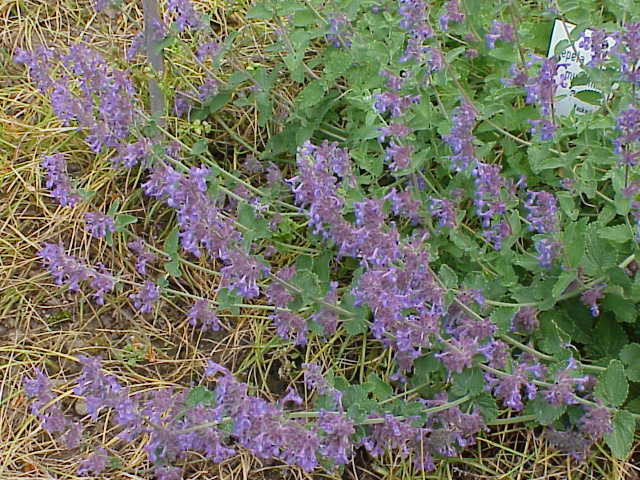
Catmint 'Mussinii' forms a low, spreading mound of soft gray-green foliage covered in spikes of small lavender-blue flowers from mid-spring on - one of the most reliable, low-maintenance edging perennials for a sunny border. It is a classic companion for roses, softening bare stems at the base and blooming on a similar rhythm.
Drought tolerant once established and largely untroubled by deer and rabbits. Shear the whole plant back by about a third after the first flush fades in early summer for a tidy mound and a strong rebloom. Unlike catnip (Nepeta cataria), it's grown for the garden rather than the cat - though cats will still visit.
Powdery mildew
White or grey powdery coating on leaves - usually starting on older growth in humid conditions or when nights cool.
Improve air circulation by thinning plants. Apply neem oil or potassium bicarbonate spray at first sign. Avoid overhead watering.
Root rot
Plants wilt, yellow, and stunt even in moist soil; lower stems and roots turn brown, soft, and mushy and the plant may collapse. Most common in heavy, wet, or poorly drained ground.
Improve drainage and stop overwatering, and never plant too deep. Lift and destroy badly affected plants along with the soil around the roots. Grow in raised or free-draining beds to prevent it returning.