
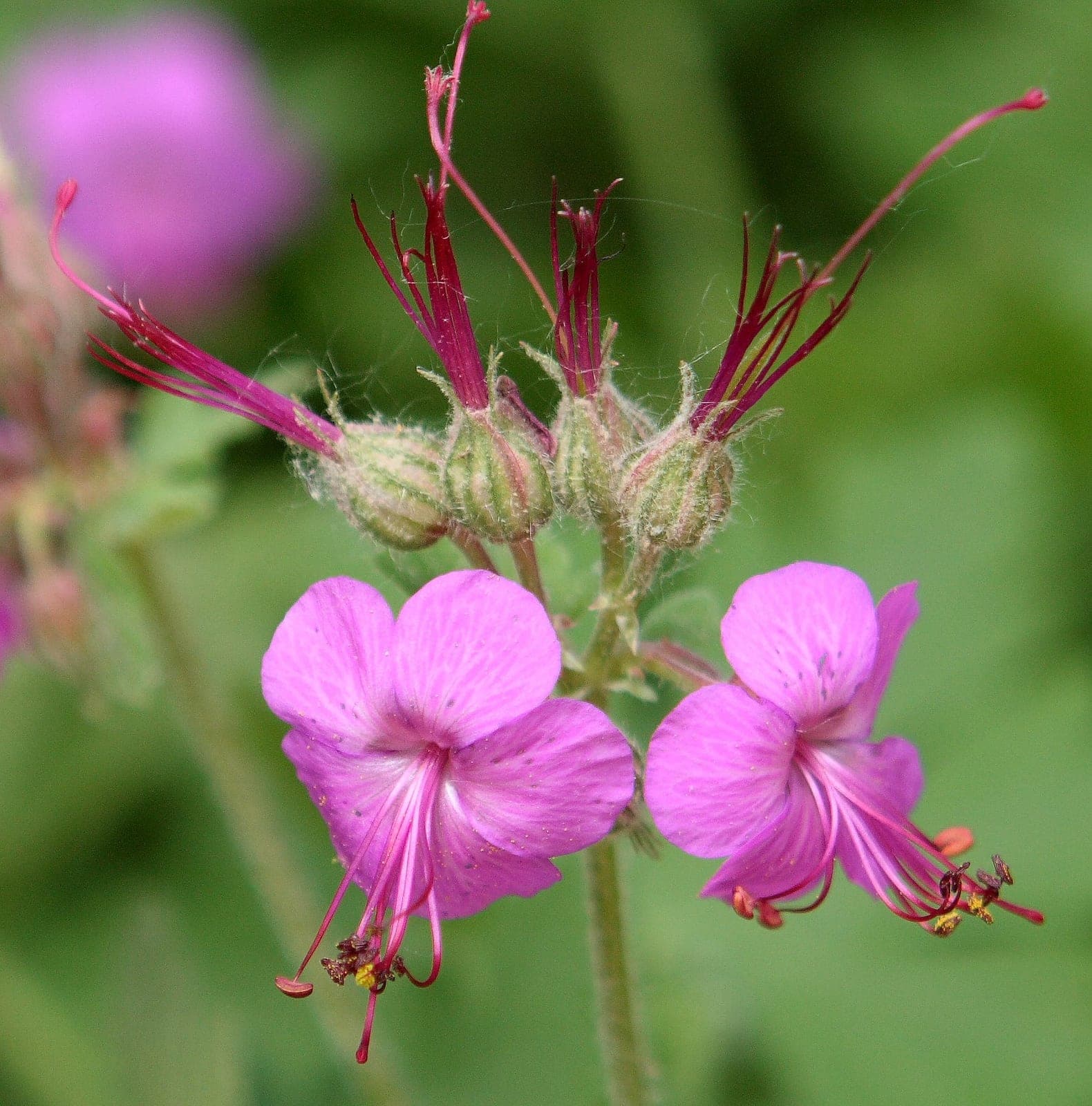
Geranium macrorrhizum is a semi-evergreen perennial ground cover native to the southeastern Alps and Balkans. It forms dense, spreading mats with sticky, deeply lobed aromatic foliage and bright magenta-pink to pale pink flowers in late spring. Deer-resistant and fast to colonize, it outcompetes weeds and holds ground on slopes where few other herbaceous plants persist.
The plant spreads by thick surface rhizomes - the basis of its common name - colonizing steadily without becoming invasive. Once established it tolerates dry shade beneath trees, poor soils, and drought far better than most herbaceous ground covers. Foliage turns warm shades of orange and red in fall and partially persists through mild winters. It performs best in soil with a pH of 6.0–7.0 and declines in waterlogged conditions.
The aromatic foliage contains an essential oil rich in geraniol and related terpenoids, which has been extracted commercially for perfumery. Balkan folk medicine has used leaf preparations as an astringent and topical wound treatment; laboratory studies confirm antimicrobial and anti-inflammatory activity in the leaf extracts.
Bacterial Blight of Geranium
Small water-soaked or brown spots with yellow halos on leaves, V-shaped yellow wedges along leaf margins, wilting, and blackened stems.
Remove and destroy infected plants; avoid overhead watering and handling wet foliage. Use clean tools and disease-free cuttings, and space plants for airflow. No chemical cure once infected.
Rust
Orange to brown raised pustules on the undersides of leaves, with yellow spotting on the upper surface. Heavy infections cause leaves to yellow and drop.
Remove and destroy infected leaves. Avoid overhead watering and improve air circulation. Apply a sulfur or copper-based fungicide if it spreads. Clear plant debris in fall.
Fungal leaf spot
Brown or purplish spots on the leaves, often ringed with a yellow halo, that spread and merge in warm, humid, or wet weather; heavily spotted leaves yellow and drop early.
Pick off spotted leaves and clear fallen debris to remove overwintering spores. Improve air circulation by thinning, and water at the base so foliage dries quickly. If it persists, apply a copper- or sulfur-based fungicide at the first sign.
Powdery mildew
White or grey powdery coating on leaves - usually starting on older growth in humid conditions or when nights cool.
Improve air circulation by thinning plants. Apply neem oil or potassium bicarbonate spray at first sign. Avoid overhead watering.
Root rot
Plants wilt, yellow, and stunt even in moist soil; lower stems and roots turn brown, soft, and mushy and the plant may collapse. Most common in heavy, wet, or poorly drained ground.
Improve drainage and stop overwatering, and never plant too deep. Lift and destroy badly affected plants along with the soil around the roots. Grow in raised or free-draining beds to prevent it returning.