
The Rose Care Calendar
Roses have a reputation for being difficult that they don’t quite deserve — most of the year comes down to one hard prune, two well-timed feeds, and a light touch with the secateurs the rest of the time. Here is the whole rose year: knowing your class, when and how hard to cut, how to feed, how to read the pests, how to train a climber, and — if you stop deadheading in time — how to end the season with a crop of hips. Every step is anchored to your own frost dates, so it works in any zone.
Prune to hips, timed to your frost dates
The front of the year counts forward from your last spring frost; the end counts backward from your first fall frost. Add your ZIP to translate every step into your own months and see which one is open now.
Every step is timed to your frost dates, so the right week here is a different week elsewhere.
The main prune
3–6 weeks before last frost
Prune while the plant is still dormant but the buds are swelling — the old cottage rule is to cut when the forsythia blooms. Take out dead, diseased, and crossing wood first, then shape the rest to a healthy outward-facing bud. How hard you cut depends on the class (see the pruning section below).
First feed and mulch
around last frost (2 weeks before to 1 weeks after)
As the buds break, work a balanced rose feed into the soil around the base and lay a thick mulch of compost or well-rotted manure over the root zone (keep it off the stems). This first feed drives the whole first flush.
Watch for black spot and aphids
2–8 weeks after last frost
As the new growth softens, aphids cluster on the tips and the first spots of fungal disease appear on the lower leaves. Act early — clear fallen leaves, water at the base only, and catch aphids before they build (see pest control below).
Deadhead through the flush
8–16 weeks after last frost
On repeat-flowering roses, cut spent blooms back to the first strong outward-facing leaf to push the next flush. This is also your cutting window — take stems for the house the same way. Keep it up all summer to keep them blooming.
Second feed after the first flush
9–11 weeks after last frost
Once the first big flush fades, feed again to fuel the repeat. A feed a little higher in potassium supports flowers and ripens the wood; hold back on high nitrogen, which pushes soft, disease-prone growth and few blooms.
Last feed of the year
6–8 weeks before first frost
Stop feeding six to eight weeks before your first frost. Feeding later pushes tender new growth that the cold will only kill — you want the plant hardening off and slowing down now, not sprinting.
Stop deadheading — let the hips set
6 weeks before first frost
This is the single switch that turns spent flowers into fruit: leave the last blooms on the plant instead of cutting them. Over the coming weeks the pollinated flowers swell into hips. Skip this on hybrid teas (their hips are thin) and do it on the species and shrub roses that make a good crop.
Harvest the hips
1–3 weeks after first frost
Pick after the first light frost, once the hips are fully coloured and just slightly soft — the frost turns their starch to sugar and takes the astringency off. This is the doorway to the tea, syrup, and jelly in the rose hips post.
Winter tidy and protect
3–8 weeks after first frost
After leaf-fall, shorten very long canes by a third so winter wind can't rock the roots loose, and mound compost or bark over the graft union of grafted roses in cold zones. Clear and destroy every fallen leaf — this is where black spot overwinters. Save the real pruning for late winter.
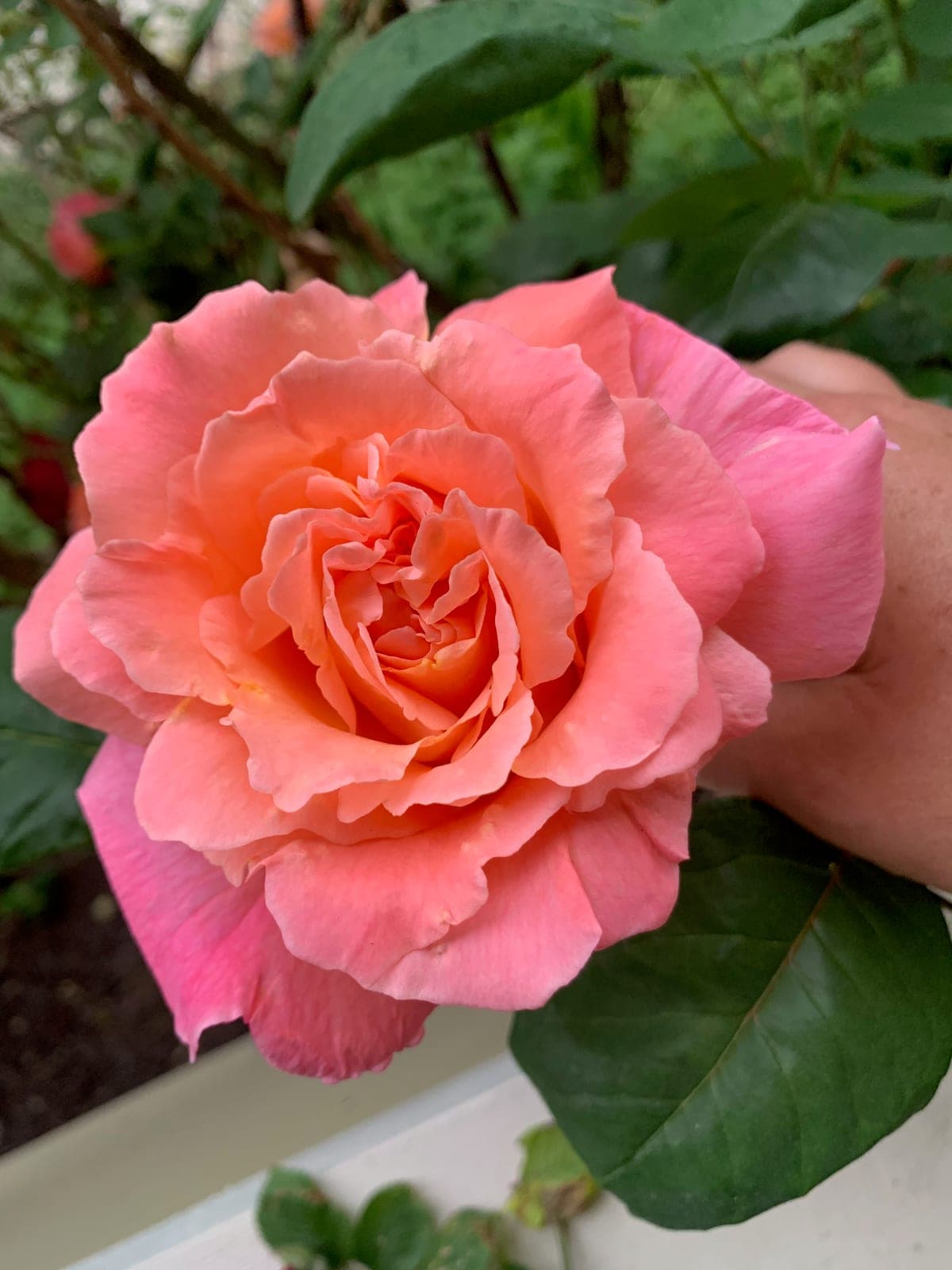
The classes of rose
Almost every question about a rose — how hard to cut it, when to cut it, whether to support it — answers itself once you know its class. Find yours here first; the pruning below follows from it.
Hybrid tea
The classic florist's rose — one large bloom to a long stem.
Habit
Upright, formal shrubs bred for a single, high-centred flower per stem. Big blooms and long stems, but often stiff, thorny, and more prone to disease than modern shrub roses.
Pruning
Hard. Cut back by a half to two-thirds in late winter, to an outward-facing bud, leaving an open goblet of 4–6 strong canes.
Best for
Show blooms and long cutting stems, if you don't mind the spraying and fuss.
Floribunda
Clusters of flowers on a bushier, tougher plant.
Habit
Carries its flowers in trusses rather than singly, blooms almost continuously, and is generally hardier and more disease-resistant than a hybrid tea.
Pruning
Moderate. Cut back by about a third to a half, keeping more canes than on a hybrid tea for a fuller, blockier bush.
Best for
Colour and repeat bloom in a border or hedge, with less babying.
Shrub & English (David Austin)
Old-rose form and fragrance on a modern, healthy plant.
Habit
Rounded, generous shrubs with high-petal, fragrant, repeat-flowering blooms — bred to give the romance of an old garden rose with modern disease resistance and repeat. The backbone of a cutting garden.
Pruning
Light. Reduce the whole plant by about a third and take out the oldest wood at the base; they resent hard cutting.
Best for
Fragrance, cutting, and a plant that mostly looks after itself.
Old garden roses
The gallicas, damasks, and albas — history in a shrub.
Habit
The pre-1867 classes: intensely fragrant, mostly once-flowering in a single midsummer show, tough and long-lived. Many are the source of attar of rose and centuries of breeding.
Pruning
Light, and — crucially — after flowering, because most bloom on old wood. Just shape and remove old canes; never hard-prune in winter.
Best for
Scent, heritage, and low-input shrubs that ask little once established.
Climbers
Stiff-caned roses trained to a wall, arch, or obelisk.
Habit
Send up long, semi-rigid canes that don't twine — you tie them to a support. Most repeat-flower and bloom on a framework of older wood, so you keep the main canes for years.
Pruning
Keep the permanent framework; in late winter cut the flowered side-shoots back to a few buds. Train the main canes horizontally (see the climbing section).
Best for
Walls, pergolas, and arches — and threading a clematis through.
Ramblers
Vigorous, once-flowering giants for covering things.
Habit
Far more vigorous than climbers — long, flexible canes that can swallow a shed or old tree in a single season-long tumble of small flowers, usually in one spectacular early-summer flush on last year's wood.
Pruning
Prune right AFTER flowering, not in winter — cut the flowered canes out at the base and tie in the fresh new ones for next year.
Best for
Big, wild, low-maintenance cover where you have the room.
How to prune, whatever the rose
How hard you cut depends on the class above; how you cut is the same every time. The main prune happens in late winter as the buds swell — the exception being ramblers and once-flowering old roses, which you prune right after they flower so you don’t cut off next year’s blooms.
The three D's first
Whatever the rose, start by removing everything Dead, Diseased, or Damaged, then anything crossing or rubbing. Half the job is often done by the time you've cleared these — and you can see the shape of what's left.
Cut to an outward-facing bud
Make each cut about a quarter-inch above a bud that points away from the centre of the plant. The new shoot grows in the direction the bud faces, so outward buds open the plant up; inward ones grow back into a congested tangle.
Open the centre
Aim for an open goblet or vase shape with an airy middle. Good airflow through the plant is the cheapest, most effective black-spot and mildew control there is — far more than any spray.
Angle the cut, seal nothing
Cut on a slight slope away from the bud so water runs off, not into it. Use clean, sharp secateurs and disinfect them between diseased plants. No need to seal cuts — wound paints do more harm than good.
Match the cut to the class
Hard-prune hybrid teas and floribundas; go lightly on shrub, English, and old roses; and never winter-prune ramblers or once-flowering old roses that bloom on old wood — you'd cut off the very stems about to flower.
Feeding and mulch
Roses are among the hungriest plants in the garden, but the trick is timing and balance, not quantity — two well-placed feeds and a good mulch outperform constant fussing, and the wrong feed at the wrong time does real harm.
Feed at bud break, feed again after the first flush
Roses are hungry. A balanced rose feed as the buds break powers the first flush; a second feed once that flush fades fuels the repeat. Two well-timed feeds beat constant dribbling.
Potassium for flowers, not nitrogen for leaves
Too much nitrogen gives you a soft, sappy jungle of leaves, few flowers, and a magnet for aphids and black spot. A feed higher in potassium (the same nutrient tomatoes want for fruit) drives flowers and ripens the wood. Specialist rose feeds are balanced for exactly this.
Mulch is half the feeding
A thick spring mulch of compost or well-rotted manure over the root zone feeds slowly all season, holds moisture even, and suppresses the weeds that compete for it. Keep it clear of the stems and the graft union.
Stop in good time before frost
Cut off feeding six to eight weeks before your first frost. A late feed pushes tender growth that the cold kills and can weaken the whole plant going into winter. Let it slow down and harden off.
Epsom salts and banana peels
The folk feeds. A magnesium dose (Epsom salts) only helps if your soil is genuinely magnesium-deficient — otherwise it can block calcium and do harm. Banana peels are potassium, but break down far too slowly to feed this season; compost them first. Neither replaces a proper feed.
Pest and disease control
The rose’s reputation for neediness is mostly its diseases, and nearly all of them are managed the same way: airflow, base watering, and autumn hygiene beat any spray. Learn the tell and act early. For the full picture on any of these, see the garden insect field guide.
Aphids
The tell
Dense clusters of soft green, pink, or black insects on the flower buds and soft new tips, with sticky honeydew and, later, black sooty mould.
What to do
Rub them off by hand or blast with a hose, and encourage ladybirds, hoverflies, and lacewings — they'll clear a colony fast. Insecticidal soap for a bad case. Avoid the high-nitrogen feeding that grows the soft tips they love.
Black spot
The tell
Round black spots with fringed edges on the leaves, the surrounding leaf yellowing, then dropping. The classic rose disease; it defoliates a plant from the bottom up.
What to do
There's no cure once a leaf has it — remove and destroy affected leaves, never compost them, and clear all fallen leaves in autumn where the spores overwinter. Water at the base, keep the centre open for airflow, and choose resistant varieties. A preventive spray (copper, or milk-and-water) before it takes hold helps.
Powdery mildew
The tell
A white, dusty coating on young leaves, buds, and shoot tips, often puckering and distorting the new growth. Worst in warm days and cool, still nights.
What to do
Improve airflow by pruning to an open centre and not crowding plants; water at the roots so foliage stays dry; remove affected tips. A milk-and-water or potassium-bicarbonate spray checks it early.
Rose rust (yellow spot)
The tell
Bright orange-yellow pustules on the undersides of the leaves, with yellow flecks showing through on top. Once established there is no cure.
What to do
Check leaf undersides weekly from late spring; remove and destroy infected leaves the moment you see them. Spray preventively before it takes hold — a mix of copper fungicide, milk and water with a little dish soap, plus a garlic spray. Clear all fallen foliage in autumn.
Japanese beetles
The tell
Metallic copper-and-green beetles feeding in groups, skeletonising the leaves and chewing ragged holes straight through the flowers.
What to do
Handpick into soapy water in the cool of early morning when they're sluggish. Skip the pheromone traps — they draw in more beetles than they catch. Healthy, well-watered plants shrug off the damage.
Rose sawfly (rose slug)
The tell
Leaves 'windowpaned' — grazed to a translucent skeleton — by small, slug-like green larvae feeding on the undersides.
What to do
Handpick or hose off the larvae; a healthy plant outgrows light damage. Insecticidal soap for a heavy infestation. Note it's a sawfly larva, not a caterpillar, so Bt won't touch it.
Thrips
The tell
Petals — especially on pale roses — flecked, browned at the edges, and distorted, with buds that fail to open cleanly. Tiny slivers you'll barely see move in the flower.
What to do
Remove and destroy affected buds. Blue sticky traps monitor them; encourage the lacewings and predatory mites that hunt them. Rarely worth spraying in a garden.
Botrytis (grey mould)
The tell
Fuzzy grey mould on buds and blooms that ball and rot without opening, worst in wet, cool spells and on tightly-petalled roses.
What to do
Remove and destroy every mouldy bud and bloom, improve airflow, and avoid overhead watering. It thrives on dead and damaged tissue, so good hygiene is most of the control.
Helping them climb
No rose truly climbs — it leans and hooks, and you do the rest. The single thing worth learning is to train the canes sideways: a rose tied horizontally flowers along its whole length instead of only at the top.
Climber or rambler?
A climber has stiffer canes, usually repeat-flowers, and grows to maybe 8–12 ft — the one for a wall, arch, or obelisk. A rambler is far more vigorous, floppier, and flowers once, hugely, on last year's wood — the one for a big tree, shed, or long fence. They're pruned at opposite times, so know which you have before you cut.
Train the canes horizontal
This is the trick that makes a climber flower all the way up instead of only at the top. Bend the long main canes down toward the horizontal and tie them there. It breaks the plant's apical dominance, so every bud along the cane wakes and throws a flowering side-shoot — a fan or a series of horizontal tiers gives you flowers from the ground up.
Tie in, don't twist
Roses don't twine or cling — they lean and hook, so you must tie them to their support. Use soft twine or rubber ties in a loose figure-eight (cane in one loop, wire in the other) so the tie never cuts into the swelling cane. Check and loosen the ties each year.
Give it real support
A mature climber is heavy and catches the wind — fix horizontal wires 18 inches apart and a hand's width off a wall, or use a solid arch, obelisk, or pergola. Fan the main canes out across it while they're young and flexible; you can't rearrange a woody old cane.
Prune to the framework
On a climber, keep the permanent main canes for years and, in late winter, cut the side-shoots that flowered back to two or three buds. On a rambler, cut the flowered canes out at the base right after the summer show and tie in the fresh new growth for next year. Never hard-prune a climber to the ground — you'll lose the framework and the flowers with it.
Thread a clematis through
The classic pairing: a late-flowering (Group 3) clematis planted at the foot of a climbing rose scrambles up through it and carries the display on after the rose's flush. Because it's hard-pruned in late winter, it never tangles with the rose's framework.
The last of these — threading a clematis through a climbing rose — has its own guide. See the clematis guide for the pruning groups and why a late-flowering clematis is the perfect partner.
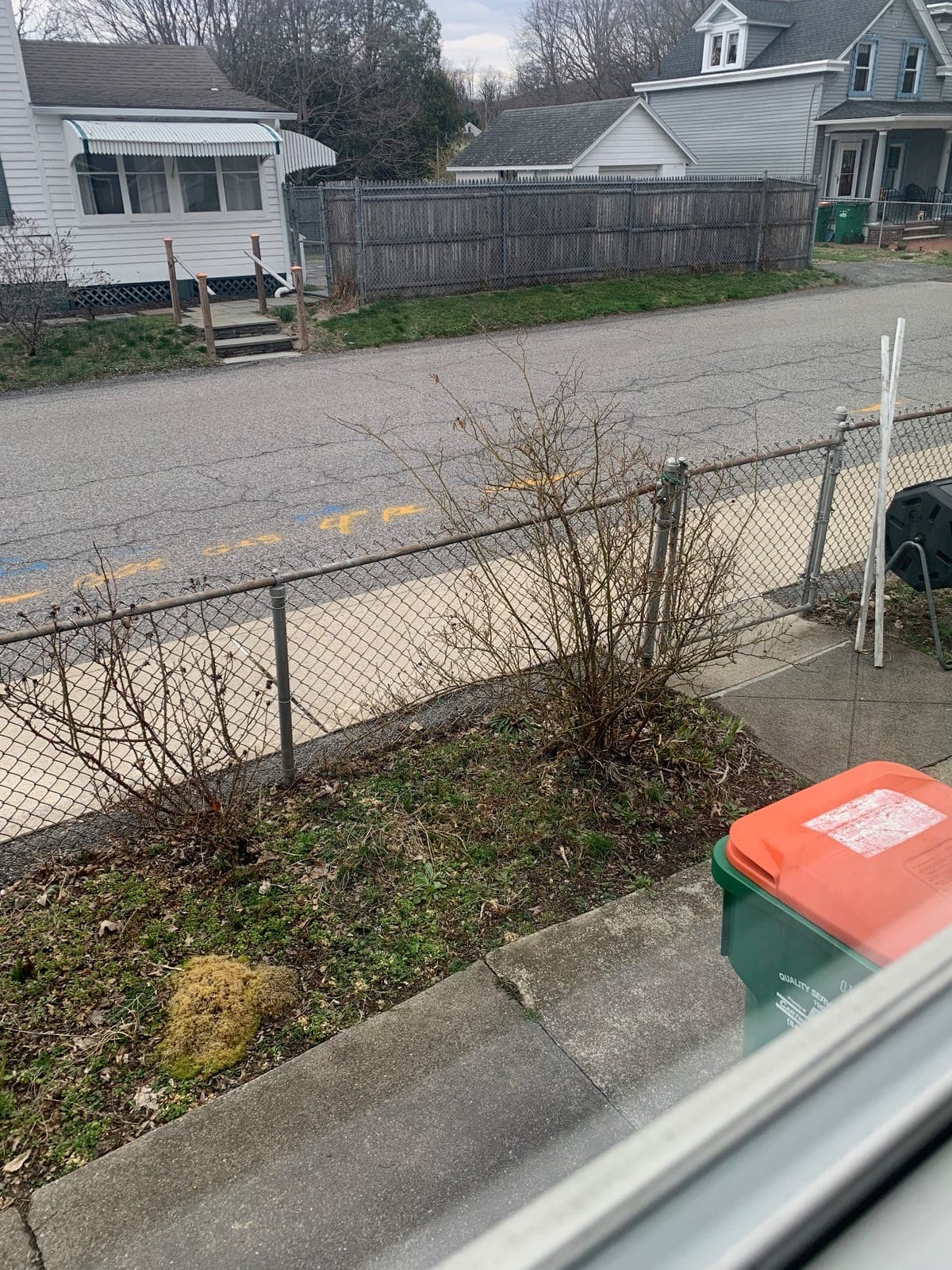
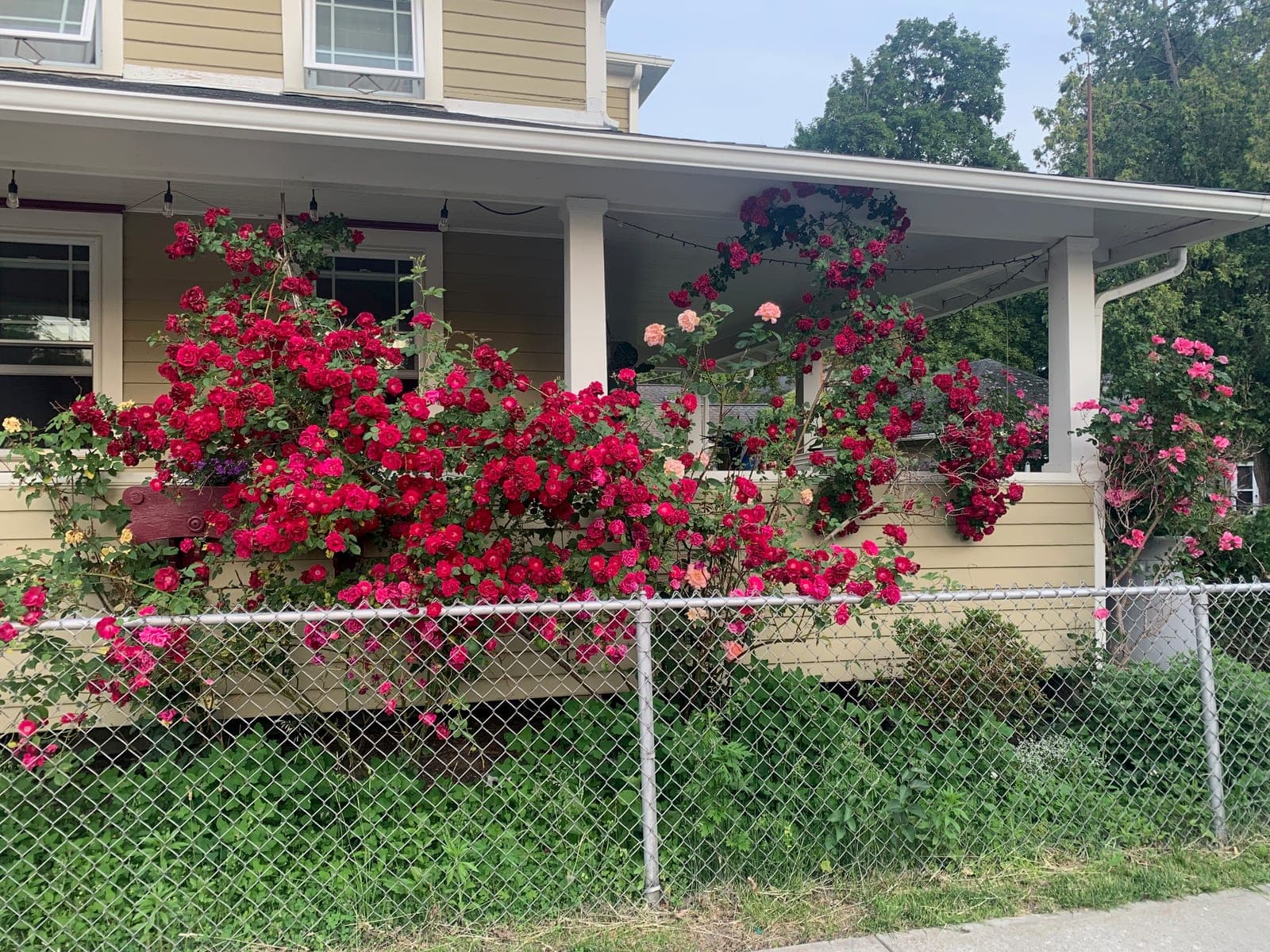
Famous roses
No flower carries as much history. A handful of roses changed the whole genus — brought repeat flowering out of China, carried scent down a thousand years, or simply outlived the people who named them.
The Apothecary's Rose
Rosa gallica var. officinalis
Perhaps the oldest cultivated rose in the West — the Red Rose of Lancaster, grown in medieval Provins for a petal trade in medicine and confectionery because its scent deepens rather than fades when dried. The ancestor of countless garden roses.
Rosa Mundi
Rosa gallica 'Versicolor'
A sport of the Apothecary's Rose, its crimson petals splashed and striped with pale pink so that no two blooms are alike. Named, the legend goes, for 'Fair Rosamund', mistress of Henry II — a rose that has been grown for its oddity since the 16th century.
Autumn Damask
Rosa × damascena
The Damask rose — the source of attar of rose and rose water, still grown by the hectare in Bulgaria and Turkey and harvested by hand at dawn. One of the few old roses that repeats, it carried scent breeding for a thousand years.
Old Blush
Rosa chinensis 'Old Blush'
The 'monthly rose' brought from China to Europe around 1750 — and the plant that changed everything, because it flowered again and again through the season. Nearly every repeat-flowering rose in the world traces back to this modest pink china.
Peace
Rosa 'Madame A. Meilland'
The most famous rose of the 20th century. Bred in France as war broke out, its budwood was smuggled out on one of the last planes before the occupation; it was released the day Berlin fell and named 'Peace', a bloom of it set at every seat of the founding UN delegates.
Zéphirine Drouhin
Rosa 'Zéphirine Drouhin'
The thornless climber — a Bourbon rose from 1868 with cerise, deeply fragrant flowers and smooth, spineless canes, which is why it's the one everyone trains beside a doorway or path where you'd rather not be caught.
New Dawn
Rosa 'New Dawn'
A repeat-flowering climber of soft shell-pink, and a footnote in law: in 1931 it became the first plant ever granted a US patent. Tough, shade-tolerant, and still one of the most widely planted climbers a century on.
Gertrude Jekyll
Rosa 'Ausbord' (David Austin)
The English rose voted the nation's favourite for its fragrance — an intense, quintessential old-rose scent so true it's grown commercially for perfume. Named for the great garden designer, it's the David Austin most people mean when they say a rose 'smells like a rose'.
Roses for hips
If you want a crop from your roses, the wild and species roses are the ones to plant — big, fleshy hips, tough constitutions, and no need to spray. The one rule is to stop deadheading in late summer so the flowers can set fruit.
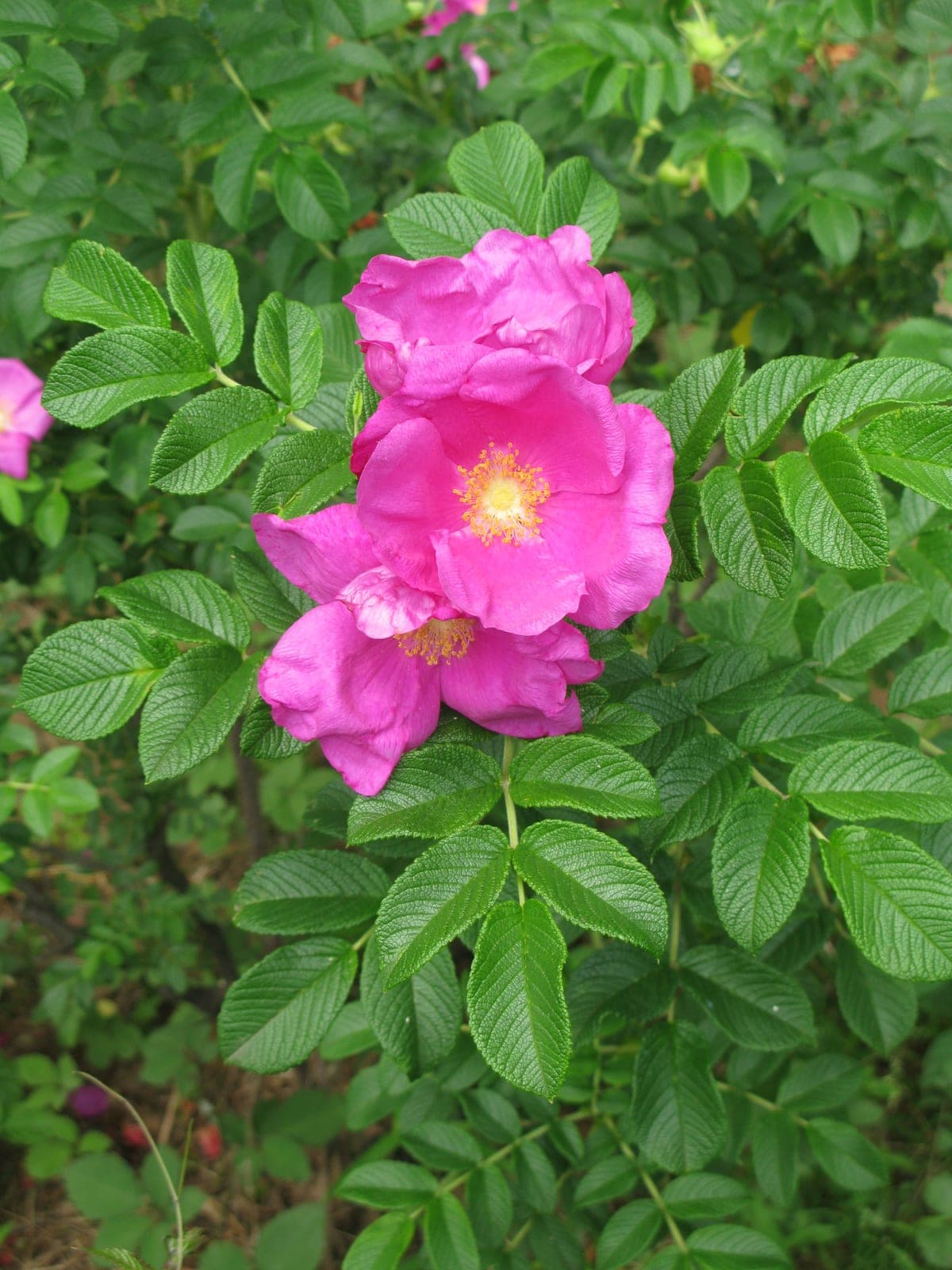
The friendliest rose to grow for hips: hardy to zone 2, shrugs off the diseases that plague hybrids, thrives in poor sandy soil, and sets the largest, fleshiest hips of any rose. If you plant one rose for the kitchen, plant this.
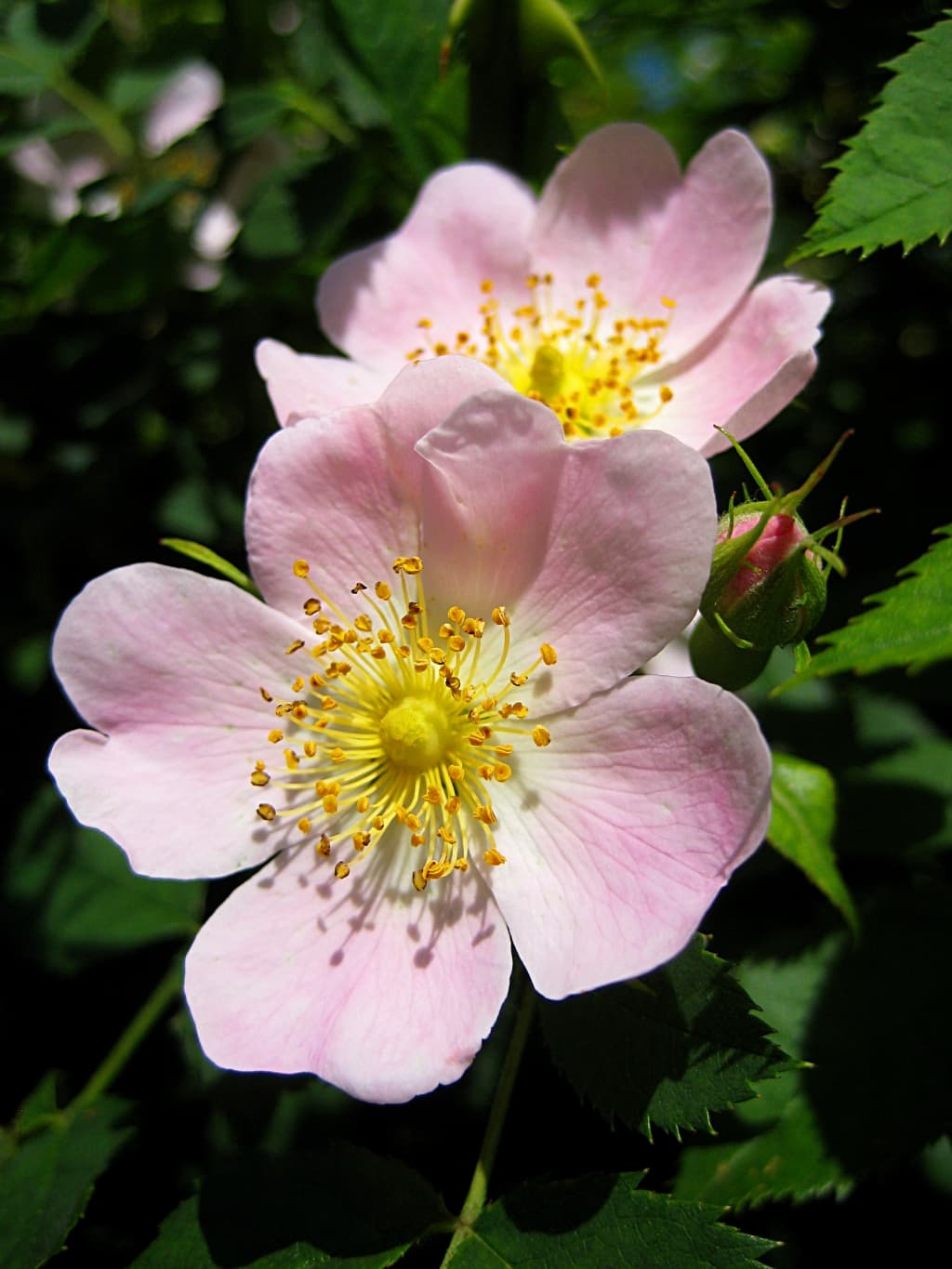
The classic hedgerow wild rose — pale pink flowers, oval scarlet hips, and the rootstock most garden roses are grafted onto. The most-studied species for both the vitamin-C hips and the skincare seed oil.
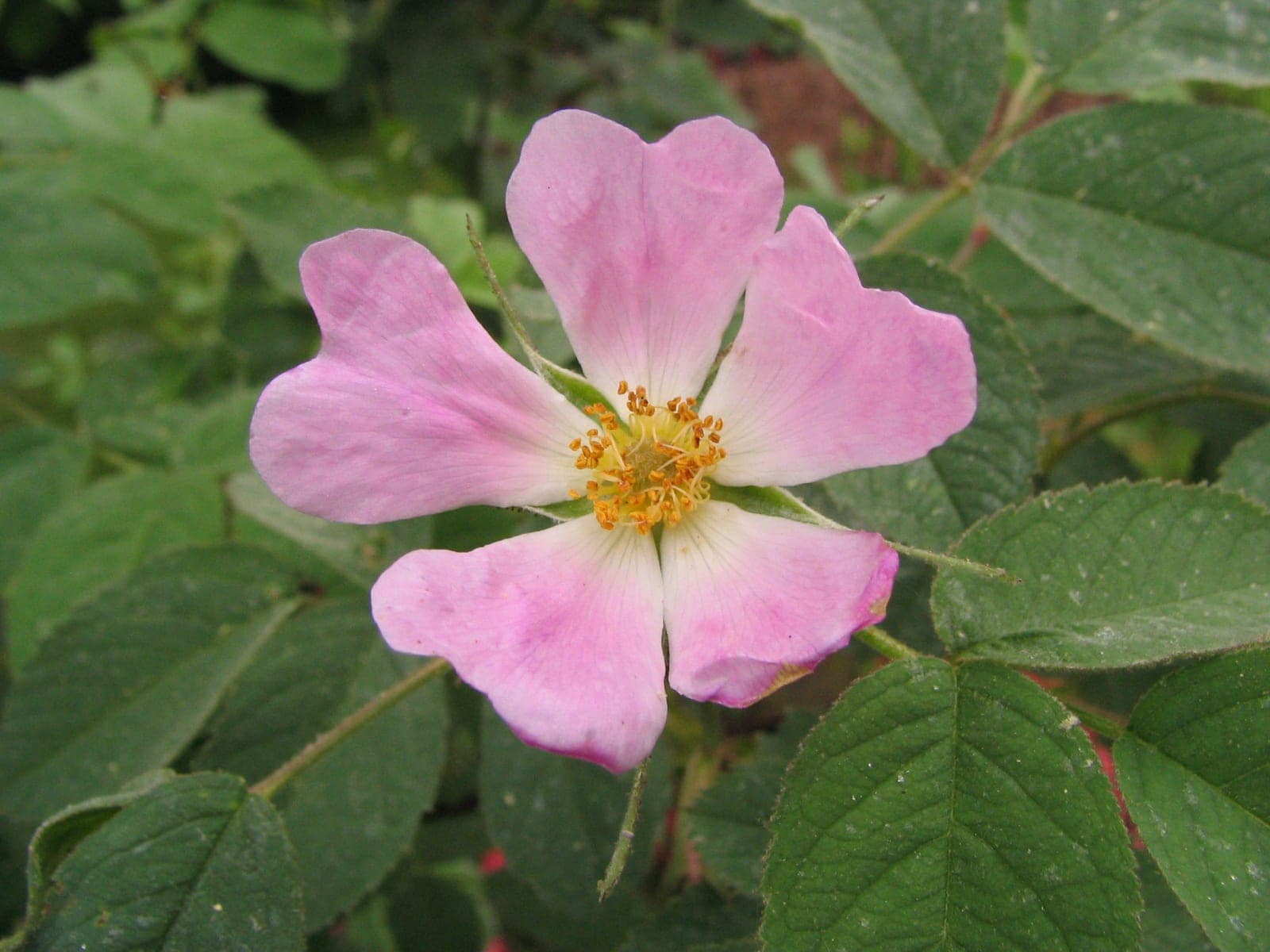
Grown for its unusually large, apple-shaped scarlet hips that hang on well into winter. Disease-resistant and hardy to zone 3 — a low-input choice for hips and wildlife alike.
The catalog's all-rounder shrub rose. Most garden roses will set some hips if you stop deadheading, though the thin hips of a hybrid tea are far less rewarding to process than a species rose's.
What to plant alongside it
The best rose companions skirt its bare lower stems, are said to help confuse pests hunting by scent, or — in the case of clematis — share its support and carry the display on after the flush.
Clematis
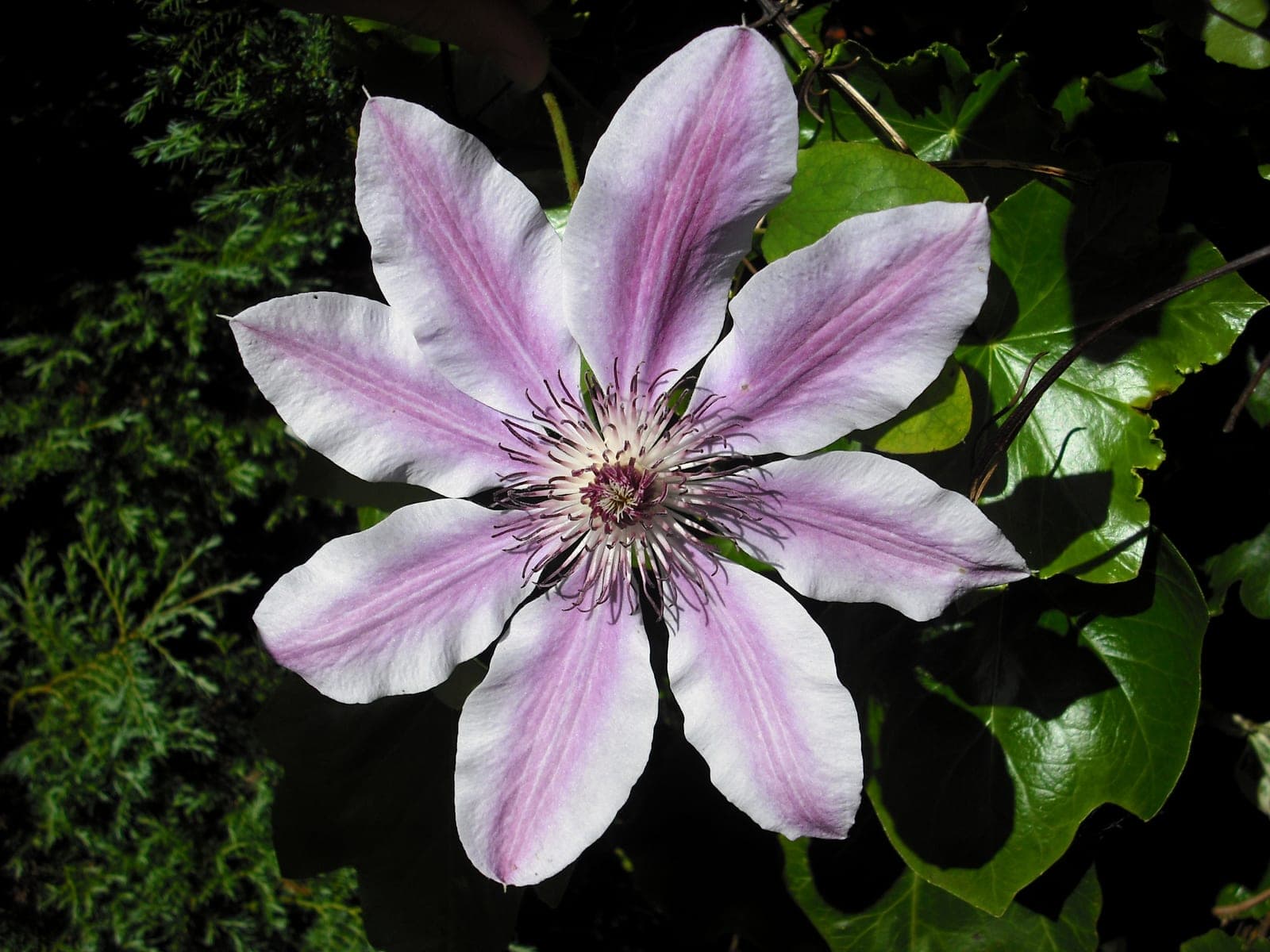
The classic climbing pairing — a late-flowering (Group 3) clematis threaded through a climber or rambler carries the display on after the rose's flush, and its hard late-winter prune keeps it from ever tangling with the rose's framework.
Lavender
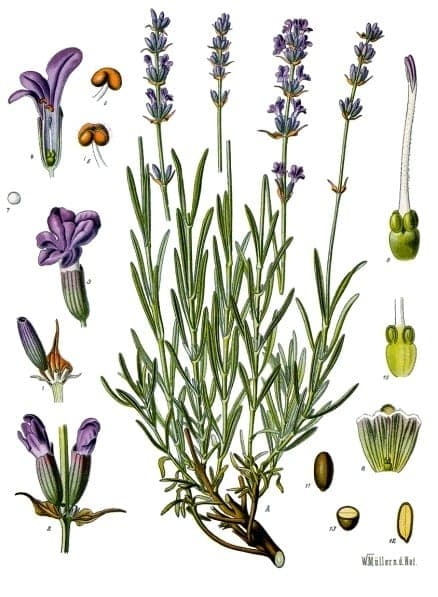
A classic cottage-garden pairing: lavender's low, silvery mound softens a rose's bare lower stems, and its scent is said to help confuse pest insects hunting by smell.
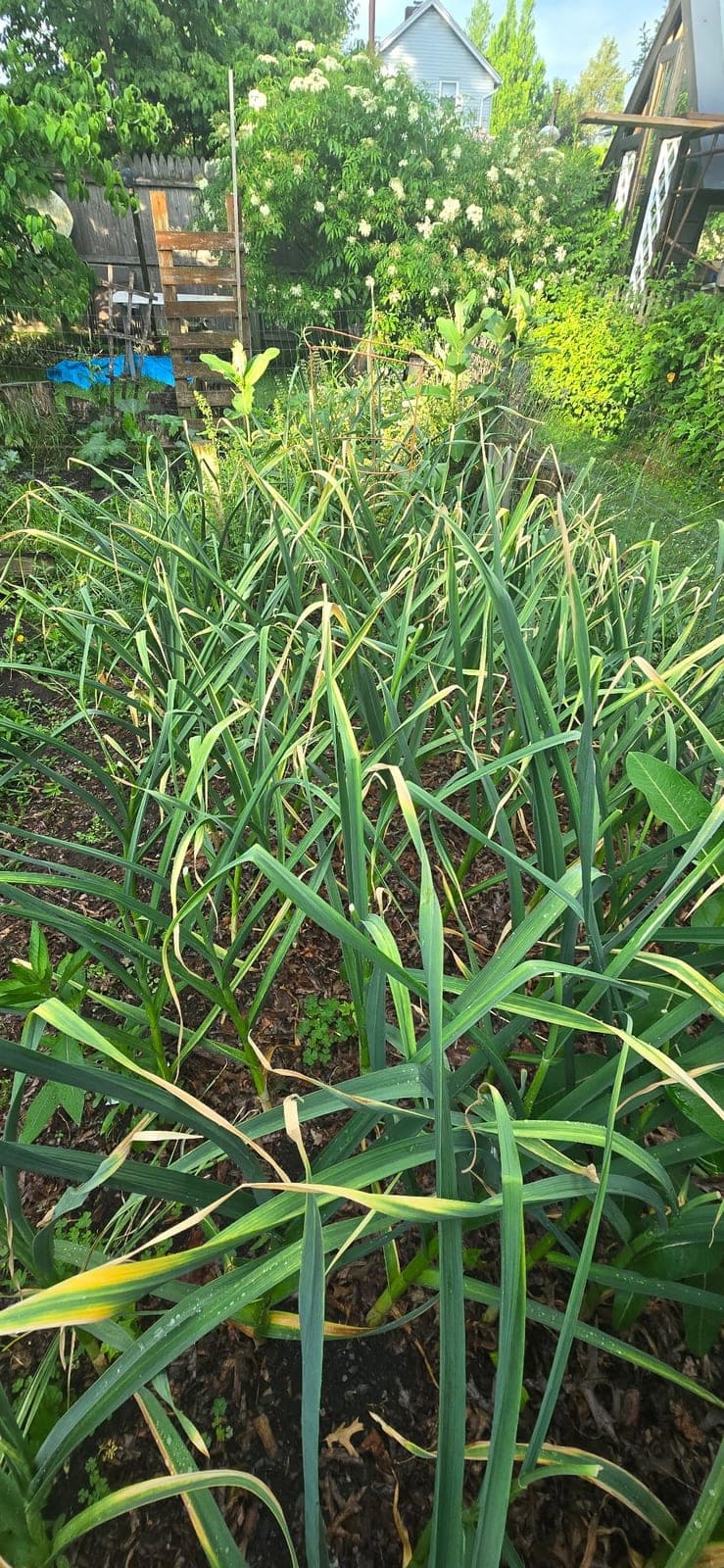
Garlic
Planted at the base, its sulfur compounds are said to discourage aphids and blackspot — and unlike a flowering companion, it asks nothing of the bed but a hole to grow in.
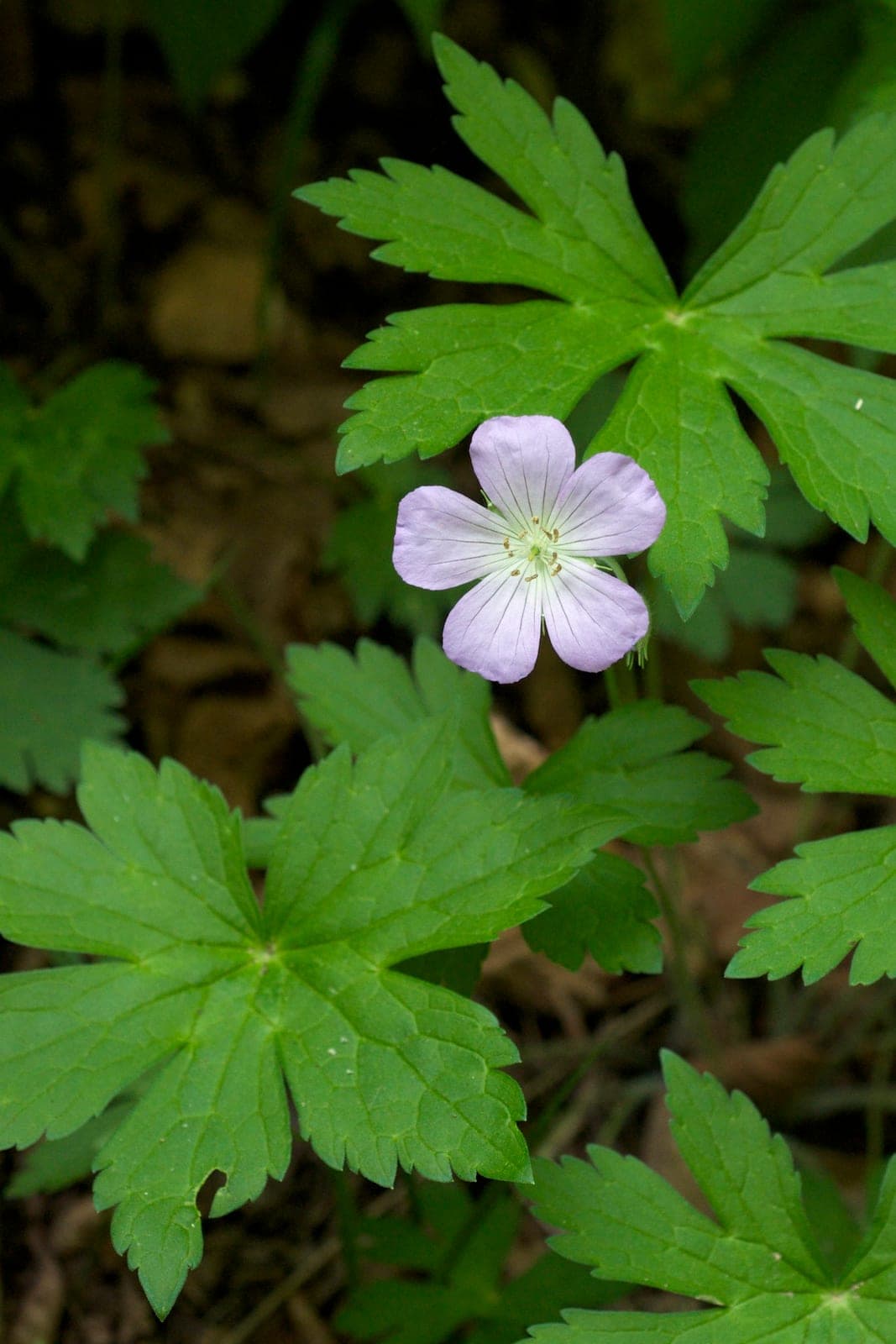
Wild geranium
A low, spreading groundcover — the classic 'rose skirt' — that shades the soil, keeps weeds down around the base, and hides bare lower canes without competing for the rose's light.
Get every rose step on time, for your exact zone.
The Garden Digest tier turns this guide into a weekly almanac built around your plant list and frost dates — telling you the week to prune, feed, stop deadheading, and harvest hips, so you hit every step without watching the calendar.
Looking for something?
Let us know and we will add it to the list for your garden plan.