
Rosa canina is a thorny, arching wild shrub native to Europe, northwest Africa, and western Asia. It produces pale pink to white flowers in late spring, followed by oval red hips that deepen to scarlet through fall and persist into winter. Its value in the landscape is threefold: wildlife habitat, foraging source, and the primary rootstock onto which the majority of the world's grafted garden roses are budded.
It naturalizes readily in hedgerows, woodland edges, and rough ground and tolerates poor, dry soils that defeat most ornamental shrubs. Stems are heavily hooked and will scramble over fences or neighboring plants if not periodically cut back. A soil pH of 6.0–6.5 suits it well, though it adapts to a wide range. Mulch around the base aids establishment; after that, little intervention is needed. Cold-hardy to zone 3a with no special winter protection required. Suckers may emerge from the root zone and should be removed if a tidy outline is wanted.
Rose hips are among the richest plant sources of vitamin C and have been used in European herbal medicine for centuries for colds, urinary tract complaints, and joint inflammation. Both hips and petals are edible; hips are processed into tea, syrup, jam, and wine. Harvest hips after the first light frost, when sugars have increased and the skins soften slightly.
Growing roses? Read the Rose Care Calendar — pruning by class, feeding, pests, climbers, and growing for hips, timed to your frost dates.Powdery mildew
White or grey powdery coating on leaves — usually starting on older growth in humid conditions or when nights cool.
Improve air circulation by thinning plants. Apply neem oil or potassium bicarbonate spray at first sign. Avoid overhead watering.
Botrytis (grey mould)
Grey fuzzy mould on petals and stems, worst in cool wet conditions.
Remove affected parts immediately. Improve air circulation. Avoid overhead watering. Apply copper fungicide if severe.
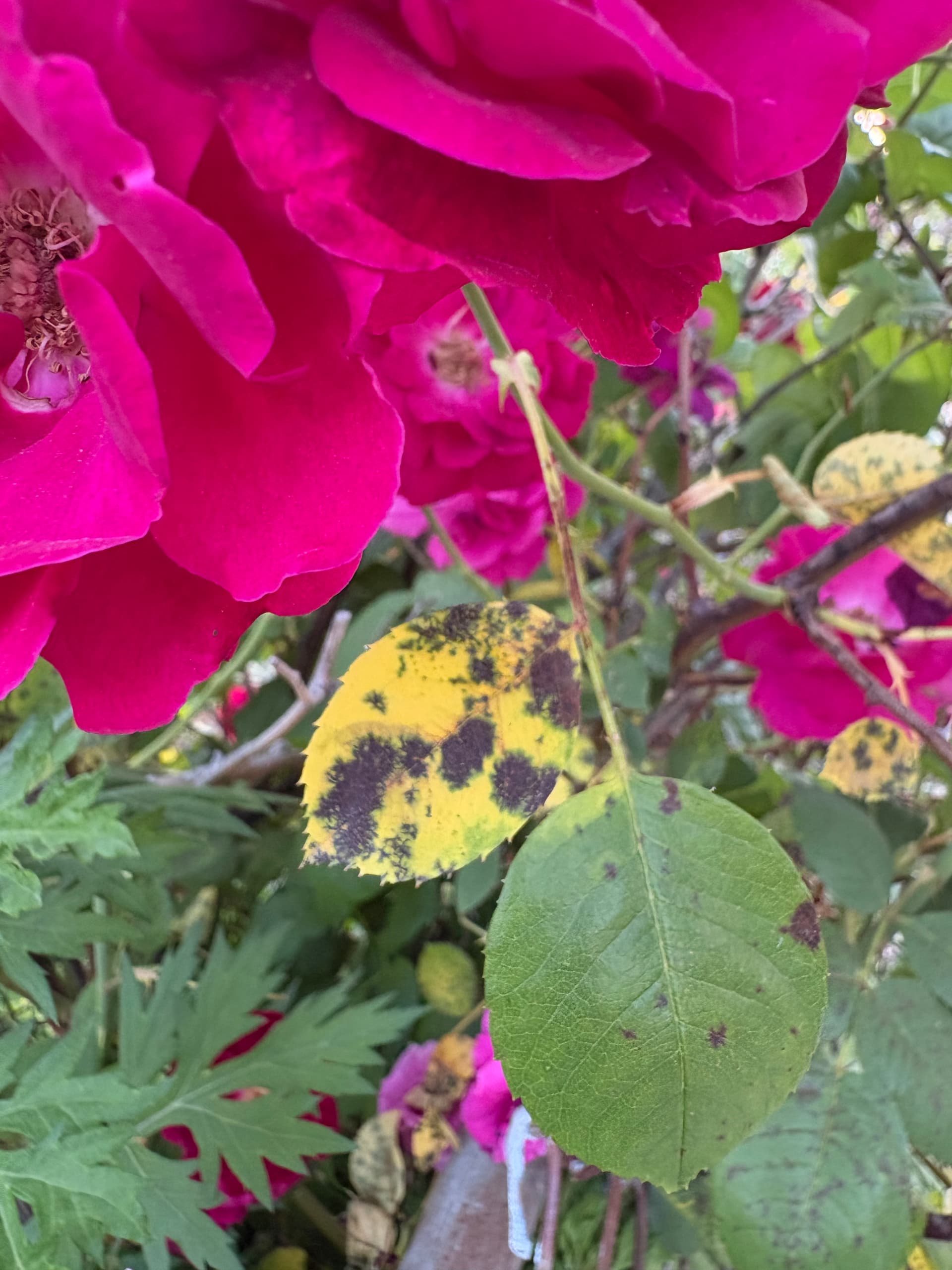
Yellow spot (rose rust)
Bright yellow spots on the upper surface of leaves, with orange-yellow powdery pustules on the underside. Leaves may drop prematurely. Worst in cool, wet springs.
Remove and bin all affected leaves — do not compost. Apply a systemic fungicide (myclobutanil or trifloxystrobin) at first sign and repeat every 10–14 days. Spray preventively from early spring before infection takes hold. Improve air circulation by pruning to an open centre.
Aphids
Aphididae →Clusters of small soft insects on new growth and flower buds.
Knock off with a strong jet of water. Ladybirds and lacewings are natural predators. Insecticidal soap as last resort.