
Rosa villosa is a wild rose native to Europe and western Asia, grown chiefly for its large, apple-shaped hips that ripen to deep scarlet in late summer and persist well into winter. Single pink flowers appear in early summer, but the hips are the primary reason to plant this species: they are among the largest of any rose, highly ornamental, and a valuable food source for birds and wildlife. It is substantially more disease-resistant than most modern cultivated roses, making it a practical choice for low-input landscapes.
The shrub suckers moderately and can slowly expand into a loose colony if left unmanaged; removing root suckers annually keeps it in bounds. It tolerates poor, stony, and mildly alkaline soils better than most roses and becomes drought-tolerant once established. Mulch the root zone in the first season to aid establishment. Cold-hardy to zone 3, it requires no winter protection in most of its range. Avoid high-nitrogen fertilizers, which push soft growth at the expense of hips.
The hips have a long record of culinary and medicinal use across Europe. High in vitamin C, they are processed into jams, jellies, syrups, soups, and teas. Traditional European herbalism drew on them for immune support through winter, relief of mild inflammation, and as a gentle urinary tonic. Harvest after the first light frost, when flesh sweetens and astringency decreases.
Growing roses? Read the Rose Care Calendar — pruning by class, feeding, pests, climbers, and growing for hips, timed to your frost dates.Powdery mildew
White or grey powdery coating on leaves — usually starting on older growth in humid conditions or when nights cool.
Improve air circulation by thinning plants. Apply neem oil or potassium bicarbonate spray at first sign. Avoid overhead watering.
Botrytis (grey mould)
Grey fuzzy mould on petals and stems, worst in cool wet conditions.
Remove affected parts immediately. Improve air circulation. Avoid overhead watering. Apply copper fungicide if severe.
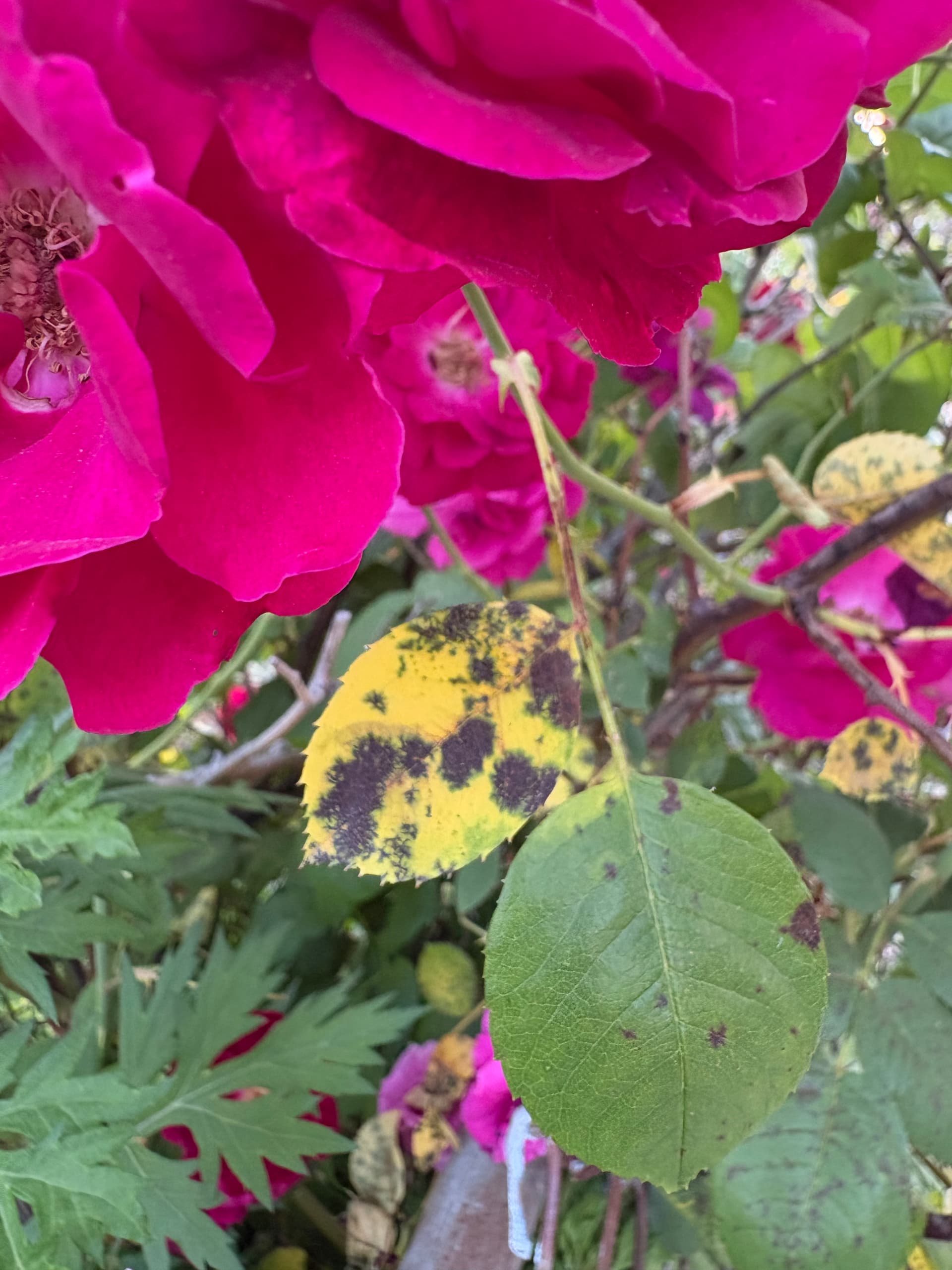
Yellow spot (rose rust)
Bright yellow spots on the upper surface of leaves, with orange-yellow powdery pustules on the underside. Leaves may drop prematurely. Worst in cool, wet springs.
Remove and bin all affected leaves — do not compost. Apply a systemic fungicide (myclobutanil or trifloxystrobin) at first sign and repeat every 10–14 days. Spray preventively from early spring before infection takes hold. Improve air circulation by pruning to an open centre.
Aphids
Aphididae →Clusters of small soft insects on new growth and flower buds.
Knock off with a strong jet of water. Ladybirds and lacewings are natural predators. Insecticidal soap as last resort.