
Rosa rugosa is a suckering shrub rose native to coastal areas of northeastern China, Japan, Korea, and southeastern Siberia, where it colonizes sandy dunes and sea cliffs. Gardeners grow it for its large, fragrant blooms in magenta-pink or white, exceptional cold hardiness to zone 2a, strong resistance to the foliar diseases that plague hybrid roses, and its large orange-red hips — among the biggest produced by any rose species.
It spreads by root suckers and can form dense thickets over time; it is classified as invasive in parts of coastal Europe and North America. The plant is highly adaptable to poor, sandy, and salt-laden soils where other roses struggle. Soil pH between 5.5 and 7.0 suits it best. Mulching conserves moisture on dry sites but is not essential once plants are established. Remove suckers annually at the root to prevent unwanted spread.
Rose hips are one of the richest plant sources of vitamin C and were used historically to prevent scurvy. They are harvested for teas, syrups, jams, and jellies. The petals are edible and used in flavoring and confectionery. Clinical research supports anti-inflammatory activity in rosehip preparations, with consistent evidence for symptom reduction in osteoarthritis.
Growing roses? Read the Rose Care Calendar — pruning by class, feeding, pests, climbers, and growing for hips, timed to your frost dates.Powdery mildew
White or grey powdery coating on leaves — usually starting on older growth in humid conditions or when nights cool.
Improve air circulation by thinning plants. Apply neem oil or potassium bicarbonate spray at first sign. Avoid overhead watering.
Botrytis (grey mould)
Grey fuzzy mould on petals and stems, worst in cool wet conditions.
Remove affected parts immediately. Improve air circulation. Avoid overhead watering. Apply copper fungicide if severe.
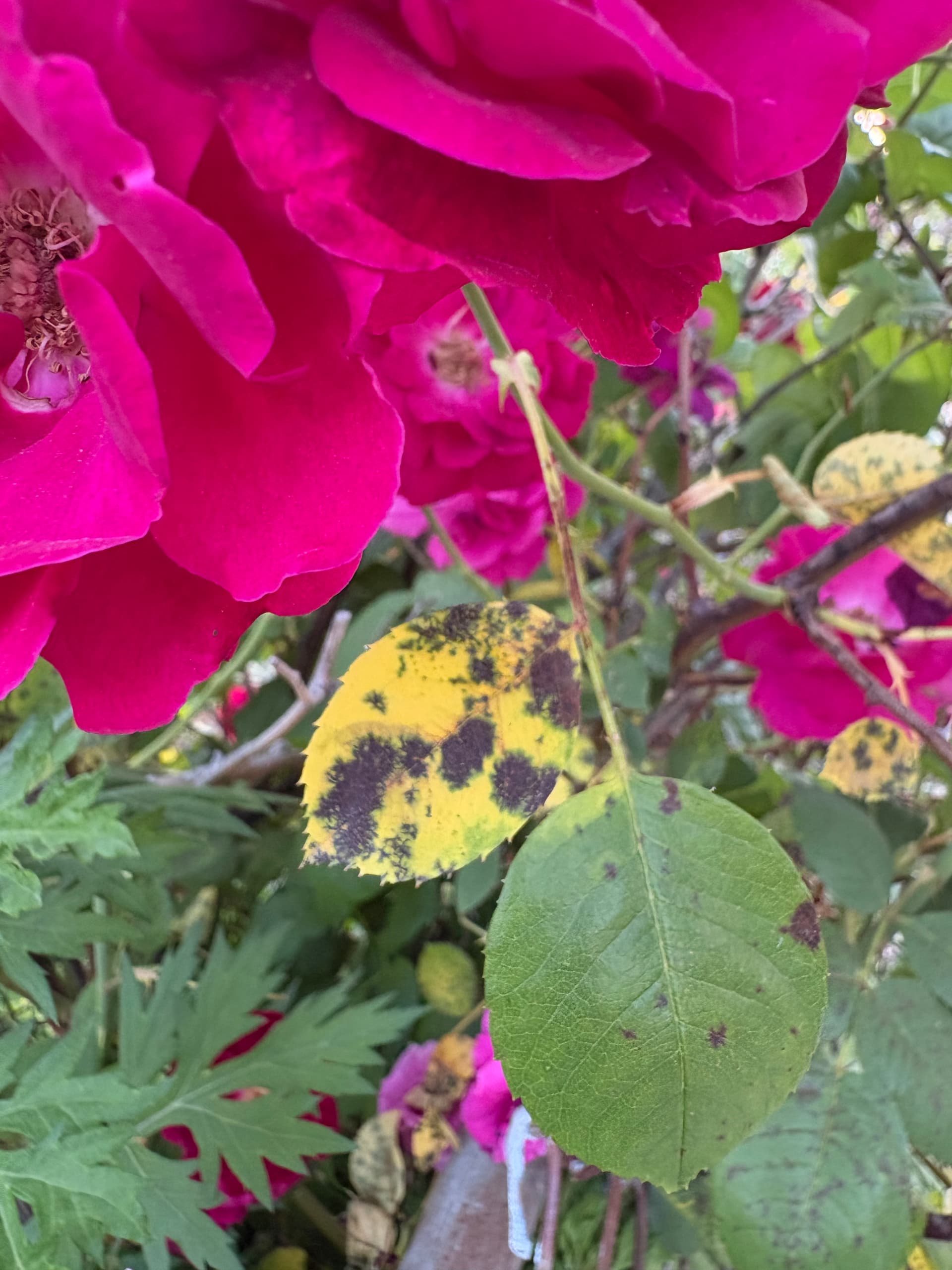
Yellow spot (rose rust)
Bright yellow spots on the upper surface of leaves, with orange-yellow powdery pustules on the underside. Leaves may drop prematurely. Worst in cool, wet springs.
Remove and bin all affected leaves — do not compost. Apply a systemic fungicide (myclobutanil or trifloxystrobin) at first sign and repeat every 10–14 days. Spray preventively from early spring before infection takes hold. Improve air circulation by pruning to an open centre.
Aphids
Aphididae →Clusters of small soft insects on new growth and flower buds.
Knock off with a strong jet of water. Ladybirds and lacewings are natural predators. Insecticidal soap as last resort.