
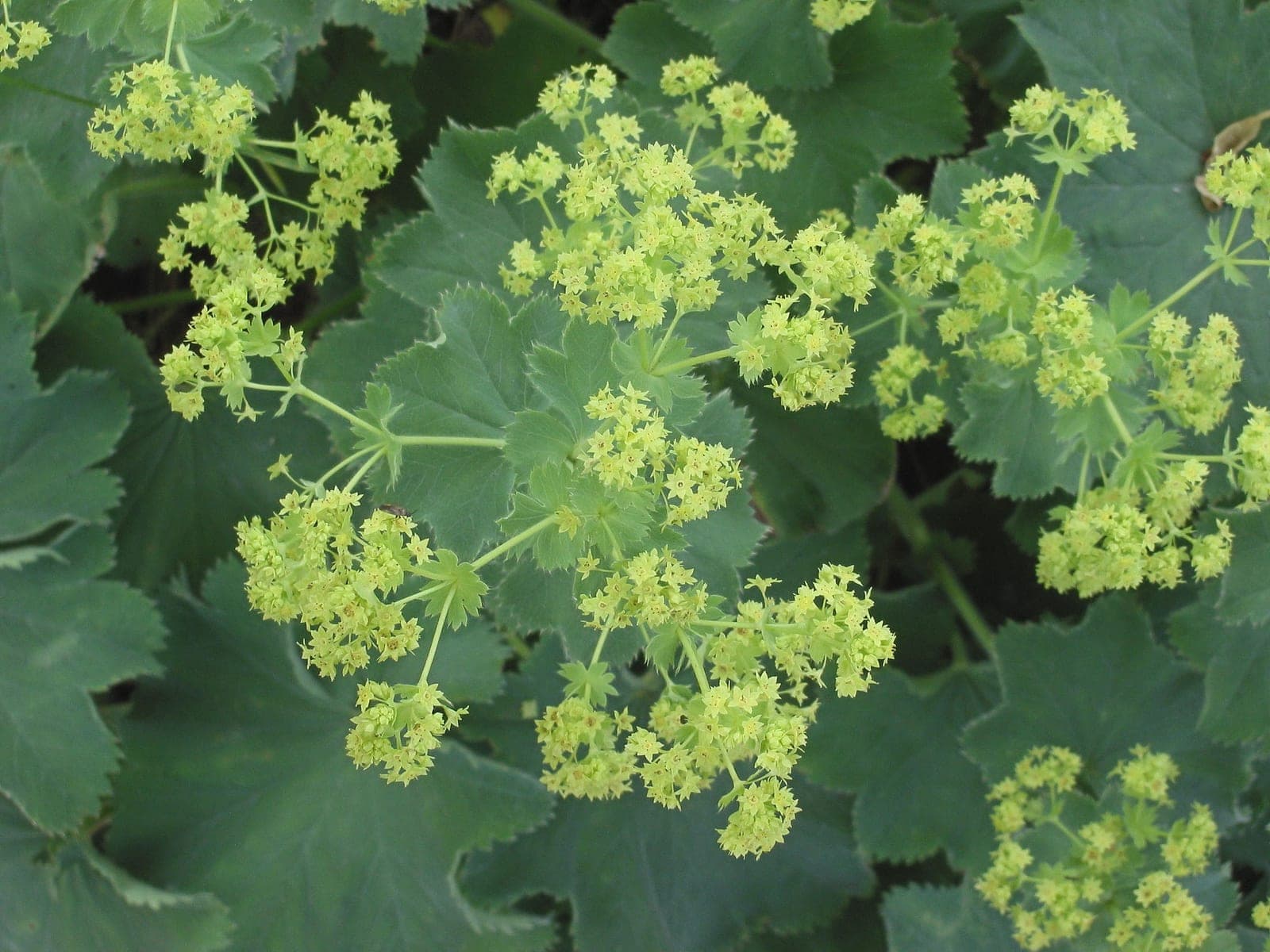
Lady's mantle is grown as much for its foliage as its flowers: soft, rounded, scalloped leaves with a fine covering of hairs that bead water and dew into perfect silver droplets, a detail that has made it a favorite of garden designers and photographers alike. Native to southern Europe and Asia Minor, it forms a tidy, weed-suppressing mound that sends up airy sprays of tiny chartreuse-yellow flowers in early summer, floating like a haze above the foliage - useful both as a border edging and as filler in cut arrangements.
It's an easy, low-maintenance perennial that tolerates a wide range of conditions but looks best with consistent moisture and some afternoon shade in hot climates, where leaf edges can scorch in full sun. Shearing the whole plant back hard after the first flush of flowers fades refreshes the foliage and prevents the modest self-seeding it's known for. Rarely troubled by deer or rabbits.
Fungal leaf spot
Brown or purplish spots on the leaves, often ringed with a yellow halo, that spread and merge in warm, humid, or wet weather; heavily spotted leaves yellow and drop early.
Pick off spotted leaves and clear fallen debris to remove overwintering spores. Improve air circulation by thinning, and water at the base so foliage dries quickly. If it persists, apply a copper- or sulfur-based fungicide at the first sign.