
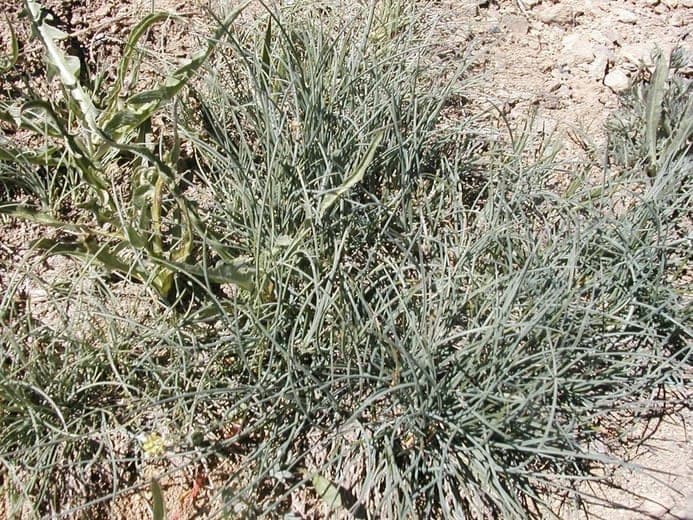
Roemer's fescue is a fine-leaved native bunchgrass endemic to Pacific Northwest prairies, particularly the Willamette Valley in Oregon and the Puget lowland in Washington. A keystone grass of the region's historically extensive but now largely fragmented prairie ecosystems, it is widely used in native habitat restoration and low-maintenance naturalistic plantings.
Cool-season in habit, it grows actively from fall through spring and enters semi-dormancy during summer heat and drought. Clumps are tidy and non-spreading, with blue-green to gray-green foliage that remains evergreen in mild winters. It performs best in well-drained, poor to moderately fertile soils and tolerates both moderate shade at oak savanna edges and full exposure in open meadows. Avoid heavy clay and sustained wet conditions. Mulch lightly at planting to aid establishment, but keep mulch clear of crowns. Historically maintained by Indigenous burning practices, established stands respond well to occasional prescribed or controlled burning in restoration contexts.
Roemer's fescue provides nesting structure for ground-nesting birds and supports several native skippers and other grassland-associated Lepidoptera as a larval host grass, making it an ecologically productive choice beyond its ornamental value.
Ecoregions:Northwestern Forested MountainsMarine West Coast ForestMediterranean California
Red Thread
Pink to red thread-like mycelial strands extend from leaf tips; affected blades turn tan or bleached and patches of grass appear water-soaked before drying to a straw color.
Improve drainage and air circulation around clumps. Avoid overhead irrigation, especially in the evening. Remove and dispose of heavily infected foliage. Apply a fungicide containing thiophanate-methyl or chlorothalonil if infection spreads; do not apply excess nitrogen, which favors the pathogen.
Crown Rot
Lower leaves yellow and wilt; the base of the rosette turns brown and soft, sometimes with white fungal threads at the soil line. Plants collapse in wet conditions.
Remove and destroy affected plants. Improve drainage and avoid overhead watering. Do not mulch directly against the crown. Space plants for airflow and avoid replanting in the same wet spot.
Root rot
Plants wilt, yellow, and stunt even in moist soil; lower stems and roots turn brown, soft, and mushy and the plant may collapse. Most common in heavy, wet, or poorly drained ground.
Improve drainage and stop overwatering, and never plant too deep. Lift and destroy badly affected plants along with the soil around the roots. Grow in raised or free-draining beds to prevent it returning.