
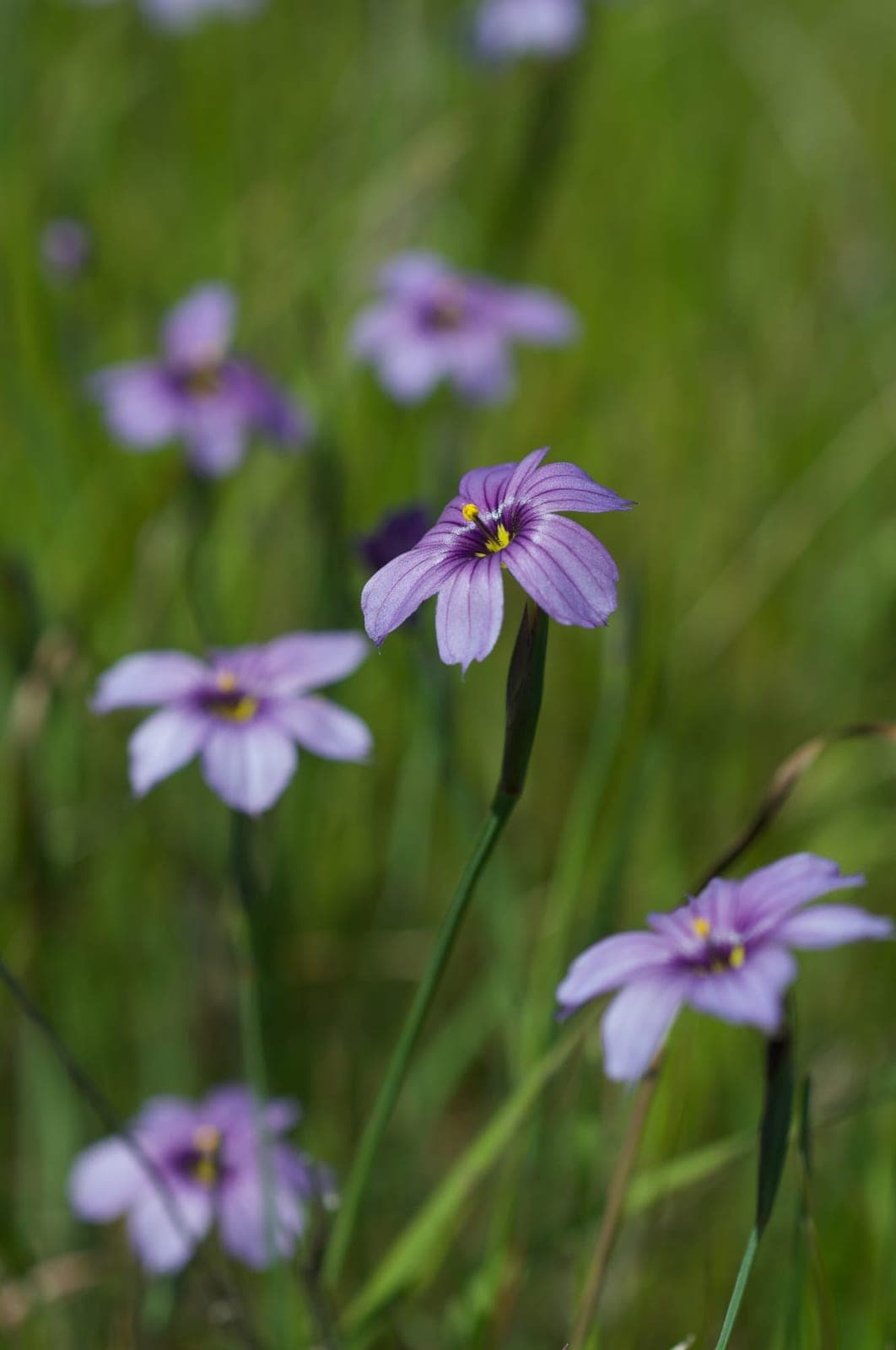
Sisyrinchium bellum is a California and Oregon native perennial in the iris family. Despite the common name, it is not a grass; its flat, two-ranked stems resemble grass foliage while small blue-violet flowers with a yellow center appear from late winter through spring. Native to meadows, grasslands, and coastal scrub from Oregon south through Baja California, it naturalizes readily and suits low-water ornamental plantings across the Pacific Coast.
The plant goes fully summer dormant once dry conditions set in, a trait well matched to Mediterranean-climate gardens. It self-seeds freely and spreads into meadow or turf-replacement plantings over time. Planting in fall coincides with the onset of seasonal rains and allows root establishment before the dry season. It tolerates clay soils and resists deer browsing. Divide congested clumps every three to four years in early fall to keep plants vigorous.
The flowers are an important early-season nectar source for native bees, particularly small solitary mining bees. It is widely used in habitat restoration plantings and California native plant gardens.
Ecoregions:Northwestern Forested MountainsMarine West Coast ForestMediterranean California
Root rot
Plants wilt, yellow, and stunt even in moist soil; lower stems and roots turn brown, soft, and mushy and the plant may collapse. Most common in heavy, wet, or poorly drained ground.
Improve drainage and stop overwatering, and never plant too deep. Lift and destroy badly affected plants along with the soil around the roots. Grow in raised or free-draining beds to prevent it returning.
Crown Rot
Lower leaves yellow and wilt; the base of the rosette turns brown and soft, sometimes with white fungal threads at the soil line. Plants collapse in wet conditions.
Remove and destroy affected plants. Improve drainage and avoid overhead watering. Do not mulch directly against the crown. Space plants for airflow and avoid replanting in the same wet spot.