
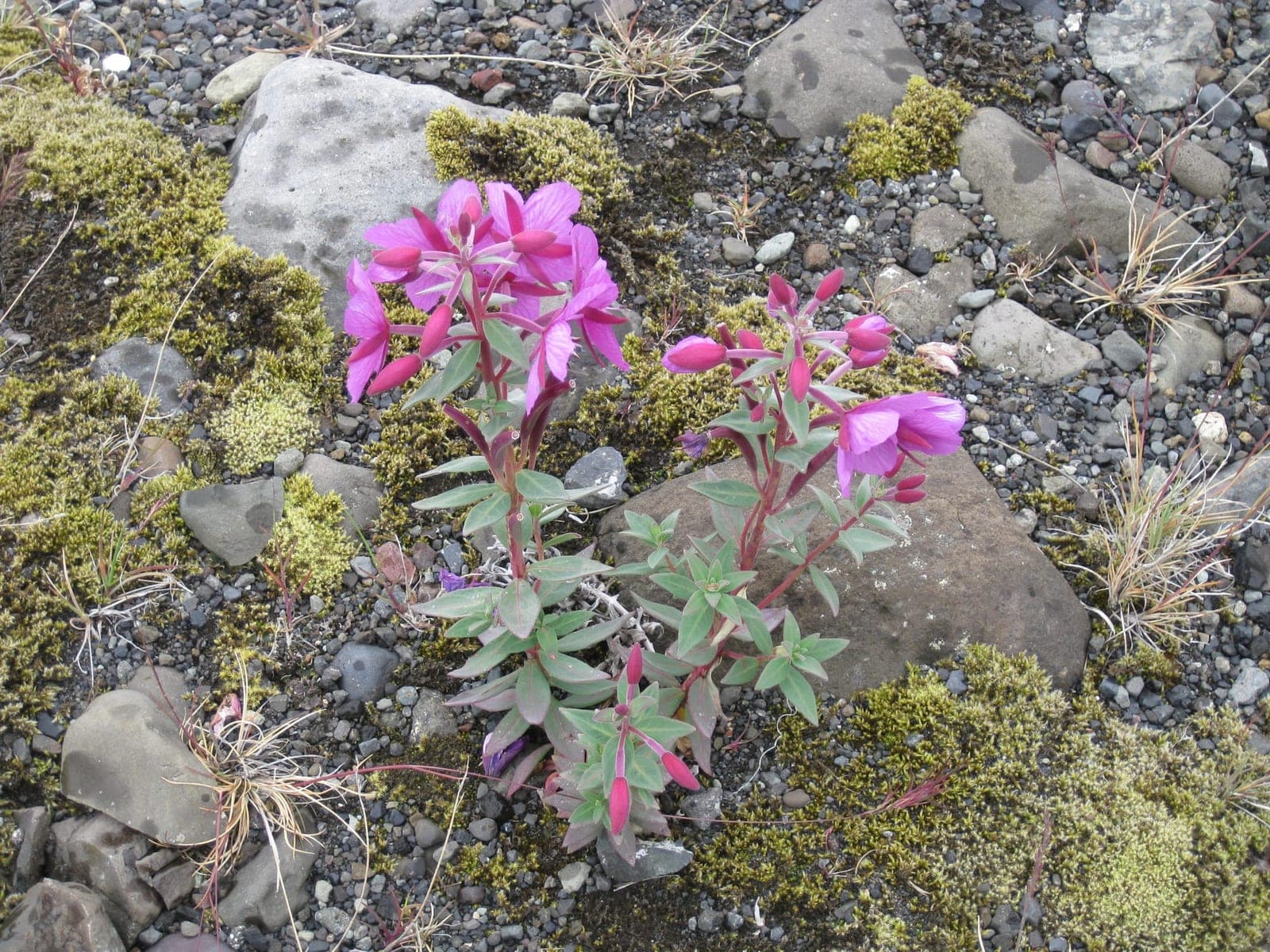
River beauty (Chamaenerion latifolium) is a circumboreal perennial herb in the evening primrose family, native to Arctic, sub-Arctic, and alpine zones across the Northern Hemisphere. It colonizes gravel bars, talus slopes, and snowmelt channels where few other flowering plants can establish, producing bright magenta-pink flowers in mid- to late summer. In cold-climate gardens it fills a role similar to its taller relative fireweed, but with a compact, clumping habit well suited to rock gardens and gravel beds.
Plants grow from a woody caudex that anchors them in shifting substrate and allows persistence through hard freeze-thaw cycles. As a pioneer species, river beauty performs best in lean, low-organic soils; rich amended beds encourage floppy growth and poor flowering. It needs consistent moisture, particularly in spring, and tolerates the rocky, fast-draining conditions typical of glacial outwash. Seeds are wind-dispersed and silky-tufted; plants self-seed modestly when conditions suit.
Young shoots and leaves have long been gathered as food by Arctic Indigenous peoples, eaten raw, boiled as greens, or added to soups, in the same manner as fireweed shoots.
Ecoregions:Arctic CordilleraTundraTaigaHudson PlainNorthern ForestsNorthwestern Forested MountainsMarine West Coast Forest
Powdery mildew
White or grey powdery coating on leaves - usually starting on older growth in humid conditions or when nights cool.
Improve air circulation by thinning plants. Apply neem oil or potassium bicarbonate spray at first sign. Avoid overhead watering.
Rust
Orange to brown raised pustules on the undersides of leaves, with yellow spotting on the upper surface. Heavy infections cause leaves to yellow and drop.
Remove and destroy infected leaves. Avoid overhead watering and improve air circulation. Apply a sulfur or copper-based fungicide if it spreads. Clear plant debris in fall.
Root rot
Plants wilt, yellow, and stunt even in moist soil; lower stems and roots turn brown, soft, and mushy and the plant may collapse. Most common in heavy, wet, or poorly drained ground.
Improve drainage and stop overwatering, and never plant too deep. Lift and destroy badly affected plants along with the soil around the roots. Grow in raised or free-draining beds to prevent it returning.