
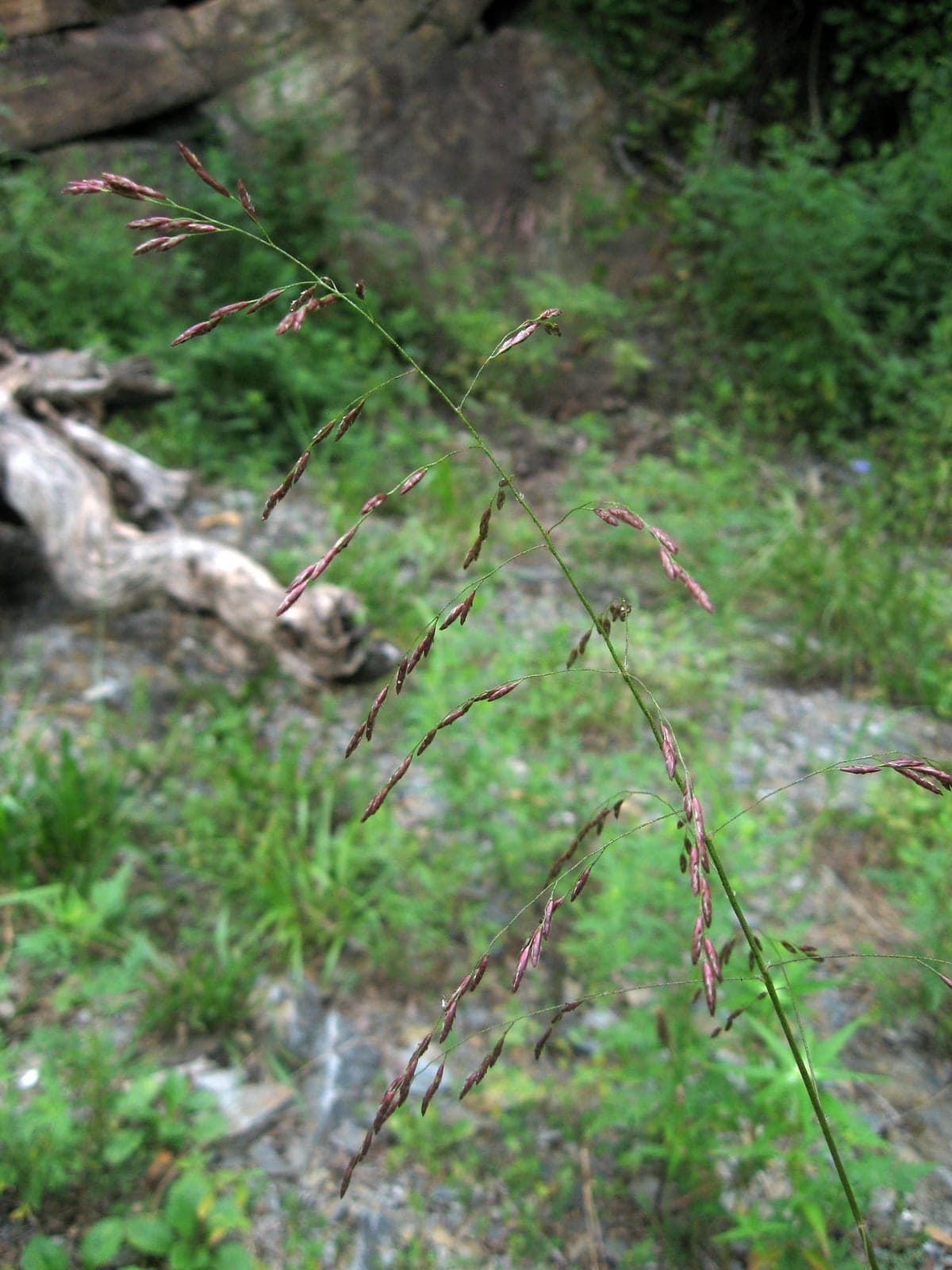
Tridens flavus is a robust native perennial bunchgrass of eastern North America, growing 3 to 5 feet tall with open panicles that ripen to a deep purple in late summer and fall. It colonizes disturbed ground, old fields, roadsides, and open woodlands, and its late-season color and architectural mass translate well into prairie-style and naturalistic plantings.
The grass establishes readily from seed and tolerates clay, compacted soil, and summer drought once rooted. Its florets produce a lipid secretion that gives them a greasy feel, the origin of the folk names greasy grass and grease grass. Cut clumps back to 4 to 6 inches in late winter before new growth begins; leaving stems standing through fall and winter provides both structure and wildlife value. Self-seeding can be significant near established stands.
Purpletop is a documented larval host for the Delaware Skipper and several related grass skippers. Ripened seed heads are taken by sparrows, juncos, and finches, and the dense clumped habit provides cover for ground-nesting birds.
Ecoregions:Eastern Temperate ForestsGreat Plains
Rust
Orange to brown raised pustules on the undersides of leaves, with yellow spotting on the upper surface. Heavy infections cause leaves to yellow and drop.
Remove and destroy infected leaves. Avoid overhead watering and improve air circulation. Apply a sulfur or copper-based fungicide if it spreads. Clear plant debris in fall.
Helminthosporium Leaf Spot
Small oval to elongated tan or brown lesions with reddish-purple borders appear on leaf blades and sheaths. In severe cases, blades yellow and die back from the tip downward.
Remove and dispose of heavily infected foliage. Avoid overhead irrigation and improve air circulation by thinning dense plantings. Fungicide applications are rarely warranted on established native grasses; correcting site conditions - spacing, drainage, and fertility - is the primary control.