
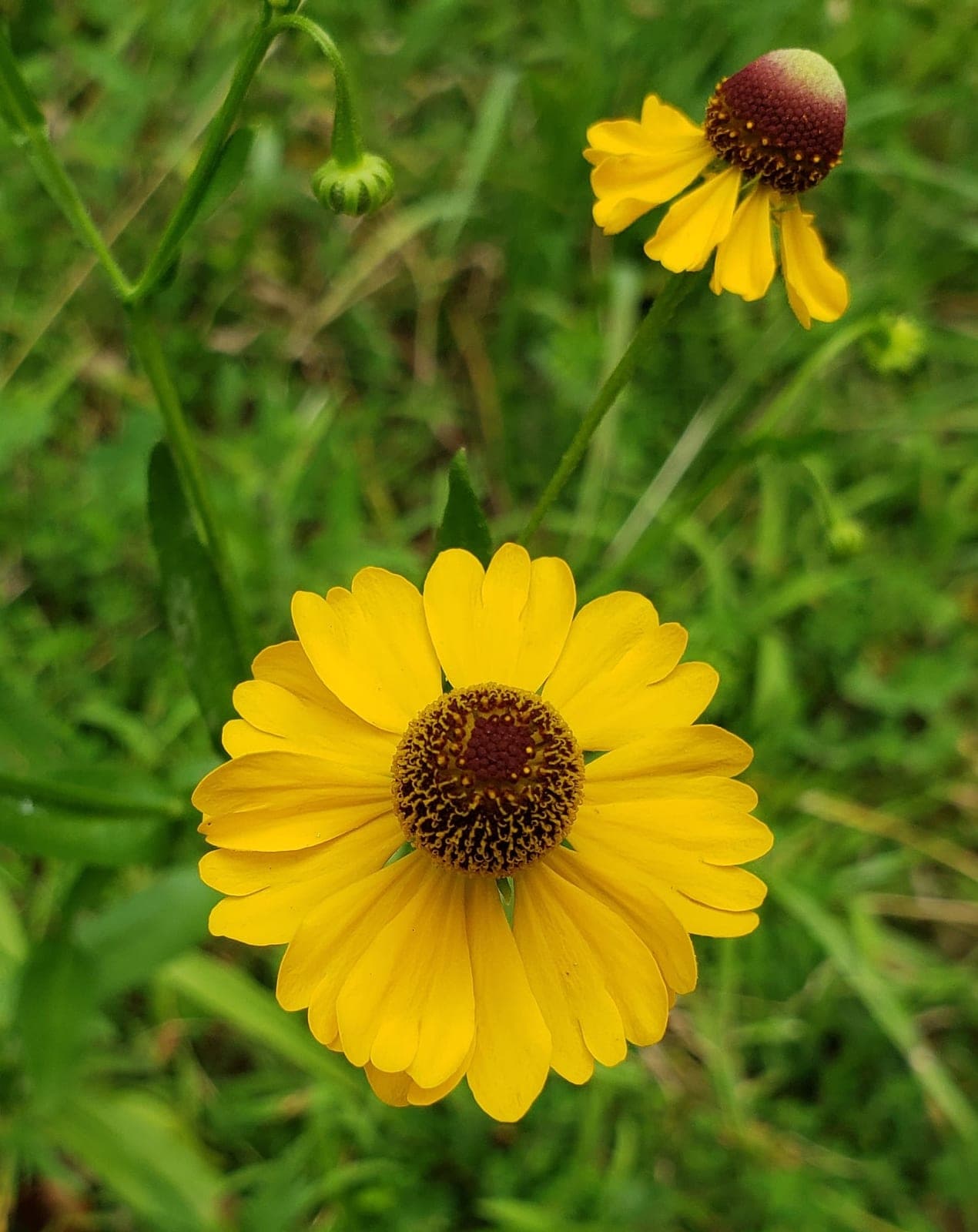
Helenium flexuosum is a native North American perennial in the daisy family, widespread across eastern and central US and Canada from Nova Scotia to eastern Texas. Its yellow ray petals surround a raised, dome-shaped disc that deepens from yellow to purplish-brown as it matures, giving the species its common name. It blooms from midsummer well into fall, providing a reliable nectar and pollen source for native bees, butterflies, and beneficial wasps during the late-season period.
In the wild it colonizes moist meadows, streambanks, ditches, and low-lying roadsides. In gardens it performs best in consistently moist soil with full sun, and tolerates brief flooding. Plants self-seed readily and build spreading clumps. Cutting stems back by one-third in early summer produces sturdier, branching growth and staggers the bloom period; dividing congested clumps every three to four years maintains vigor. Prefers near-neutral to slightly acidic soil pH.
The name 'sneezeweed' traces to the practice of grinding dried plant material into snuff to provoke sneezing. The plant contains sesquiterpene lactones including helenalin, which are toxic to livestock - heavy grazing by sheep or cattle causes a vomiting syndrome historically called spewing sickness. Sap contact can cause skin irritation in sensitive individuals.
Ecoregions:Northern ForestsEastern Temperate ForestsGreat Plains
Powdery mildew
White or grey powdery coating on leaves - usually starting on older growth in humid conditions or when nights cool.
Improve air circulation by thinning plants. Apply neem oil or potassium bicarbonate spray at first sign. Avoid overhead watering.
Rust
Orange to brown raised pustules on the undersides of leaves, with yellow spotting on the upper surface. Heavy infections cause leaves to yellow and drop.
Remove and destroy infected leaves. Avoid overhead watering and improve air circulation. Apply a sulfur or copper-based fungicide if it spreads. Clear plant debris in fall.
Fungal leaf spot
Brown or purplish spots on the leaves, often ringed with a yellow halo, that spread and merge in warm, humid, or wet weather; heavily spotted leaves yellow and drop early.
Pick off spotted leaves and clear fallen debris to remove overwintering spores. Improve air circulation by thinning, and water at the base so foliage dries quickly. If it persists, apply a copper- or sulfur-based fungicide at the first sign.
Aster Yellows
Deformed, greenish flowers, stunted growth, and yellowed foliage. Flower centers may produce tufts of leafy growth instead of normal petals.
No cure. Remove and destroy infected plants immediately to stop spread. Control leafhoppers, which transmit the disease, and remove nearby weed hosts.