
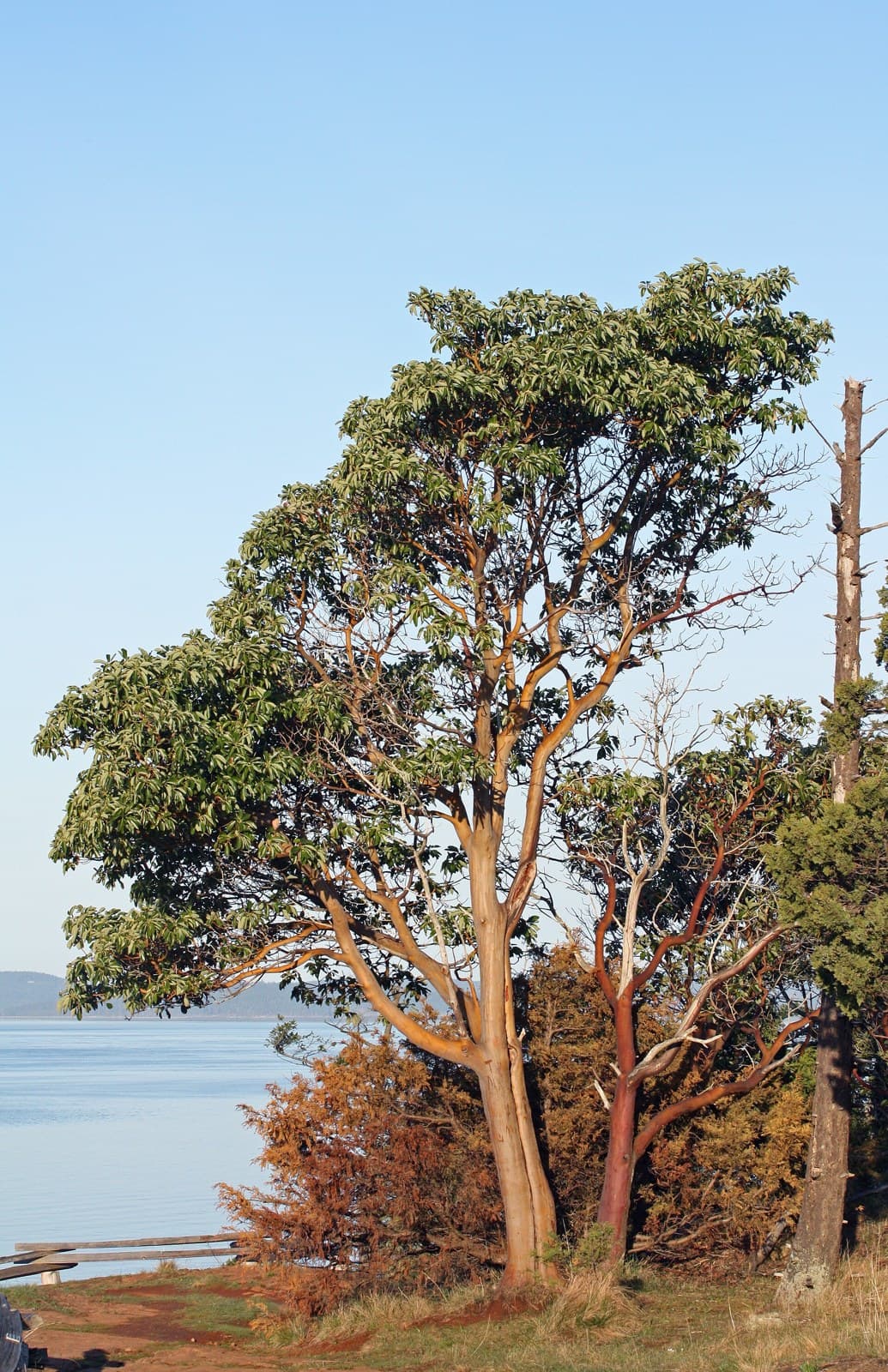
Pacific Madrone (Arbutus menziesii) is a broadleaf evergreen tree native to the Pacific Coast of North America from British Columbia to Baja California. Its exfoliating reddish-brown bark peels away each year to reveal smooth, chartreuse to cinnamon-toned inner bark. White, urn-shaped spring flowers give way to clusters of bright orange-red berries in fall, making it one of the most structurally and ecologically distinctive trees in western North American forests.
Madrone is notoriously difficult to establish from nursery stock. It strongly resents root disturbance and, critically, any summer irrigation - excess soil moisture during the dry season is the leading cause of decline in cultivated trees. Plant small container-grown specimens (1-gallon or smaller) in fall, do not irrigate after the first establishment season, and avoid disturbing soil within the root zone. It performs best on slopes or rocky, well-drained ground with good air circulation. Intolerant of clay and compacted soils. In zone 7a, avoid cold air drainage sites where late frost can settle.
Coast Salish, Ohlone, and other Pacific Coast peoples used bark and leaf decoctions for colds, stomach complaints, and wound treatment. The berries are edible - eaten fresh, dried, or fermented into a mild beverage. Fruit is a critical winter food source for band-tailed pigeons, cedar waxwings, and American robins.
Ecoregions:Northwestern Forested MountainsMarine West Coast ForestMediterranean California
Phytophthora Root Rot
Wilting despite moist soil, yellowing leaves, stunted growth, and dark, decayed roots and crown tissue. Vines may collapse during hot weather.
Plant in well-draining soil and avoid waterlogging. Remove and destroy affected vines. Improve drainage with raised beds or amended soil and avoid overwatering.
Sudden Oak Death
Reddish-brown to black bleeding cankers on the lower trunk ooze dark sap; inner bark beneath the canker is stained deep red-brown. Foliage may wilt and die rapidly as the canker girdles the stem. Leaf lesions occur on some hosts but are secondary on oaks.
No systemic cure is available once infection is established. Preventive trunk injections with potassium phosphite applied before infection can slow canker progression in high-risk areas. Remove and chip or burn infected wood on-site; do not transport infected material off the property. Report confirmed or suspected cases to the California Department of Food and Agriculture.
Armillaria Root Rot
Thinning, yellowing canopy with progressive dieback; white, fan-shaped mycelial mats visible beneath bark at or just below the soil line; honey-colored mushroom clusters appearing at the trunk base or on surface roots in autumn.
No chemical cure exists. Improve drainage and avoid any injury to roots or trunk. Remove severely infected trees along with as much root material as possible. Do not replant susceptible species in the same spot.
Botryosphaeria Canker
Dark, sunken cankers on stems and major branches, most often occurring after drought stress or mechanical wounding. Bark peeled back from affected areas reveals brown, discolored wood beneath. Branch tips wilt and die back progressively inward.
Prune infected branches at least 6 inches below the visible canker margin using sterilized tools, and dispose of all cuttings away from the garden. Reduce plant stress by maintaining consistent irrigation during dry periods and avoiding bark wounds during maintenance. No curative fungicide is available; keeping plants vigorous is the primary preventive strategy.
Fungal leaf spot
Brown or purplish spots on the leaves, often ringed with a yellow halo, that spread and merge in warm, humid, or wet weather; heavily spotted leaves yellow and drop early.
Pick off spotted leaves and clear fallen debris to remove overwintering spores. Improve air circulation by thinning, and water at the base so foliage dries quickly. If it persists, apply a copper- or sulfur-based fungicide at the first sign.
Rust
Orange to brown raised pustules on the undersides of leaves, with yellow spotting on the upper surface. Heavy infections cause leaves to yellow and drop.
Remove and destroy infected leaves. Avoid overhead watering and improve air circulation. Apply a sulfur or copper-based fungicide if it spreads. Clear plant debris in fall.