
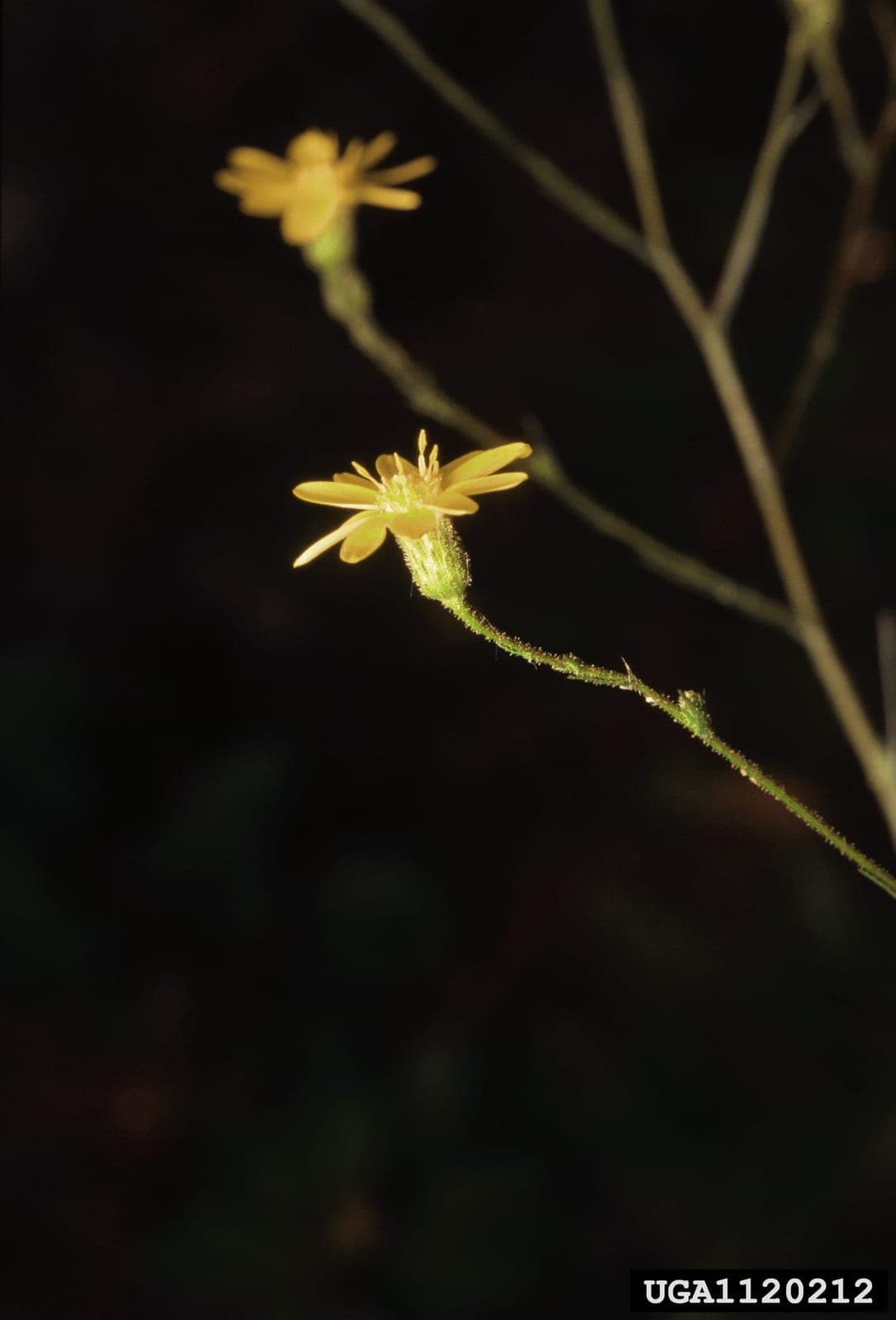
Narrowleaf silkgrass is a fibrous-rooted native perennial in the Asteraceae family, widespread across the southeastern United States from coastal sandhills to longleaf pine woodlands. Dense silvery hairs coat the narrow, grasslike leaves year-round, giving the plant persistent textural interest. Small yellow daisy-like heads with ray and disk florets appear in late summer and fall, providing nectar for native bees and small butterflies at a season when many plants have finished.
This species is adapted to nutrient-poor, sandy, well-drained soils and performs poorly in rich or consistently moist ground, which promotes floppy growth and root problems. No fertilizer is needed, and established plants require no supplemental water in most of its native range. It spreads slowly by fibrous roots into loose colonies and is well suited to dry native meadows, open woodland edges, roadsides, and longleaf pine ecosystem restoration plantings. Slightly acidic, sandy soils with good drainage best replicate its natural habitat.
Ecoregions:Eastern Temperate ForestsGreat PlainsTropical Wet Forests
Root rot
Plants wilt, yellow, and stunt even in moist soil; lower stems and roots turn brown, soft, and mushy and the plant may collapse. Most common in heavy, wet, or poorly drained ground.
Improve drainage and stop overwatering, and never plant too deep. Lift and destroy badly affected plants along with the soil around the roots. Grow in raised or free-draining beds to prevent it returning.
Fungal leaf spot
Brown or purplish spots on the leaves, often ringed with a yellow halo, that spread and merge in warm, humid, or wet weather; heavily spotted leaves yellow and drop early.
Pick off spotted leaves and clear fallen debris to remove overwintering spores. Improve air circulation by thinning, and water at the base so foliage dries quickly. If it persists, apply a copper- or sulfur-based fungicide at the first sign.