
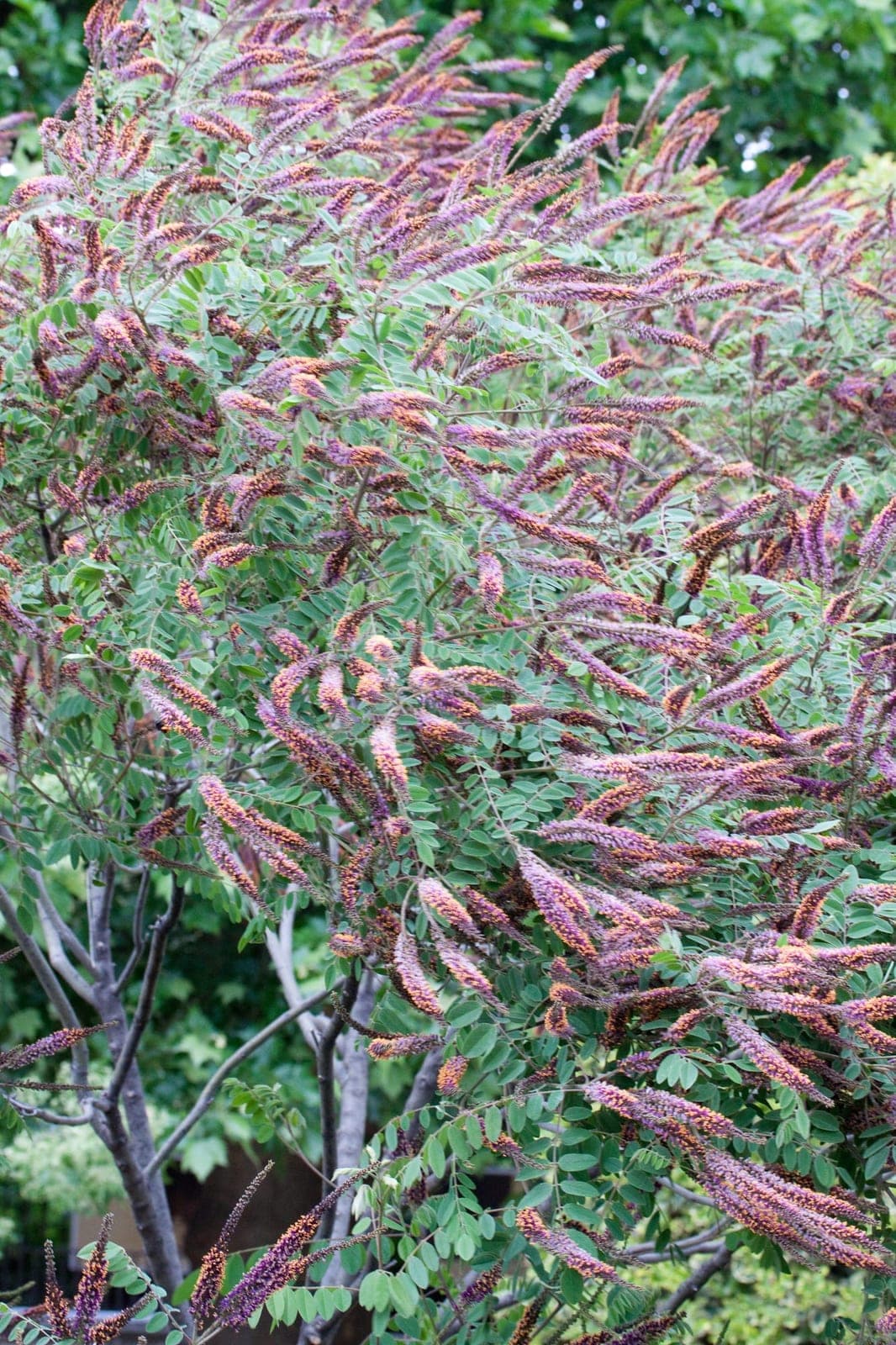
Leadplant (Amorpha canescens) is a native semi-shrub of the tallgrass and mixed-grass prairies of central North America. It grows 2–4 ft tall with gray-green compound leaves densely covered in silver hairs that give the foliage its leaden cast, and produces long, narrow clusters of small purple flowers with bright yellow stamens from late June through September. It fixes atmospheric nitrogen through root nodules and provides nectar and pollen for native bees and specialist Amorpha-feeding insects.
Ecologists treat leadplant as an indicator of unplowed native prairie; its presence strongly suggests topsoil that has never been turned. The taproot can reach 16 ft deep, making established plants exceptionally drought tolerant and essentially impossible to transplant successfully. Growth is slow in the first two years while the root system develops. It thrives in infertile, sandy, rocky, or loamy soils and handles cold to zone 2b without protection. Mulch lightly during establishment to conserve moisture, but avoid heavy mulch that holds water against the crown. pH from mildly acidic to mildly alkaline is acceptable. Plants can be cut hard in late winter to maintain a tidy habit and stimulate vigorous regrowth.
Several Plains tribes used leadplant medicinally. Leaf decoctions were applied externally to skin conditions and wounds, and some groups used internal preparations to treat intestinal parasites. The Lakota dried and smoked the leaves.
Ecoregions:Northern ForestsNorthwestern Forested MountainsEastern Temperate ForestsGreat Plains
Root rot
Plants wilt, yellow, and stunt even in moist soil; lower stems and roots turn brown, soft, and mushy and the plant may collapse. Most common in heavy, wet, or poorly drained ground.
Improve drainage and stop overwatering, and never plant too deep. Lift and destroy badly affected plants along with the soil around the roots. Grow in raised or free-draining beds to prevent it returning.
Powdery mildew
White or grey powdery coating on leaves - usually starting on older growth in humid conditions or when nights cool.
Improve air circulation by thinning plants. Apply neem oil or potassium bicarbonate spray at first sign. Avoid overhead watering.