
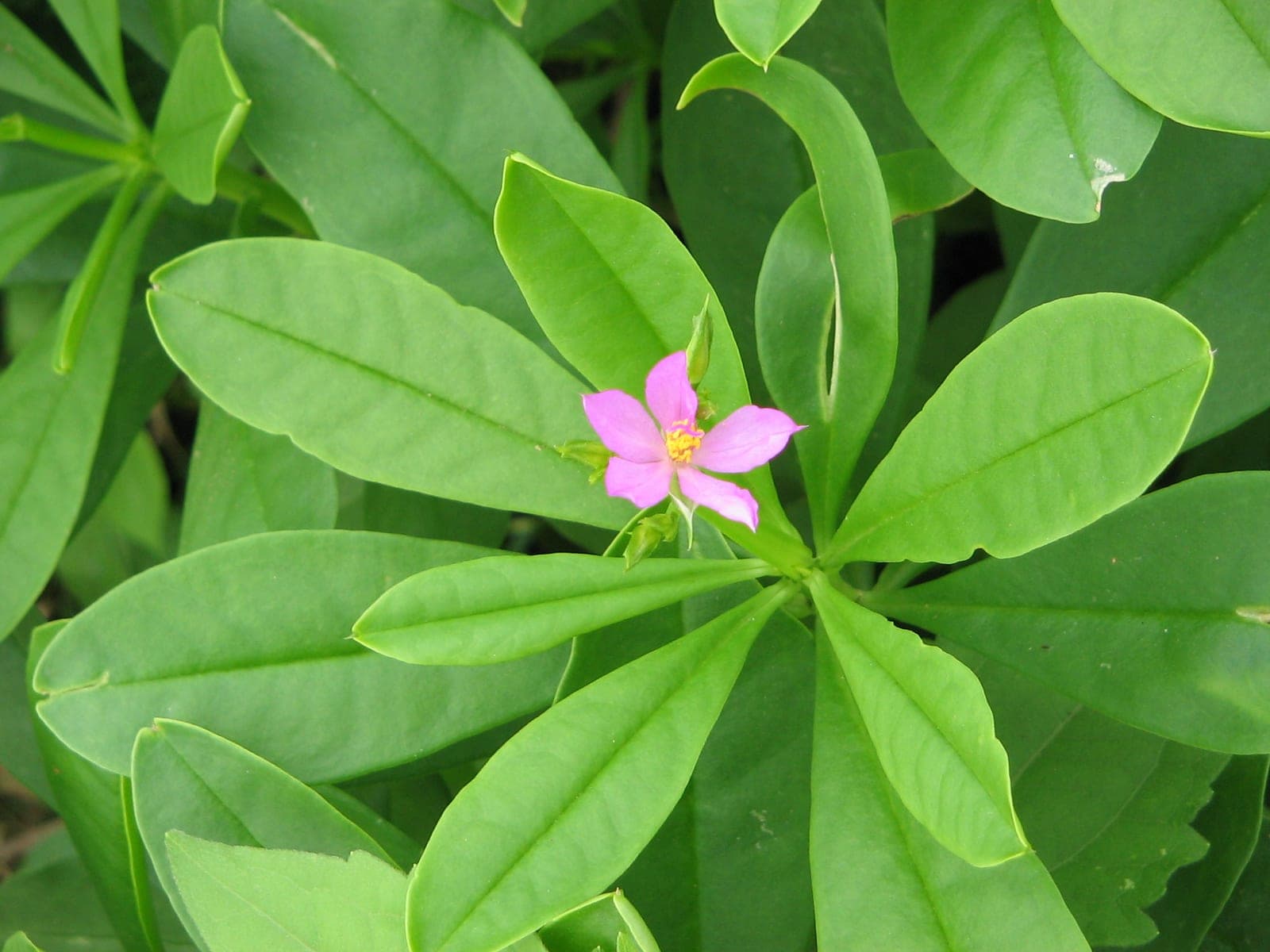
Talinum paniculatum, commonly fameflower or jewels of opar, is a succulent-leaved plant grown chiefly for its glossy, thick chartreuse-gold foliage in the 'Aureum' selection. Above the mounding rosettes, wiry stems rise well past the foliage carrying loose, branching sprays of tiny five-petaled pink flowers that open in the afternoon, followed by round seed capsules that ripen to a jewel-like coppery red-brown - the source of both common names. It self-seeds readily and often reappears from dropped seed the following year even where it doesn't overwinter.
It is a tender perennial in Zones 8 and warmer and a warm-season annual elsewhere; direct sow after the soil has warmed, since seed is slow to germinate in cool soil. Full sun brings out the strongest gold foliage color; in shadier spots the leaves stay more green. The thick, mildly mucilaginous leaves are edible raw or cooked, with a texture close to purslane, and the species has a long history as a leaf vegetable - known as waterleaf - in parts of tropical America and West Africa.
Ecoregions:Eastern Temperate ForestsGreat PlainsNorth American DesertsSouthern Semi-Arid Highlands
Root rot
Plants wilt, yellow, and stunt even in moist soil; lower stems and roots turn brown, soft, and mushy and the plant may collapse. Most common in heavy, wet, or poorly drained ground.
Improve drainage and stop overwatering, and never plant too deep. Lift and destroy badly affected plants along with the soil around the roots. Grow in raised or free-draining beds to prevent it returning.