
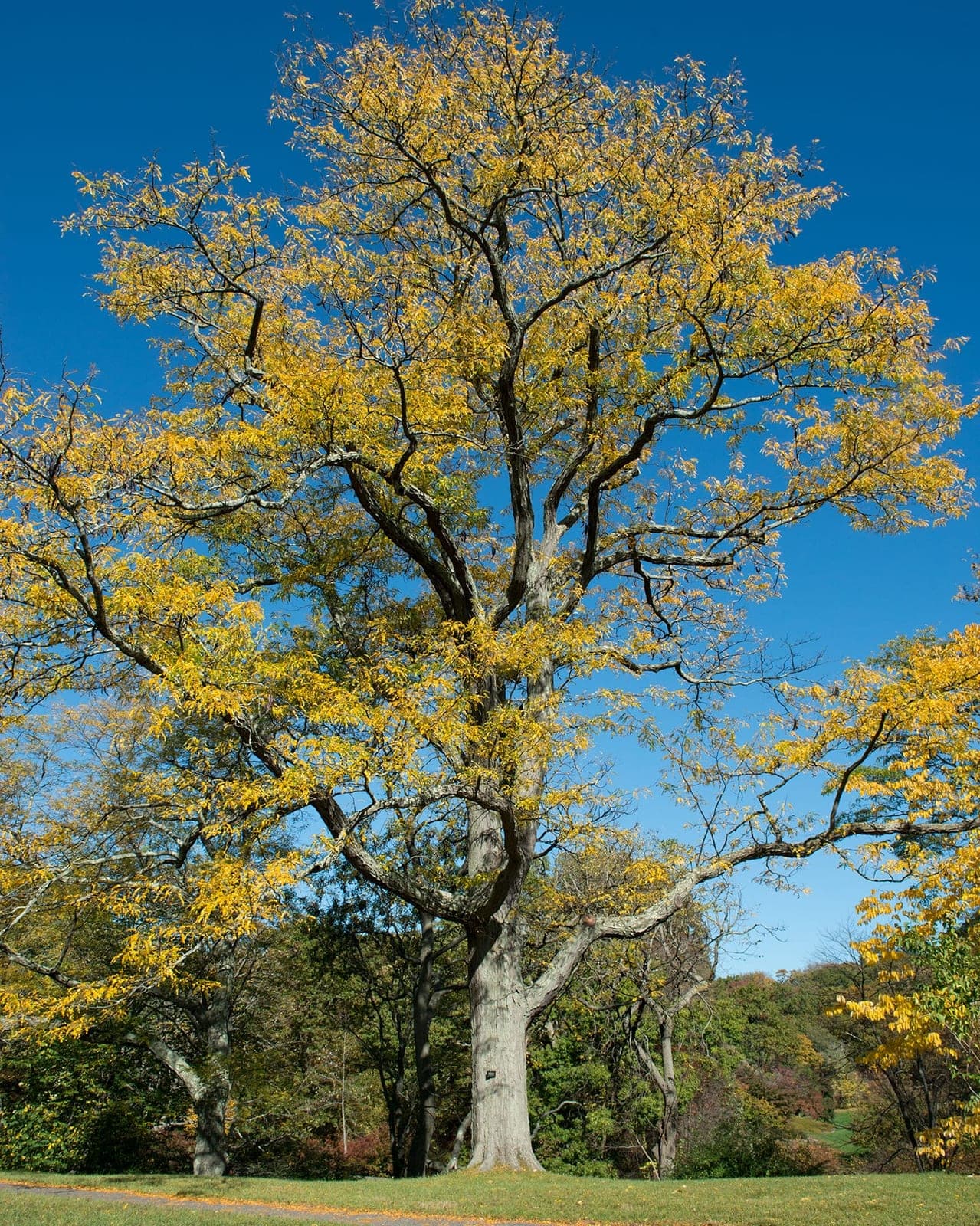
Honeylocust (Gleditsia triacanthos) is a fast-growing deciduous tree native to river valleys of central North America. It typically reaches 30–70 ft and produces long, leathery seed pods containing sweet edible pulp. Wild trees bear formidable branched trunk thorns; the thornless cultivar group (var. inermis) dominates the nursery trade and is the standard choice for planned landscapes. Unlike most members of Fabaceae, honeylocust does not form nitrogen-fixing root nodules.
Few shade trees match this species for tolerance of urban adversity: it withstands drought, soil compaction, alkaline pH, road salt, and air pollution. Fine pinnate leaves cast dappled shade light enough for lawn grass to persist beneath the canopy, and the small leaflets break down quickly without heavy raking. Outside its native range, honeylocust spreads readily along disturbed roadsides and is considered invasive in parts of Europe and Australia; check local regulations before planting. Thornless cultivars grown on their own roots can produce thorny root suckers, which should be removed as they appear.
Seed pods were consumed by indigenous peoples across its range - the sweet pulp eaten fresh or fermented into a beverage - and remain a significant food source for deer, cattle, and small mammals. The wood is exceptionally hard and rot-resistant, used historically for fence posts, railroad ties, and tool handles.
Ecoregions:Eastern Temperate ForestsGreat Plains
Thyronectria Canker
Elongated, sunken cankers form on branches and the main trunk; bark over infected areas shows orange-red discoloration beneath the surface when sliced. Small orange wart-like spore pustules appear on canker margins during wet weather. Foliage and branches above the canker wilt and die back.
Prune cankered wood at least 6 inches below visible discoloration and disinfect tools between cuts with 70% isopropyl alcohol. Avoid pruning during wet weather to limit spore dispersal. No chemical treatment is effective once infection is established; focus on maintaining tree vigor through proper siting and avoiding bark wounds from equipment or improper pruning.
Botryosphaeria Canker
Dark, sunken cankers on stems and major branches, most often occurring after drought stress or mechanical wounding. Bark peeled back from affected areas reveals brown, discolored wood beneath. Branch tips wilt and die back progressively inward.
Prune infected branches at least 6 inches below the visible canker margin using sterilized tools, and dispose of all cuttings away from the garden. Reduce plant stress by maintaining consistent irrigation during dry periods and avoiding bark wounds during maintenance. No curative fungicide is available; keeping plants vigorous is the primary preventive strategy.
Fungal leaf spot
Brown or purplish spots on the leaves, often ringed with a yellow halo, that spread and merge in warm, humid, or wet weather; heavily spotted leaves yellow and drop early.
Pick off spotted leaves and clear fallen debris to remove overwintering spores. Improve air circulation by thinning, and water at the base so foliage dries quickly. If it persists, apply a copper- or sulfur-based fungicide at the first sign.
Powdery mildew
White or grey powdery coating on leaves - usually starting on older growth in humid conditions or when nights cool.
Improve air circulation by thinning plants. Apply neem oil or potassium bicarbonate spray at first sign. Avoid overhead watering.