
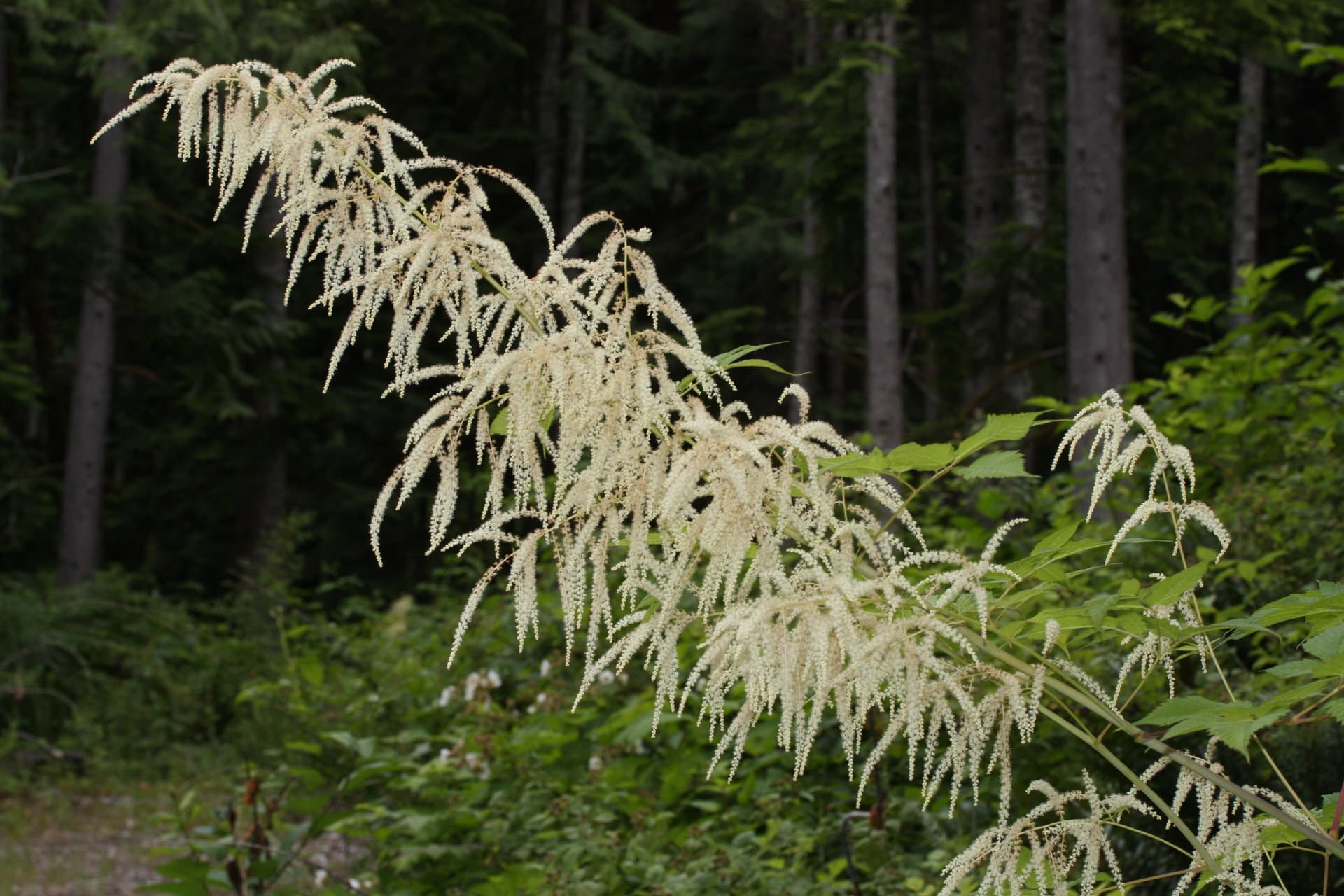
Aruncus dioicus is a large, clump-forming native perennial suited to deep shade and consistently moist soil - conditions that exclude most flowering ornamentals. It builds tall mounds of ferny, compound foliage topped by feathery cream-white plumes in early summer. The plant is dioecious, meaning male and female flowers occur on separate individuals; male plants produce brighter, more upright plumes, while female plants persist longer after peak display and set seed.
Established plants are slow to settle but exceptionally long-lived, often persisting for decades in place. It naturalizes well along streambanks and in woodland understories without becoming invasive. It tolerates clay soils provided drainage is adequate, and it is cold-hardy to zone 3 with no special winter protection needed. A consistent mulch layer conserves the soil moisture it requires and prevents competing weeds.
Cherokee and other Native American peoples applied root preparations externally for bee stings and rheumatic complaints. Young spring shoots have been used as a cooked vegetable, prepared similarly to asparagus, by Indigenous groups in North America.
Ecoregions:Northwestern Forested MountainsMarine West Coast ForestEastern Temperate Forests
Powdery mildew
White or grey powdery coating on leaves - usually starting on older growth in humid conditions or when nights cool.
Improve air circulation by thinning plants. Apply neem oil or potassium bicarbonate spray at first sign. Avoid overhead watering.
Fungal leaf spot
Brown or purplish spots on the leaves, often ringed with a yellow halo, that spread and merge in warm, humid, or wet weather; heavily spotted leaves yellow and drop early.
Pick off spotted leaves and clear fallen debris to remove overwintering spores. Improve air circulation by thinning, and water at the base so foliage dries quickly. If it persists, apply a copper- or sulfur-based fungicide at the first sign.