
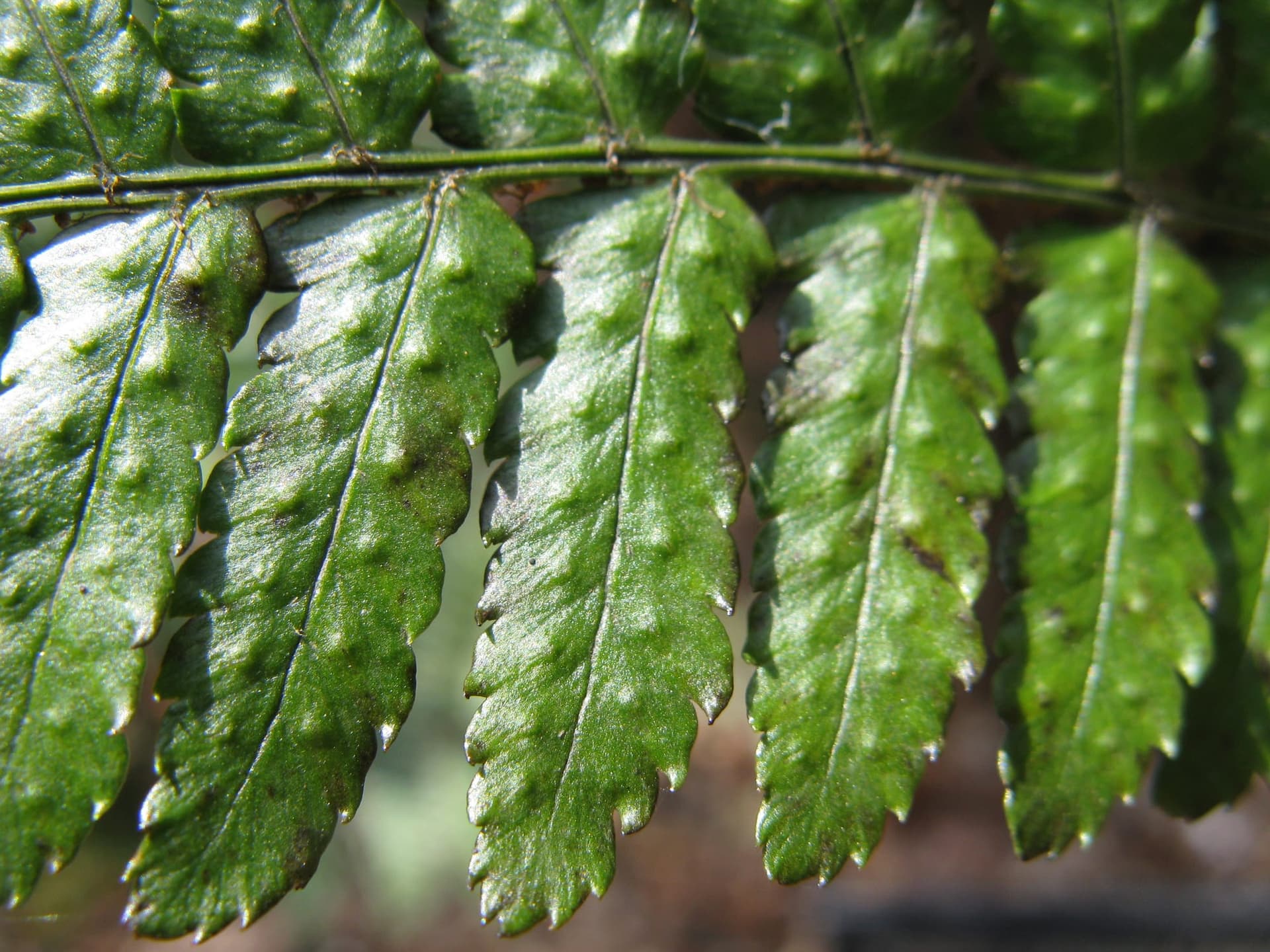
'Gro-low' is a low-growing selection of fragrant sumac that stays around 2–3 ft tall and spreads 6–8 ft wide, so it works as a woody groundcover rather than a shrub in the usual sense. Small yellow catkin-like flowers open on bare stems early in the year, before the glossy three-leaflet leaves emerge. The leaves smell resinous and citrusy when crushed, hairy red fruit clusters ripen through summer and feed birds, and in autumn the foliage turns red, orange, and purple.
Its value is in tough sites. It handles dry, thin, rocky, and clay soils, full sun to part shade, and the cold of zone 2, and it roots where low stems touch the ground, which knits a bank together. That makes it a standard answer for erosion control on slopes, road cuts, and the hot strip beside pavement. It dislikes wet feet, so give it drainage and skip the rich soil and heavy feeding that make it floppy. Because the leaf has three leaflets, people often mistake it for poison ivy; it is a different plant, but learn the two apart before clearing a bank. Where the species itself is wanted at 3–6 ft, buy plain fragrant sumac instead.
Ecoregions:Eastern Temperate Forests
Powdery mildew
White or grey powdery coating on leaves - usually starting on older growth in humid conditions or when nights cool.
Improve air circulation by thinning plants. Apply neem oil or potassium bicarbonate spray at first sign. Avoid overhead watering.
Fungal leaf spot
Brown or purplish spots on the leaves, often ringed with a yellow halo, that spread and merge in warm, humid, or wet weather; heavily spotted leaves yellow and drop early.
Pick off spotted leaves and clear fallen debris to remove overwintering spores. Improve air circulation by thinning, and water at the base so foliage dries quickly. If it persists, apply a copper- or sulfur-based fungicide at the first sign.