
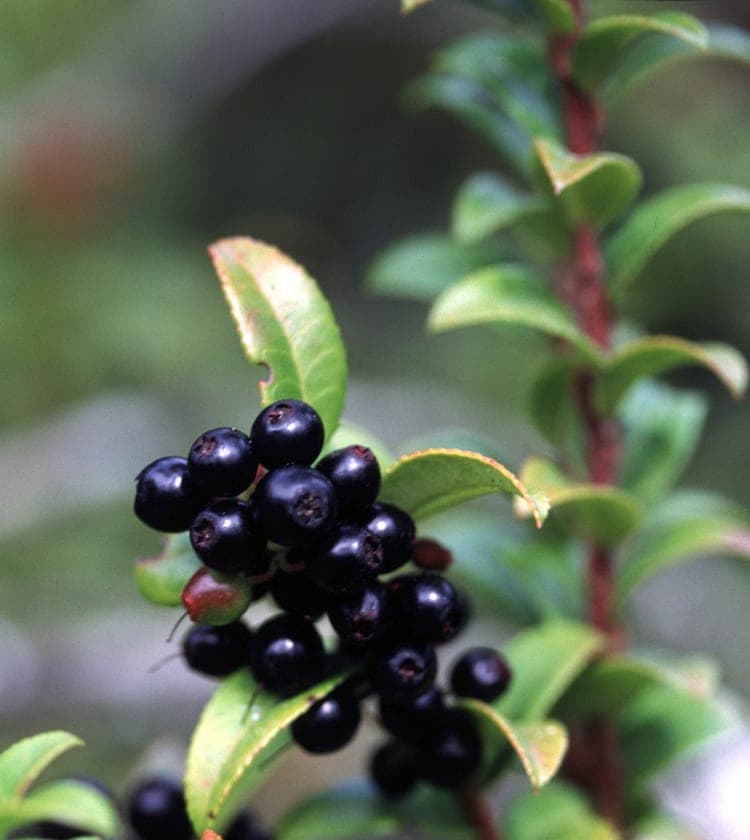
Vaccinium ovatum is a slow-growing evergreen shrub native to Pacific coastal forests and chaparral from British Columbia to central California. New foliage emerges copper-bronze in spring and matures to glossy dark green, making it ornamental year-round. The cut stems are a staple of the commercial floral industry, sold as long-lasting filler greens.
In the garden it excels as a hedge, foundation plant, or woodland understory shrub. It tolerates more shade than most fruiting shrubs, though berry production increases with more light. Acidic, humus-rich soil with reliable organic mulch is essential; plants establish slowly but gain considerable drought tolerance once rooted. Avoid heavy clay or poorly drained sites. pH of 4.5–5.5 is ideal, similar to blueberry culture.
Small black berries ripen August through October and are eaten fresh or used in jams, syrups, and baked goods. Indigenous peoples of the Pacific Coast gathered them as a staple food. The berries contain high levels of anthocyanins, consistent with other Vaccinium species.
Ecoregions:Northwestern Forested MountainsMarine West Coast ForestMediterranean California
Mummy Berry
New shoots and leaves wilt, blacken, and die in spring. Infected berries turn tan or pink, shrivel into hard 'mummies', and drop to the ground.
Remove and destroy mummified berries and blighted shoots. Rake and dispose of fallen fruit and leaves. Apply 2 inches of fresh mulch in early spring to bury overwintering spores, and prune for airflow.
Phytophthora Root Rot
Wilting despite moist soil, yellowing leaves, stunted growth, and dark, decayed roots and crown tissue. Vines may collapse during hot weather.
Plant in well-draining soil and avoid waterlogging. Remove and destroy affected vines. Improve drainage with raised beds or amended soil and avoid overwatering.
Fungal leaf spot
Brown or purplish spots on the leaves, often ringed with a yellow halo, that spread and merge in warm, humid, or wet weather; heavily spotted leaves yellow and drop early.
Pick off spotted leaves and clear fallen debris to remove overwintering spores. Improve air circulation by thinning, and water at the base so foliage dries quickly. If it persists, apply a copper- or sulfur-based fungicide at the first sign.
Botrytis (grey mould)
Grey fuzzy mould on petals and stems, worst in cool wet conditions.
Remove affected parts immediately. Improve air circulation. Avoid overhead watering. Apply copper fungicide if severe.