
Rosa californica is a native deciduous shrub reaching 3–8 ft, bearing clusters of single pink flowers in summer and small red hips that persist through fall and into winter. It earns its place in the garden as wildlife habitat, a thorny barrier hedge, and a bank stabilizer, while fitting naturally into California native and drought-tolerant plantings.
Naturally found along stream banks, woodland edges, and chaparral slopes from Oregon through Baja California, it tolerates drought once established but grows most vigorously in moderately moist, well-drained soil. It spreads freely by root suckers; in confined spaces, remove suckers at ground level promptly to prevent colony formation. Full sun maximizes hip production; light shade is tolerated but reduces yield. Grows in a wide range of soils including heavy clay, provided drainage is adequate. pH adaptability is broad, and established plants need little supplemental irrigation in most California climates.
Rose hips from this species are rich in vitamin C and have been used by Indigenous California peoples for generations. They are edible raw, dried for tea, or cooked into jelly and syrup, and have traditional associations with treating colds, mild inflammation, and digestive complaints.
Growing roses? Read the Rose Care Calendar — pruning by class, feeding, pests, climbers, and growing for hips, timed to your frost dates.Powdery mildew
White or grey powdery coating on leaves — usually starting on older growth in humid conditions or when nights cool.
Improve air circulation by thinning plants. Apply neem oil or potassium bicarbonate spray at first sign. Avoid overhead watering.
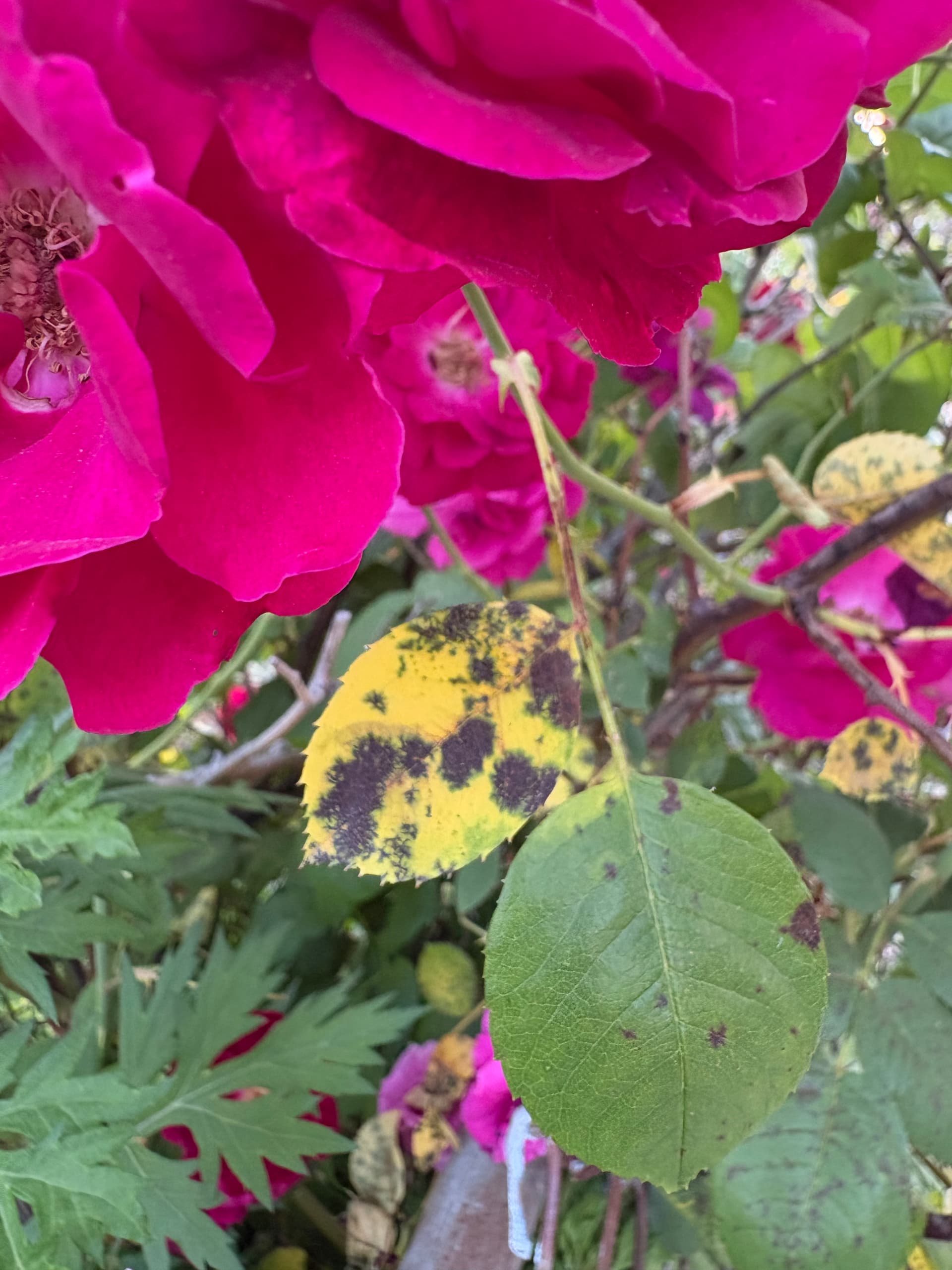
Rose Black Spot
Round black spots with fringed edges on leaves, often surrounded by yellowing. Affected leaves drop early, weakening the plant.
Remove and destroy infected leaves and fallen debris. Avoid overhead watering. Apply a fungicide labeled for black spot at first sign and repeat per label. Choose resistant varieties and space plants for airflow.
Rose Crown Gall
Rough, corky galls form on roots, the crown, or lower stems. Galls begin small and pale, enlarge irregularly, and turn brown and woody with age. Affected plants show reduced vigor and stunted new growth.
No chemical cure exists once a plant is infected. Remove and destroy infected plants; do not compost galled material. Sterilize cutting tools with a 10% bleach solution between uses. Avoid wounding roots during planting or cultivation. Source certified disease-free stock and replant in uninfested soil.
Rose Rosette Disease
Spindly, rapidly elongating new shoots with excessive thorniness on young stems; leaves are small, distorted, and often intensely red or mottled; witches' broom-like proliferation of shoots at branch tips; flowers deformed or stunted when they appear.
No cure exists. Remove and destroy infected plants immediately, including all root material; do not compost. Apply miticide to nearby healthy roses in spring and early summer to suppress the eriophyid mite vector (Phyllocoptes fructiphylus). Inspect new plants before purchase and do not site replacement roses in the same spot for at least one full season.
Rust
Orange to brown raised pustules on the undersides of leaves, with yellow spotting on the upper surface. Heavy infections cause leaves to yellow and drop.
Remove and destroy infected leaves. Avoid overhead watering and improve air circulation. Apply a sulfur or copper-based fungicide if it spreads. Clear plant debris in fall.
Yellow spot (rose rust)
Bright yellow spots on the upper surface of leaves, with orange-yellow powdery pustules on the underside. Leaves may drop prematurely. Worst in cool, wet springs.
Remove and bin all affected leaves — do not compost. Apply a systemic fungicide (myclobutanil or trifloxystrobin) at first sign and repeat every 10–14 days. Spray preventively from early spring before infection takes hold. Improve air circulation by pruning to an open centre.