
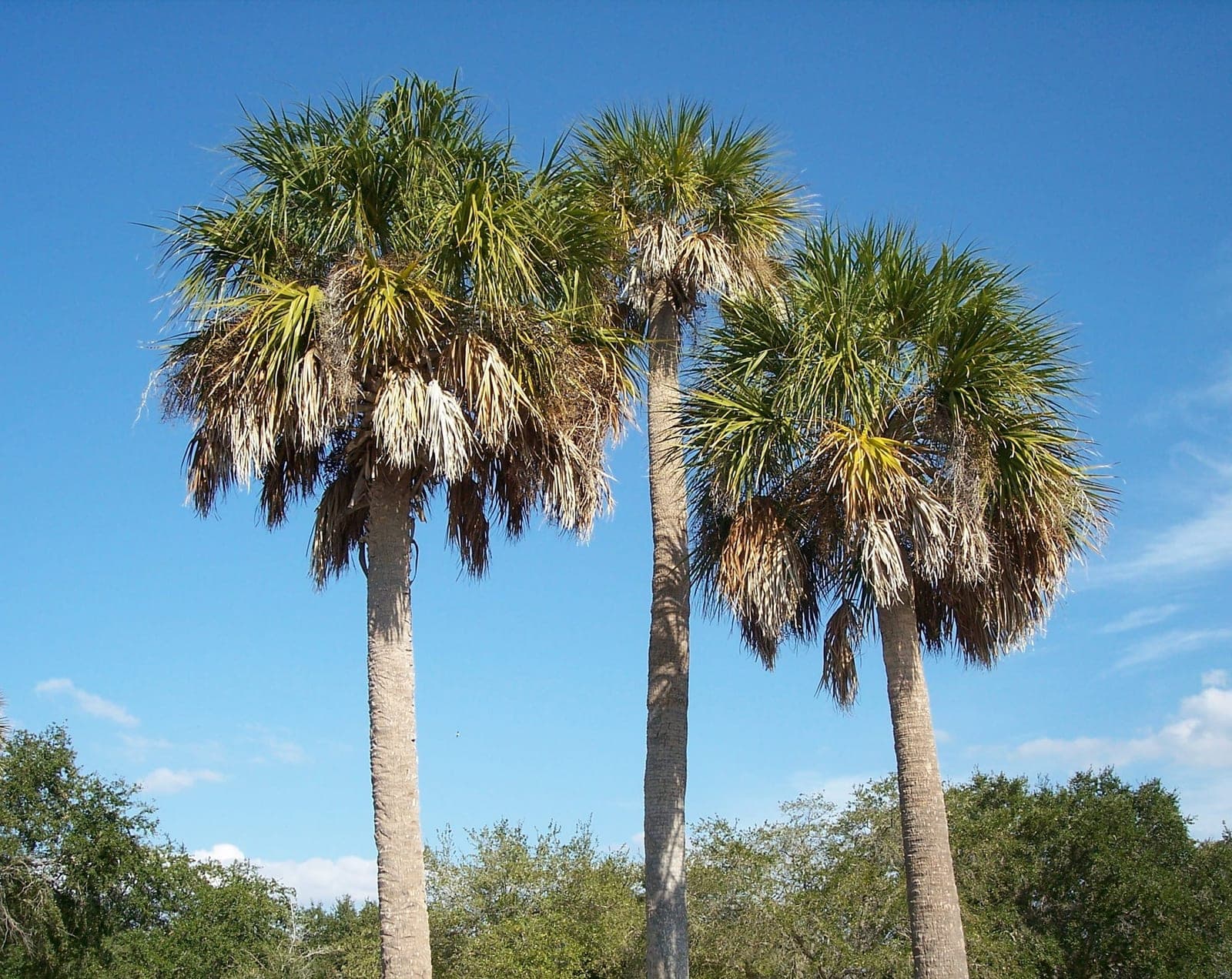
Cabbage palmetto is the official state tree of both Florida and South Carolina and one of the most cold-hardy palms native to North America. It is native to the Southeast coastal plain from North Carolina south through Florida and into the Caribbean. Mature specimens reach 30–65 feet with a stout, fibrous trunk that resists rot and withstands hurricane-force winds. Salt spray, periodic flooding, and sandy soils that challenge most trees present little problem for this species.
Growth is slow - typically 1–2 feet per year - so established specimens are more valuable than they look. Trees transplant surprisingly well; large specimens are routinely relocated with a sharp root-ball cut and settle into a new site within one or two growing seasons. The single most common landscaping mistake is over-stripping fronds. Remove only fully dead brown fronds, cutting flush with the trunk; removing green or transitioning fronds depletes nutrient reserves and weakens the tree. A palm-specific slow-release fertilizer with magnesium and micronutrients corrects potassium and manganese deficiencies common in sandy soils. In zones 8b–9a, avoid fertilizing after September, as late-season growth is vulnerable to winter cold snaps.
The terminal growing bud - called swamp cabbage or heart of palm - is edible and was a staple food for Indigenous peoples of the Southeast and early Florida settlers; harvesting it kills the tree. Small black berries ripen in fall and provide high-value food for migratory and resident birds including robins, cedar waxwings, and mockingbirds.
Ganoderma Butt Rot
White rot of heartwood at the base and lower trunk. Large, hard, shelf-like bracket fungi with a shiny reddish-brown upper surface and cream-colored pore surface appear at or near the soil line. Infected trees lose structural integrity with little visible external warning until failure.
No effective chemical treatment once established. Remove and destroy conks before they release spores. Have a certified arborist assess structural risk; removal is often required for trees near structures or high-traffic areas. Prevent infection by avoiding root collar wounds, reducing soil compaction, and maintaining tree health.
Palm Pink Rot
Water-soaked, darkening lesions at petiole bases and on lower fronds; pink to salmon-colored spore masses develop on affected tissue; fronds collapse and hang without detaching cleanly.
Cut out and dispose of infected fronds and petiole tissue. Avoid overhead irrigation and any practice that keeps the crown wet. Improve soil drainage around the trunk. Apply copper-based fungicide to the crown and petiole bases at first sign of infection and repeat every 2–3 weeks while warm, humid conditions persist.
Graphiola Leaf Spot (False Smut)
Small, hard, dark brown to black wart-like pustules erupt from both surfaces of fronds, often ringed by yellow halos. Heavily infected fronds yellow and die back prematurely.
Remove and destroy heavily infected fronds. Improve air circulation around the crown by pruning adjacent vegetation. Apply copper-based fungicide in spring as new growth emerges and repeat monthly through the growing season if infection pressure remains high.
Fusarium wilt
Sudden wilting, brown streaks in stems, yellowing leaves. Affects sweet basil varieties most.
No cure. Remove and destroy plants. Do not replant in the same spot for 3+ years. Choose resistant varieties.
Lethal Yellowing
Premature drop of immature fruit is the first sign, followed by blackening and collapse of the newly emerging spear leaf. All fronds then yellow progressively from the base upward; the palm typically dies within 3–5 months of first symptoms.
No cure exists once symptoms appear. Preventive trunk injections of oxytetracycline hydrochloride every 3–4 months can protect high-value specimens in areas with confirmed disease pressure. Remove and destroy infected palms promptly to limit spread via planthopper vectors. Sabal palmetto has moderate natural resistance compared to coconut palm but is not immune.