
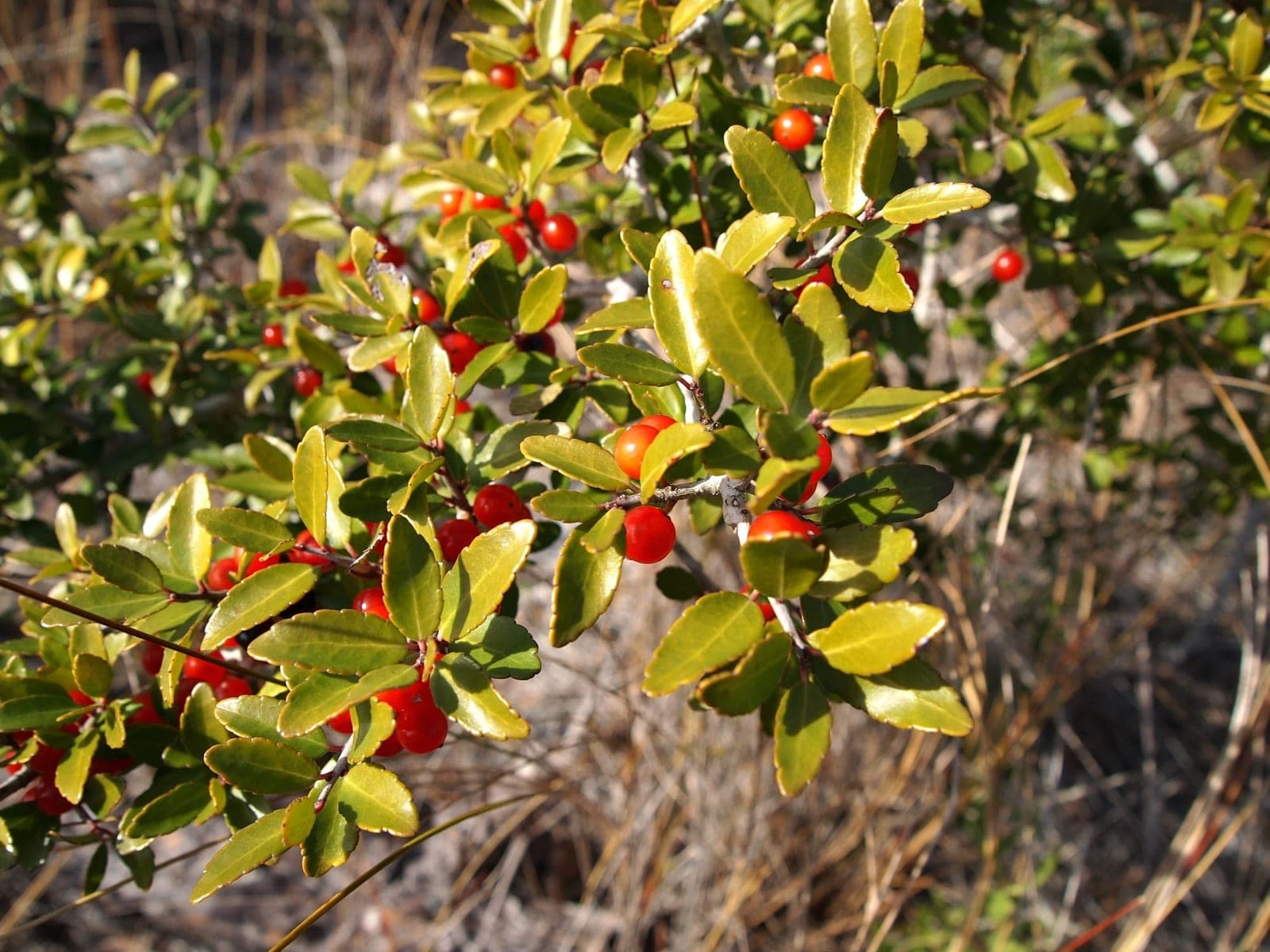
Yaupon holly is the only plant native to North America known to contain caffeine. Indigenous peoples of the Southeast brewed its leaves into a stimulating beverage called cassina or the black drink, used in ceremony and daily life for centuries. In the landscape it earns its place through year-round evergreen foliage, heavy red or yellow berry crops, and exceptional tolerance of difficult sites.
Yaupon is dioecious; a male plant must be present within pollinator range for females to set fruit. It tolerates poor or compacted soils, clay, sand, periodic flooding, coastal salt spray, and extended drought once established. The plant spreads by root suckers, which can be cut to control spread or left to form naturalistic thickets valued as bird cover. The species epithet vomitoria is a misnomer: early European observers misread Indigenous purification ceremonies - where vomiting was intentional and ritual - as evidence of general plant toxicity.
Leaves contain caffeine and theobromine. Indigenous groups roasted or dried leaves to produce a caffeinated drink; small commercial producers in the Southeast are reviving this use. Berries are consumed by at least 20 bird species but are not appropriate for human consumption.
Ecoregions:Eastern Temperate ForestsGreat Plains
Holly Tar Spot
Yellow spots appear on upper leaf surfaces in early summer and enlarge into raised, black, tar-like lesions by late summer; infected leaves drop early.
Rake and dispose of all fallen leaves in autumn to eliminate overwintering spores. Apply a copper-based fungicide at bud break if infection was heavy the prior season.
Root rot
Plants wilt, yellow, and stunt even in moist soil; lower stems and roots turn brown, soft, and mushy and the plant may collapse. Most common in heavy, wet, or poorly drained ground.
Improve drainage and stop overwatering, and never plant too deep. Lift and destroy badly affected plants along with the soil around the roots. Grow in raised or free-draining beds to prevent it returning.
Sooty Mold (Scale-Associated)
Black, powdery or crusty coating on upper leaf surfaces and stems. Affected leaves may yellow and drop in severe cases. The mold grows on honeydew secreted by scale insects, mealybugs, or aphids feeding on the plant.
Control the underlying pest infestation first using horticultural oil or neem oil applied thoroughly to stems and leaf undersides. Once pest populations are reduced, sooty mold stops spreading and weathers away over time. Rinse foliage with a strong stream of water to dislodge existing mold deposits.
Fungal leaf spot
Brown or purplish spots on the leaves, often ringed with a yellow halo, that spread and merge in warm, humid, or wet weather; heavily spotted leaves yellow and drop early.
Pick off spotted leaves and clear fallen debris to remove overwintering spores. Improve air circulation by thinning, and water at the base so foliage dries quickly. If it persists, apply a copper- or sulfur-based fungicide at the first sign.