
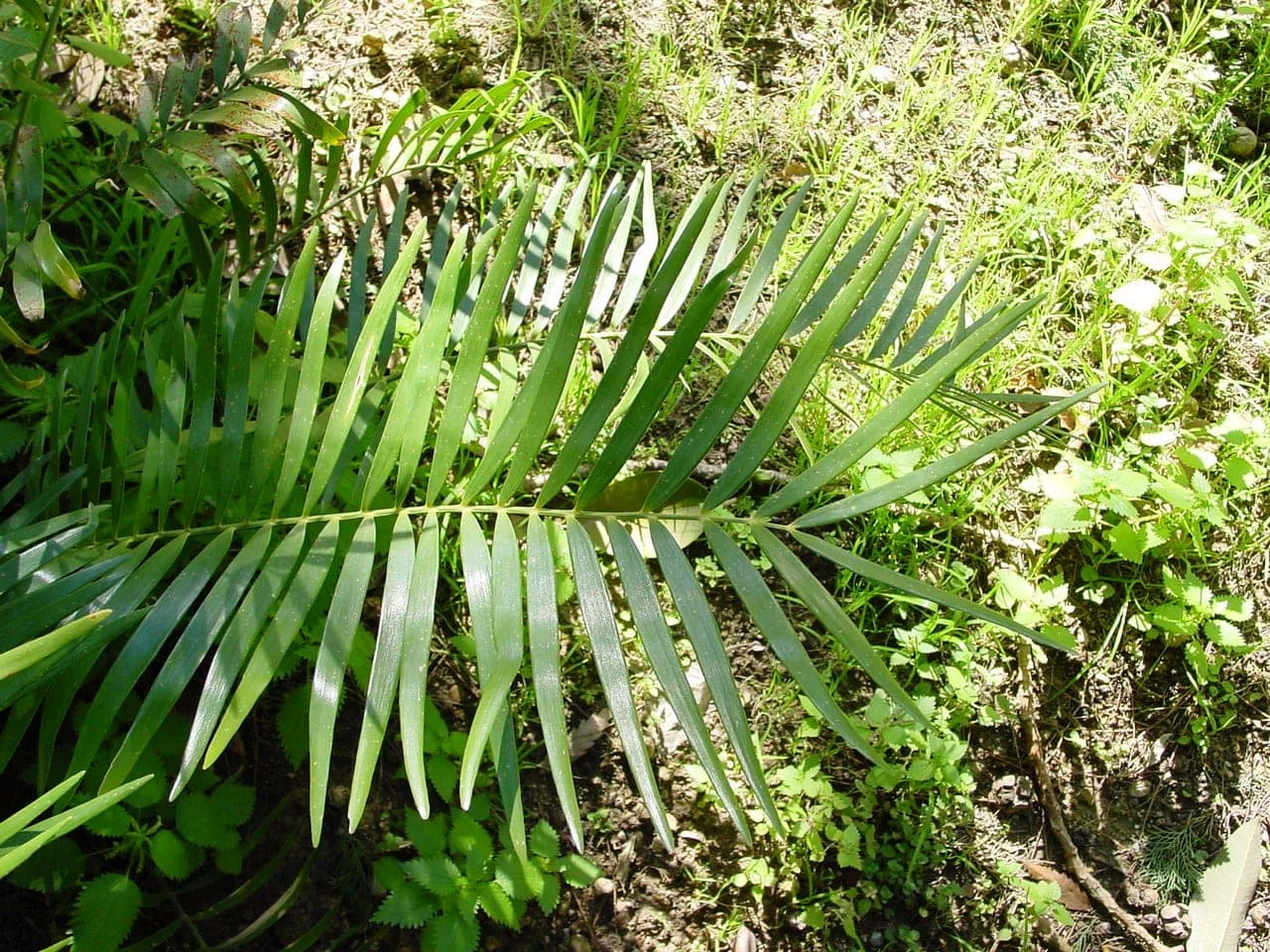
Zamia integrifolia is the only cycad native to the continental United States, found wild across Florida, coastal Georgia, and into the Caribbean basin. It forms a low, spreading mound of stiff, arching pinnate leaves rising from a thick, partially buried trunk. Slow-growing and exceptionally long-lived, it functions as a tough, low-maintenance landscape plant across a wide range of conditions.
Coontie thrives in sandy, infertile soils from full sun through deep shade and tolerates drought and salt spray once established. Female plants produce ornamental orange-red cones bearing fleshy, toxic seeds. The Atala butterfly (Eumaeus atala) depends entirely on coontie as its sole larval host plant; widespread loss of wild coontie stands through overharvesting drove both species toward extinction in Florida during the 20th century, and replanting coontie in home landscapes has been central to the Atala's documented recovery.
Indigenous peoples across Florida and the Caribbean extracted a starch from coontie roots for use in flatbreads and porridge. Commercial starch mills in the 19th century harvested wild populations so aggressively that most Florida stands were destroyed. The plant contains cycasin, a potent hepatotoxin; traditional processing required repeated washing before the starch was safe to consume.
Root rot
Plants wilt, yellow, and stunt even in moist soil; lower stems and roots turn brown, soft, and mushy and the plant may collapse. Most common in heavy, wet, or poorly drained ground.
Improve drainage and stop overwatering, and never plant too deep. Lift and destroy badly affected plants along with the soil around the roots. Grow in raised or free-draining beds to prevent it returning.
Fungal leaf spot
Brown or purplish spots on the leaves, often ringed with a yellow halo, that spread and merge in warm, humid, or wet weather; heavily spotted leaves yellow and drop early.
Pick off spotted leaves and clear fallen debris to remove overwintering spores. Improve air circulation by thinning, and water at the base so foliage dries quickly. If it persists, apply a copper- or sulfur-based fungicide at the first sign.