
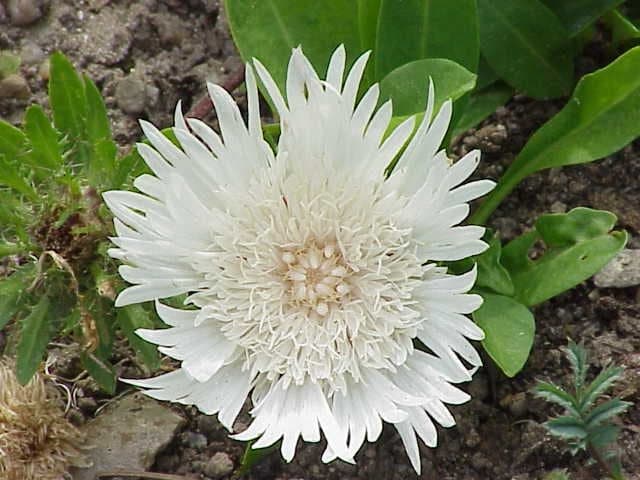
Stokesia laevis is the sole species in the genus Stokesia and is native to pine flatwoods and open wet savannas of the southeastern United States, from South Carolina south to Florida and west to Louisiana. It produces large, fringed composite heads up to 4 inches across in shades of blue, lavender, white, or pink over a long season from late spring through midsummer. The genus is named for English physician and botanist Jonathan Stokes. Cut stems hold well in arrangements, and the extended production season makes it one of the more versatile southeastern natives for cultivated borders across zones 5 through 9.
Drainage is the non-negotiable requirement: plants tolerate heat, moderate drought, and high humidity once established, but standing water in winter - even briefly - leads quickly to crown and root rot. Sandy or loamy soils of modest fertility suit it best; heavy clay should be amended or avoided. A light layer of pine needle mulch helps moderate soil temperature and moisture without holding excess water against the crown. In mild climates the foliage remains semi-evergreen through winter as a flat basal rosette. Clumps enlarge gradually and benefit from division every three to four years to sustain vigorous production.
Ecoregions:Eastern Temperate Forests
Aster Yellows
Deformed, greenish flowers, stunted growth, and yellowed foliage. Flower centers may produce tufts of leafy growth instead of normal petals.
No cure. Remove and destroy infected plants immediately to stop spread. Control leafhoppers, which transmit the disease, and remove nearby weed hosts.
Root rot
Plants wilt, yellow, and stunt even in moist soil; lower stems and roots turn brown, soft, and mushy and the plant may collapse. Most common in heavy, wet, or poorly drained ground.
Improve drainage and stop overwatering, and never plant too deep. Lift and destroy badly affected plants along with the soil around the roots. Grow in raised or free-draining beds to prevent it returning.
Powdery mildew
White or grey powdery coating on leaves - usually starting on older growth in humid conditions or when nights cool.
Improve air circulation by thinning plants. Apply neem oil or potassium bicarbonate spray at first sign. Avoid overhead watering.
Fungal leaf spot
Brown or purplish spots on the leaves, often ringed with a yellow halo, that spread and merge in warm, humid, or wet weather; heavily spotted leaves yellow and drop early.
Pick off spotted leaves and clear fallen debris to remove overwintering spores. Improve air circulation by thinning, and water at the base so foliage dries quickly. If it persists, apply a copper- or sulfur-based fungicide at the first sign.