
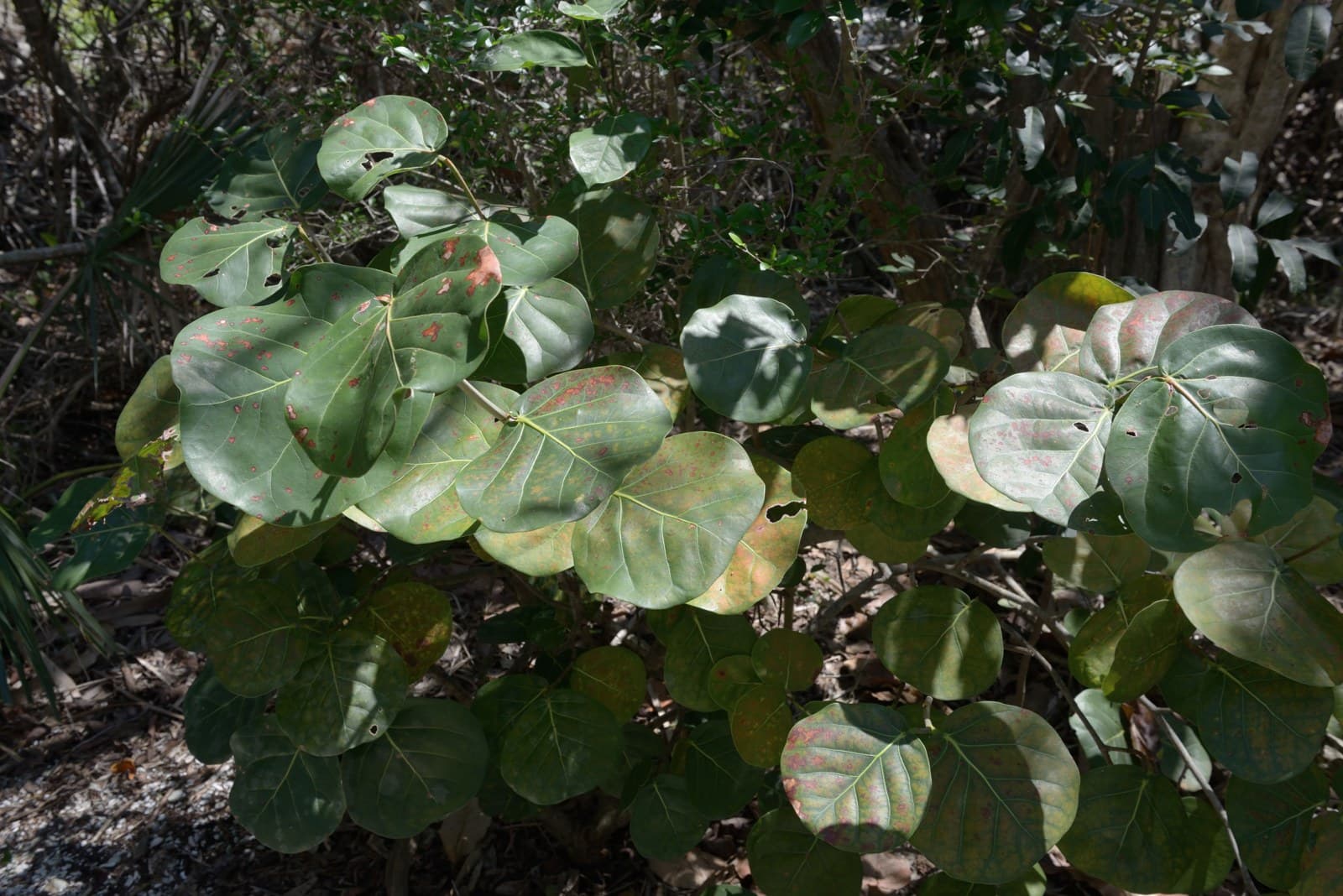
Sea grape is a large evergreen shrub or small tree in the buckwheat family, native to coastal beaches and strands throughout the Caribbean and tropical Americas. Its round, leathery leaves with prominent red veins are ornamentally distinctive, and fruit clusters ripen from green to deep purple-red in summer through fall, closely resembling bunches of grapes.
Few plants rival sea grape for tolerance of salt spray, wind, and nutrient-poor sandy soil. It anchors dunes and functions as a coastal windbreak, and can be maintained as a clipped hedge or allowed to develop into a multi-trunked specimen. It performs best in full sun with sharp drainage and requires minimal irrigation once established. In frost-prone years even within zone 10, young plants may defoliate but typically recover from the roots.
The ripe fruit is edible fresh and widely used in Caribbean kitchens to make jellies and wine. Fruit clusters draw birds and wildlife throughout the season. Bark and leaves are tannin-rich and have been used in folk medicine as an astringent for digestive complaints and sore throat.
Fungal leaf spot
Brown or purplish spots on the leaves, often ringed with a yellow halo, that spread and merge in warm, humid, or wet weather; heavily spotted leaves yellow and drop early.
Pick off spotted leaves and clear fallen debris to remove overwintering spores. Improve air circulation by thinning, and water at the base so foliage dries quickly. If it persists, apply a copper- or sulfur-based fungicide at the first sign.
Sooty Mold (Scale-Associated)
Black, powdery or crusty coating on upper leaf surfaces and stems. Affected leaves may yellow and drop in severe cases. The mold grows on honeydew secreted by scale insects, mealybugs, or aphids feeding on the plant.
Control the underlying pest infestation first using horticultural oil or neem oil applied thoroughly to stems and leaf undersides. Once pest populations are reduced, sooty mold stops spreading and weathers away over time. Rinse foliage with a strong stream of water to dislodge existing mold deposits.
Root rot
Plants wilt, yellow, and stunt even in moist soil; lower stems and roots turn brown, soft, and mushy and the plant may collapse. Most common in heavy, wet, or poorly drained ground.
Improve drainage and stop overwatering, and never plant too deep. Lift and destroy badly affected plants along with the soil around the roots. Grow in raised or free-draining beds to prevent it returning.