
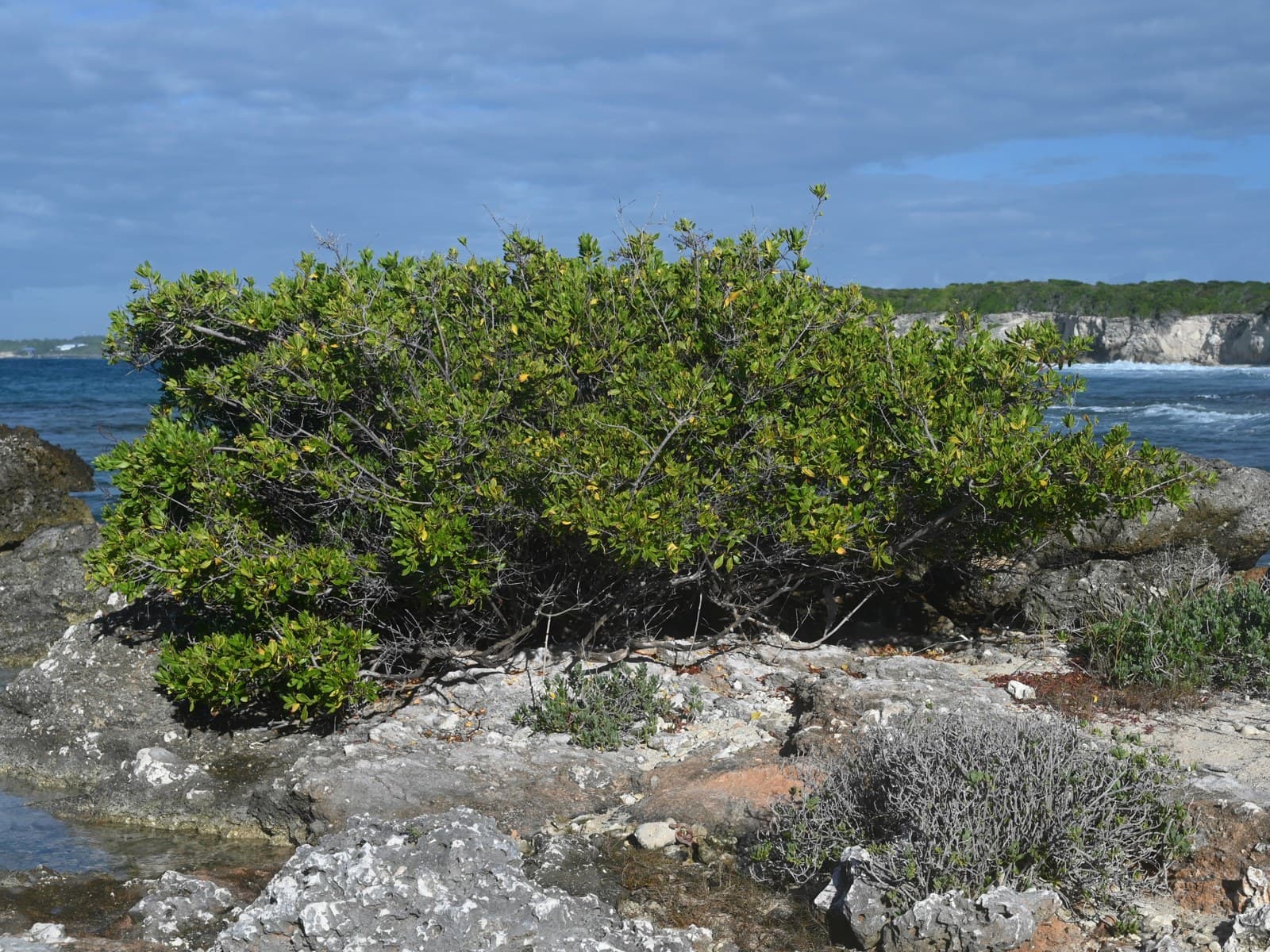
Buttonwood is a mangrove associate native to tidal flats, rocky shorelines, and the landward margins of mangrove forests across South Florida, the Caribbean, and tropical Americas. It is among the most salt-tolerant woody plants available to subtropical gardeners and is widely used as a specimen, hedge, or windbreak where ocean exposure limits most other choices.
In the landscape, buttonwood thrives in full sun and accepts sandy, rocky, or compacted soils as well as periodic flooding and brackish conditions. Once established it is highly drought tolerant. Without pruning it can develop into a small tree over time; regular trimming holds it shrub-sized and makes it effective for formal hedges and topiary in coastal settings. It performs well in parking lot islands and coastal revegetation projects where root zones may be confined or exposed to salt.
The bark is dense with tannins and has a documented history of use as an astringent in traditional medicine across its native range. The wood is exceptionally hard and was historically used for charcoal, fuel, boat construction, and furniture.
Sooty Mold (Scale-Associated)
Black, powdery or crusty coating on upper leaf surfaces and stems. Affected leaves may yellow and drop in severe cases. The mold grows on honeydew secreted by scale insects, mealybugs, or aphids feeding on the plant.
Control the underlying pest infestation first using horticultural oil or neem oil applied thoroughly to stems and leaf undersides. Once pest populations are reduced, sooty mold stops spreading and weathers away over time. Rinse foliage with a strong stream of water to dislodge existing mold deposits.
Root rot
Plants wilt, yellow, and stunt even in moist soil; lower stems and roots turn brown, soft, and mushy and the plant may collapse. Most common in heavy, wet, or poorly drained ground.
Improve drainage and stop overwatering, and never plant too deep. Lift and destroy badly affected plants along with the soil around the roots. Grow in raised or free-draining beds to prevent it returning.
Fungal leaf spot
Brown or purplish spots on the leaves, often ringed with a yellow halo, that spread and merge in warm, humid, or wet weather; heavily spotted leaves yellow and drop early.
Pick off spotted leaves and clear fallen debris to remove overwintering spores. Improve air circulation by thinning, and water at the base so foliage dries quickly. If it persists, apply a copper- or sulfur-based fungicide at the first sign.