
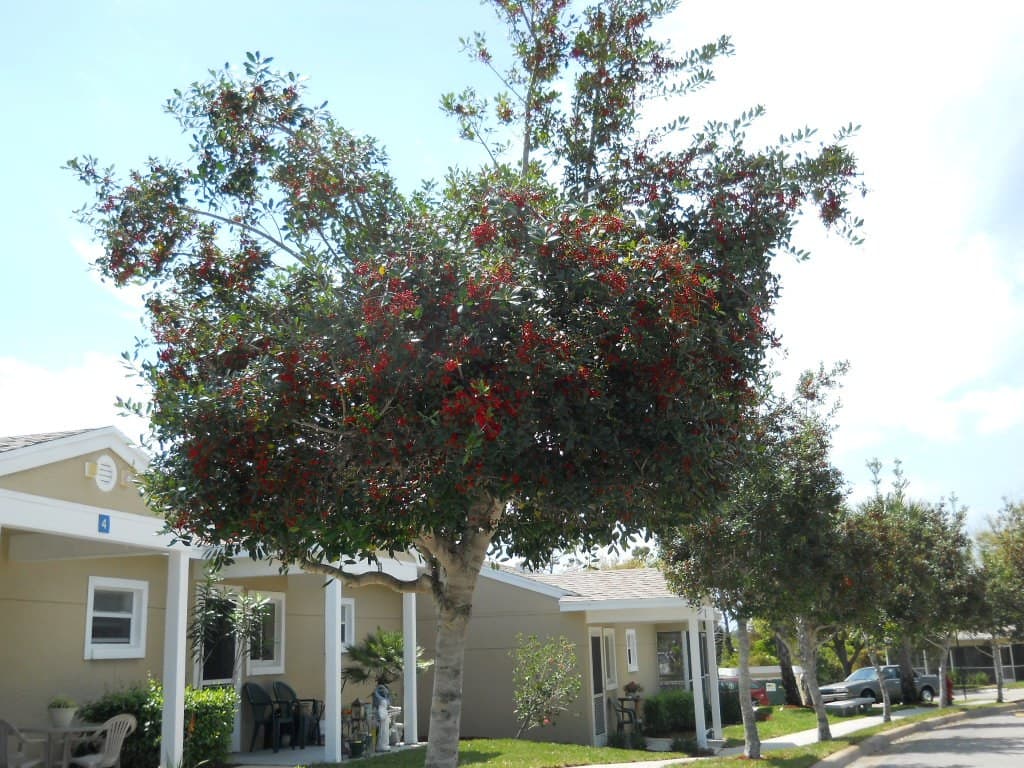
Dahoon holly is a native evergreen tree of the southeastern coastal plain, growing naturally in swamps, pocosins, and floodplain margins from Virginia to Texas and into the Caribbean. Female trees produce dense clusters of red to orange-red berries that persist from fall through winter, making the plant a reliable food source for cedar waxwings, mockingbirds, and other fruit-eating birds.
The species tolerates seasonally flooded soils and performs well in rain gardens and poorly drained sites where most trees decline. It is dioecious, so at least one male plant within range is required for berry production on female trees. Preferred soil is moist, acidic, and high in organic matter - clay and peaty substrates common to its native range suit it well. In cultivation it typically reaches 15–30 ft. Mulching to maintain soil moisture and acidity aids establishment, particularly on upland sites at the drier edge of its tolerance.
Indigenous peoples of the southeastern coast brewed a caffeinated ceremonial beverage from the leaves of Ilex cassine and the closely related I. vomitoria. The common name cassena derives from the Timucua word for these hollies, reflecting their cultural significance before European contact.
Holly Tar Spot
Yellow spots appear on upper leaf surfaces in early summer and enlarge into raised, black, tar-like lesions by late summer; infected leaves drop early.
Rake and dispose of all fallen leaves in autumn to eliminate overwintering spores. Apply a copper-based fungicide at bud break if infection was heavy the prior season.
Fungal leaf spot
Brown or purplish spots on the leaves, often ringed with a yellow halo, that spread and merge in warm, humid, or wet weather; heavily spotted leaves yellow and drop early.
Pick off spotted leaves and clear fallen debris to remove overwintering spores. Improve air circulation by thinning, and water at the base so foliage dries quickly. If it persists, apply a copper- or sulfur-based fungicide at the first sign.
Phytophthora Root Rot
Wilting despite moist soil, yellowing leaves, stunted growth, and dark, decayed roots and crown tissue. Vines may collapse during hot weather.
Plant in well-draining soil and avoid waterlogging. Remove and destroy affected vines. Improve drainage with raised beds or amended soil and avoid overwatering.