
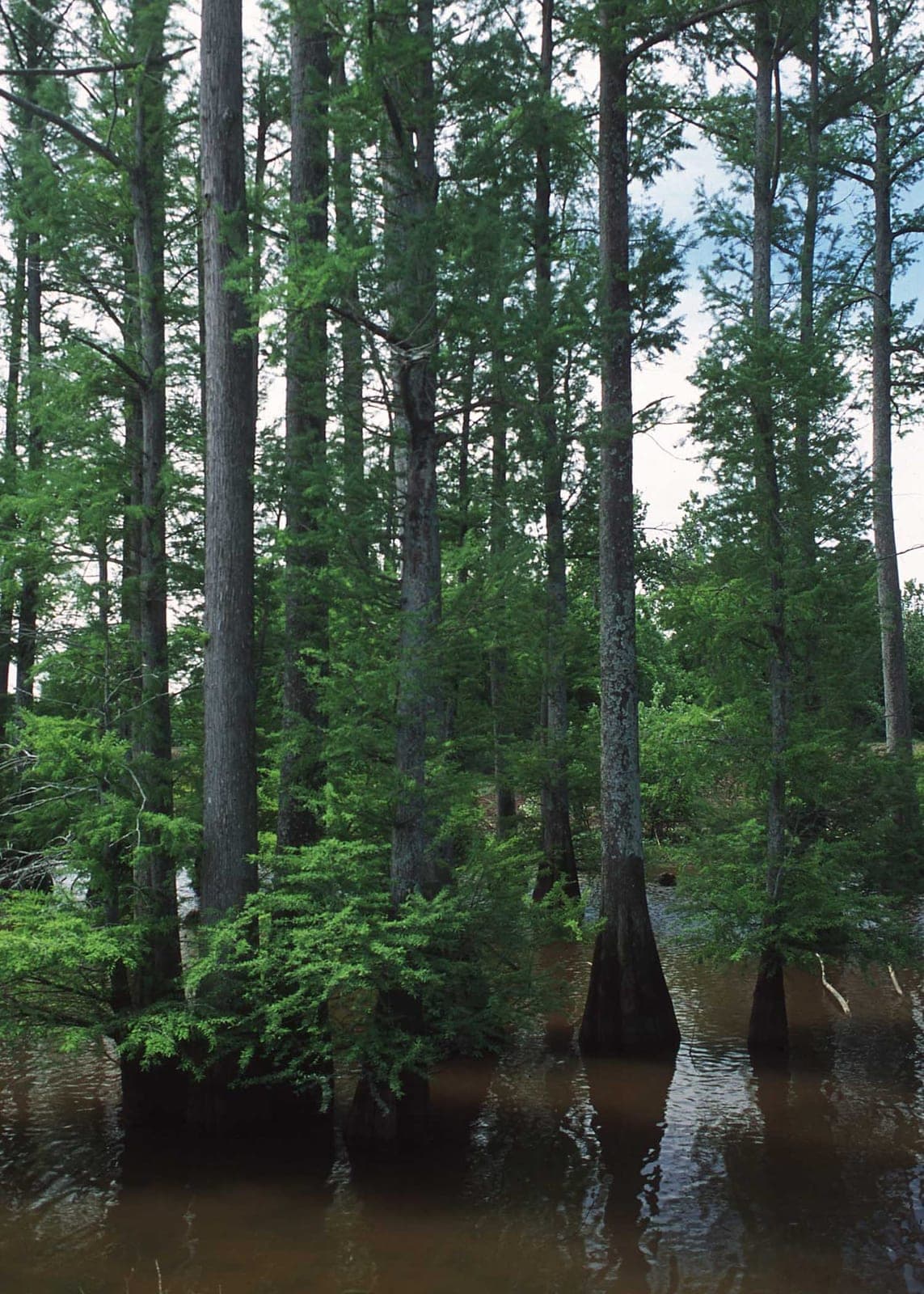
Bald cypress is a deciduous conifer native to the southeastern United States, where it dominates swamps, floodplains, and river edges. It is one of the most adaptable large trees available to North American gardeners: it tolerates standing water, compacted clay, sandy soil, and periodic drought with equal resilience. Feathery soft needles turn russet-red in fall before dropping - a striking seasonal display rare among conifers.
In saturated soils, the tree produces distinctive woody projections called knees (pneumatophores) that emerge from lateral roots near the trunk; they rarely form in dry upland settings. Establishment is slow for the first two to three years, then growth accelerates. Long-lived and structurally imposing, old specimens develop a strongly buttressed trunk base. Prefers slightly acidic soil but tolerates a broad pH range. Performs well as a street or lawn tree far outside its native wetland range, making it more versatile than its swamp-dweller reputation suggests.
The heartwood is naturally decay-resistant and was historically used for building timbers, outdoor lumber, and rot-resistant fence posts. Several southeastern Native American groups, including the Houma, used bark preparations externally for skin ailments.
Ecoregions:Eastern Temperate ForestsGreat PlainsTropical Wet Forests
Cercospora Leaf Spot
Small round spots with tan or gray centers and reddish-purple borders on leaves. Spots merge in severe cases, causing leaves to brown and die back.
Remove infected leaves and avoid overhead watering. Space plants for airflow and rotate crops. Apply a copper-based fungicide if the infection spreads.
Botryosphaeria Canker
Dark, sunken cankers on stems and major branches, most often occurring after drought stress or mechanical wounding. Bark peeled back from affected areas reveals brown, discolored wood beneath. Branch tips wilt and die back progressively inward.
Prune infected branches at least 6 inches below the visible canker margin using sterilized tools, and dispose of all cuttings away from the garden. Reduce plant stress by maintaining consistent irrigation during dry periods and avoiding bark wounds during maintenance. No curative fungicide is available; keeping plants vigorous is the primary preventive strategy.
Armillaria Root Rot
Thinning, yellowing canopy with progressive dieback; white, fan-shaped mycelial mats visible beneath bark at or just below the soil line; honey-colored mushroom clusters appearing at the trunk base or on surface roots in autumn.
No chemical cure exists. Improve drainage and avoid any injury to roots or trunk. Remove severely infected trees along with as much root material as possible. Do not replant susceptible species in the same spot.