
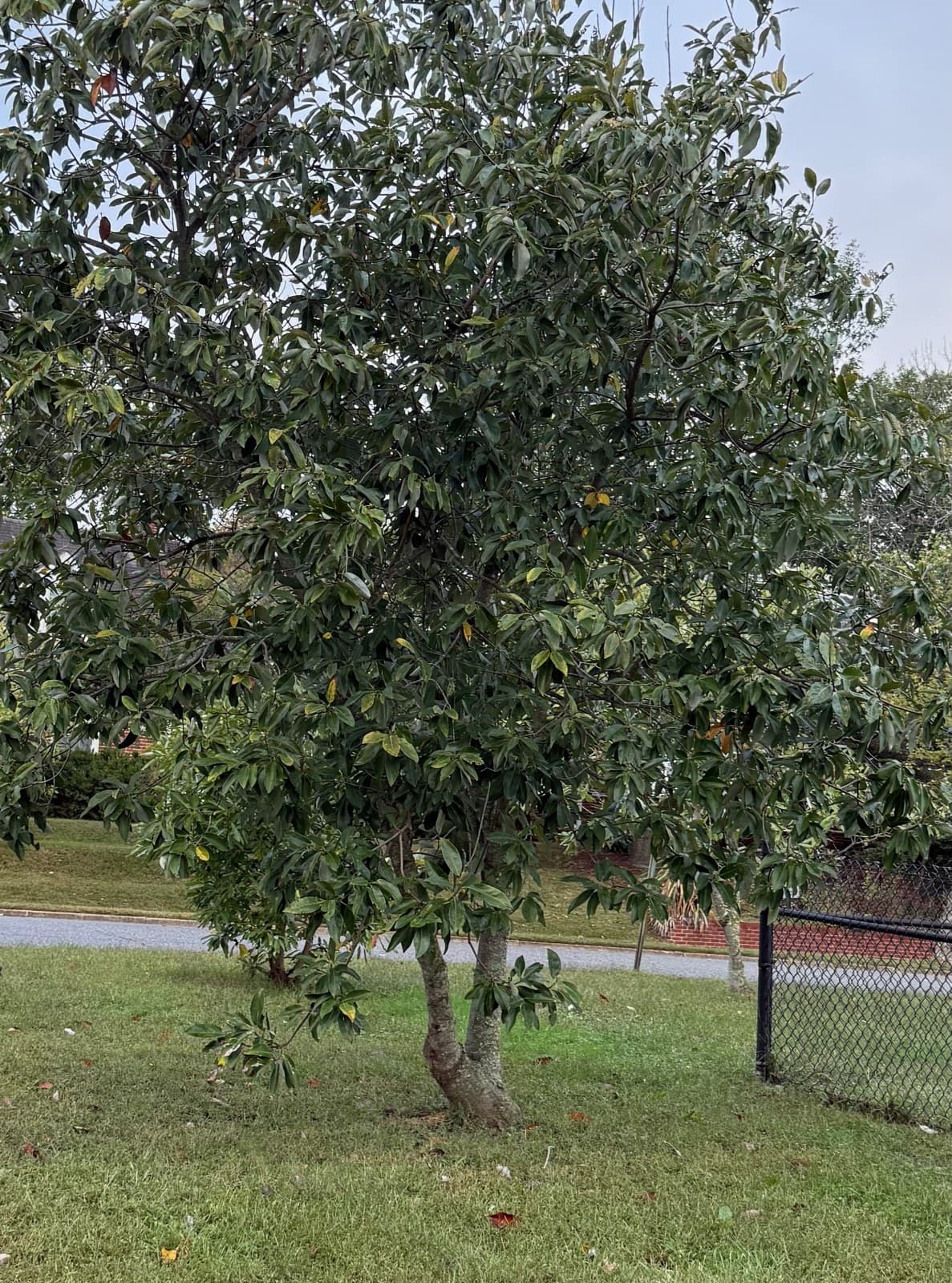
Sweetbay magnolia is a native North American tree known for fragrant creamy white flowers and leaves with distinctively silvery undersides. Its range follows the coastal plain from Massachusetts to Texas, mainly in wetland and swamp-edge habitats. It was the first magnolia described under modern botanical nomenclature and serves as the type species of genus Magnolia - which makes it, by extension, the type species of all flowering plants.
In zones 5–7 the tree is deciduous; in zones 8–10 it holds foliage through winter and functions as semi-evergreen. Despite its wetland origins, it adapts to average garden moisture once established and tolerates both flooding and brief dry spells. Red cone-like fruiting clusters appear in fall and attract songbirds. Multi-stem specimens develop a wide, open habit; single-leader trees grow more upright. Slightly acidic soil and organic mulch over the root zone help maintain vigor. Basal suckers form readily in natural settings; remove them to keep a clean single-trunk or controlled multi-stem form.
Native peoples of eastern North America used the bark as a fever remedy and general tonic. Early settlers adopted it as a substitute for quinine in treating intermittent fevers. The aromatic bark and leaves contain essential oils documented in folk use as a flavoring.
Fungal leaf spot
Brown or purplish spots on the leaves, often ringed with a yellow halo, that spread and merge in warm, humid, or wet weather; heavily spotted leaves yellow and drop early.
Pick off spotted leaves and clear fallen debris to remove overwintering spores. Improve air circulation by thinning, and water at the base so foliage dries quickly. If it persists, apply a copper- or sulfur-based fungicide at the first sign.
Verticillium Wilt
Lower leaves yellow and wilt, often on one side of the plant, with brown streaking in the stem and crown tissue when cut open. Plants are stunted and decline over the season.
Remove and destroy affected plants. Avoid planting in soil that has grown infected tomatoes, peppers, or other susceptible crops. Rotate beds and improve drainage; there is no cure once a plant is infected.