
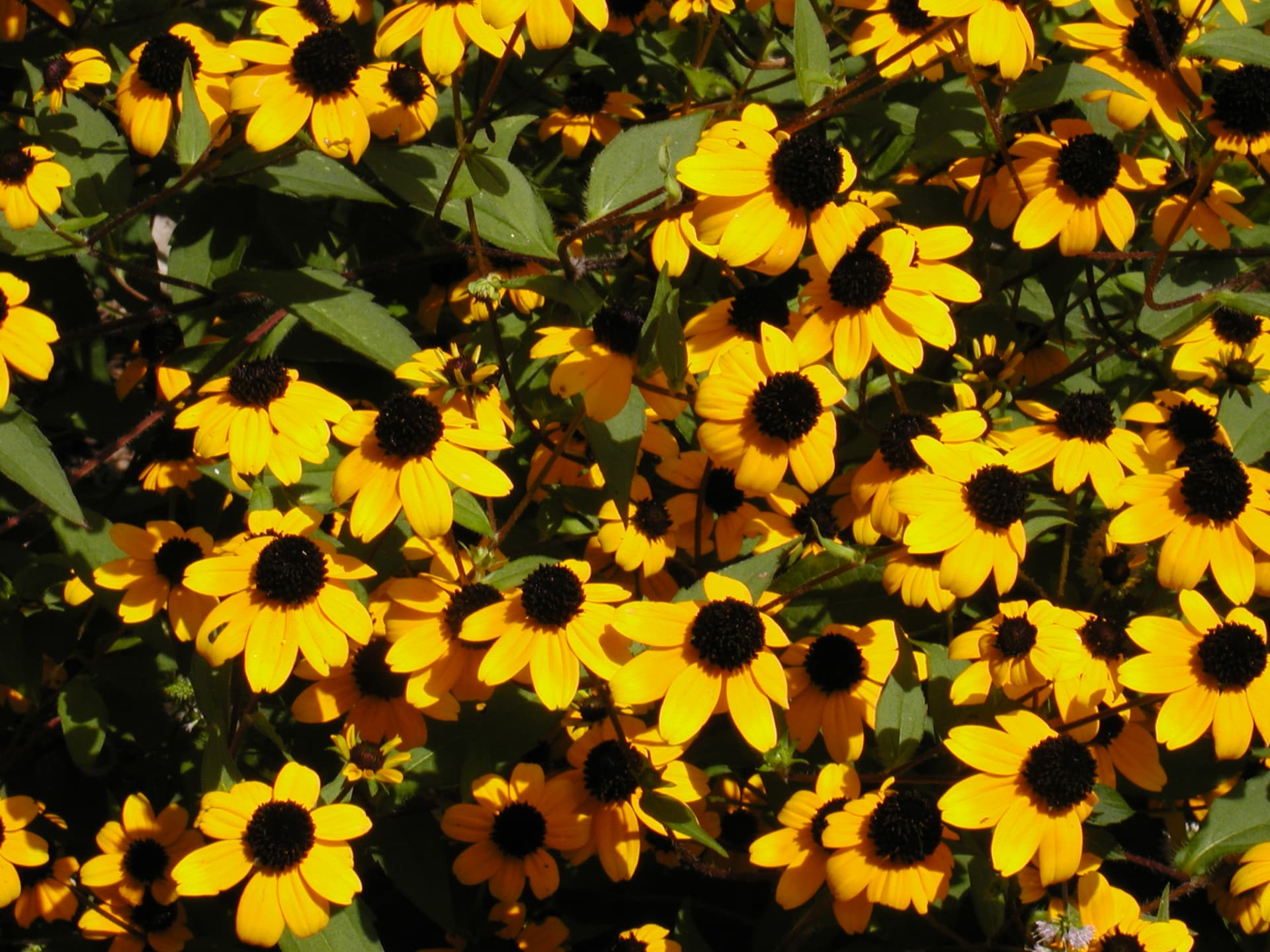
Rudbeckia triloba is a native North American biennial or short-lived perennial that covers itself in small, yellow, dark-centered daisy-type flowers from midsummer through hard frost. It self-seeds so freely that a single plant maintains itself as a colony, making it practical for naturalistic, meadow, or low-maintenance plantings where persistence without replanting is the goal.
It tolerates a wider range of conditions than most Rudbeckias: average to poor soil, dry to moderately moist conditions, and partial shade without a marked drop in flowering. Rich or consistently moist soil produces lax, floppy stems; lean soil keeps plants upright. Soil pH between 5.5 and 7.0 is acceptable. Deadheading extends the season but removes next year's seedlings; leaving seed heads standing through winter provides food for goldfinches and other seed-eating birds.
The species is a valued late-season pollen and nectar source for native bees, including bumble bees and sweat bees. Its dense branching structure also provides low cover beneficial to ground-nesting beneficial insects.
Ecoregions:Northern ForestsEastern Temperate ForestsGreat Plains
Powdery mildew
White or grey powdery coating on leaves - usually starting on older growth in humid conditions or when nights cool.
Improve air circulation by thinning plants. Apply neem oil or potassium bicarbonate spray at first sign. Avoid overhead watering.
Fungal leaf spot
Brown or purplish spots on the leaves, often ringed with a yellow halo, that spread and merge in warm, humid, or wet weather; heavily spotted leaves yellow and drop early.
Pick off spotted leaves and clear fallen debris to remove overwintering spores. Improve air circulation by thinning, and water at the base so foliage dries quickly. If it persists, apply a copper- or sulfur-based fungicide at the first sign.
Aster Yellows
Deformed, greenish flowers, stunted growth, and yellowed foliage. Flower centers may produce tufts of leafy growth instead of normal petals.
No cure. Remove and destroy infected plants immediately to stop spread. Control leafhoppers, which transmit the disease, and remove nearby weed hosts.