
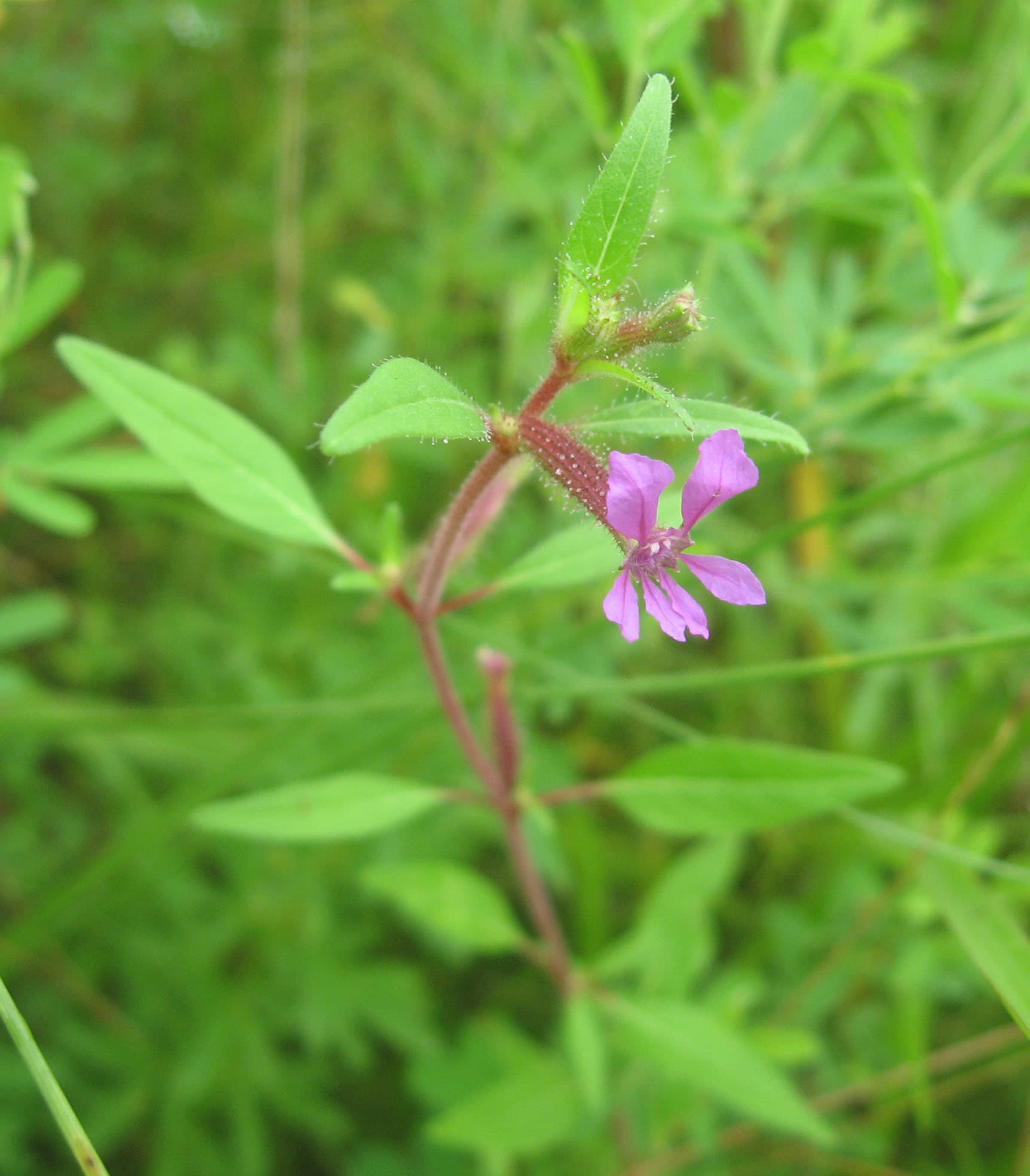
Blue waxweed is a native annual of the eastern United States, the most widespread Cuphea species in North America. It occurs naturally in open, rocky, calcareous ground and earns a place in naturalistic and pollinator plantings as a reliable self-seeder that produces small purple-pink flowers continuously from midsummer until hard frost. Bumblebees are among its primary visitors.
Plants are notably sticky - stems and leaves are covered in glandular hairs - and grow quickly in lean, alkaline, or gravelly soil where cultivated annuals struggle. Blue waxweed resents fertile, wet conditions. It self-sows freely once established and can naturalize in undisturbed rocky or sandy spots without intervention. Soil pH on the alkaline side and good drainage are the two most important factors for success.
Seeds of Cuphea viscosissima contain a high proportion of medium-chain fatty acids, principally capric and caprylic acids. This has made the genus the subject of ongoing research as a potential domestic oilseed crop to supplement or replace imported lauric-acid oils in industrial processing.
Ecoregions:Eastern Temperate ForestsGreat Plains
Damping Off
Seedlings collapse at the soil line with thin, water-soaked stems; seeds may fail to emerge or rot before sprouting.
Sow in well-draining mix, avoid overwatering, and ensure good airflow. Remove affected seedlings and let the surface dry between waterings.
Root rot
Plants wilt, yellow, and stunt even in moist soil; lower stems and roots turn brown, soft, and mushy and the plant may collapse. Most common in heavy, wet, or poorly drained ground.
Improve drainage and stop overwatering, and never plant too deep. Lift and destroy badly affected plants along with the soil around the roots. Grow in raised or free-draining beds to prevent it returning.
Fungal leaf spot
Brown or purplish spots on the leaves, often ringed with a yellow halo, that spread and merge in warm, humid, or wet weather; heavily spotted leaves yellow and drop early.
Pick off spotted leaves and clear fallen debris to remove overwintering spores. Improve air circulation by thinning, and water at the base so foliage dries quickly. If it persists, apply a copper- or sulfur-based fungicide at the first sign.