
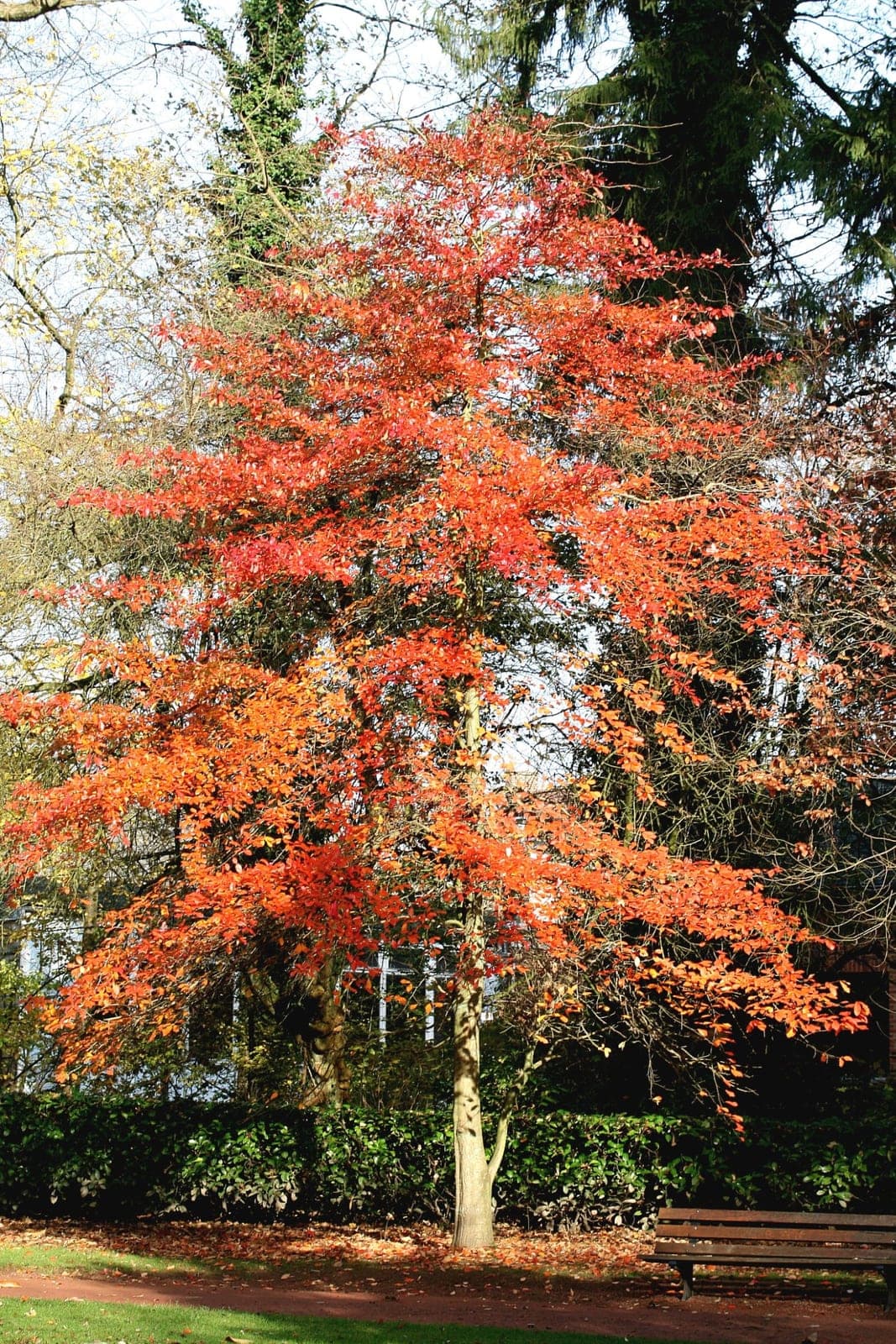
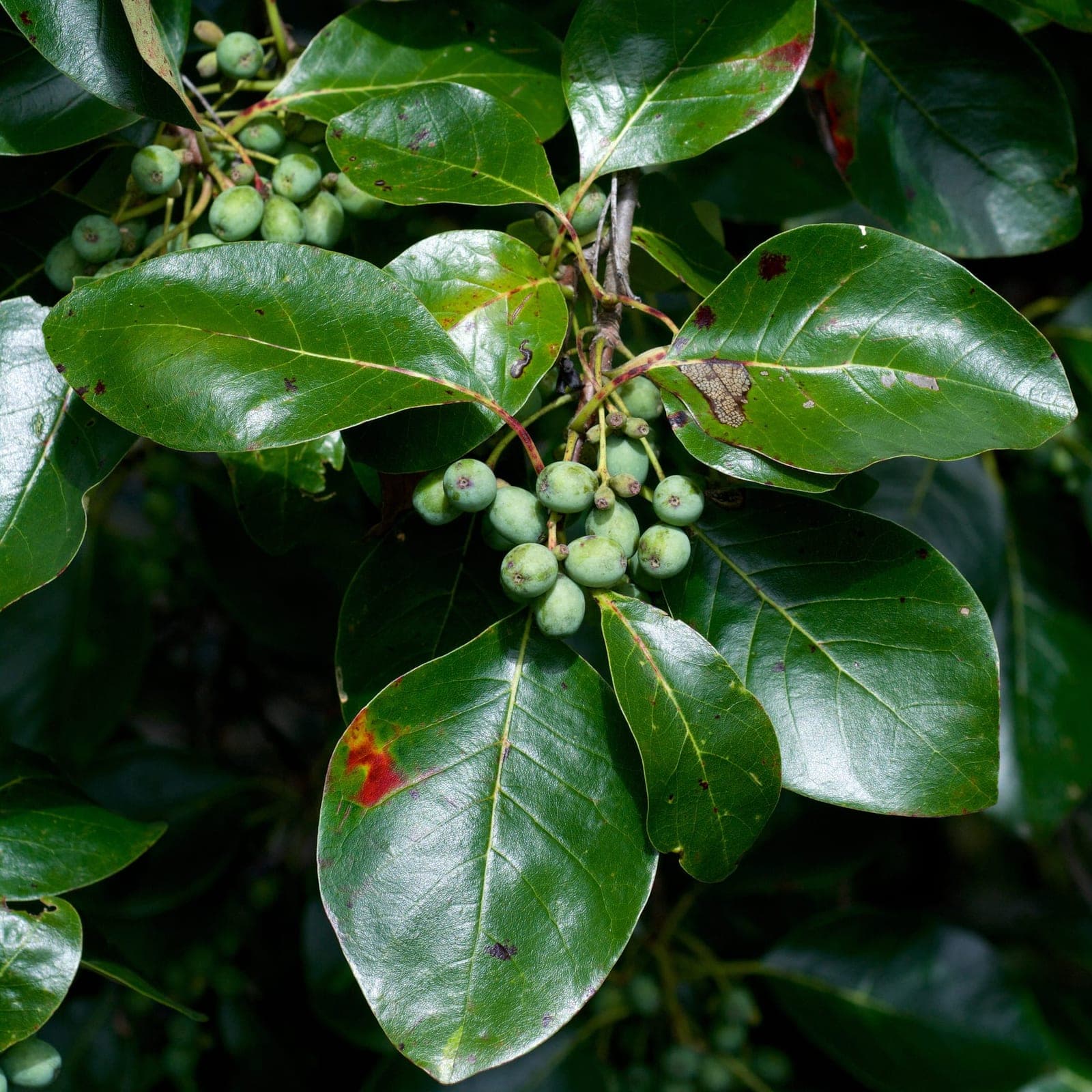
Black gum is a medium-sized native deciduous tree whose fall foliage ranks among the most vivid of any North American species, turning scarlet, orange, and yellow weeks before most other trees. It grows naturally from New England south to central Florida and west to eastern Texas, and works well as a specimen, a moist-site anchor, or a cornerstone of a wildlife planting.
Nyssa sylvatica forms a deep taproot early in life, making transplanting difficult; use only young container-grown or balled-and-burlapped stock and disturb roots as little as possible. It naturally occupies moist, acidic bottomlands and stream margins but develops moderate drought tolerance once established. The tree is dioecious; female trees set small blue-black drupes in fall that cedar waxwings, wood thrushes, and other birds actively seek. A preferred soil pH of 4.5–6.5 and a thick organic mulch layer over the root zone improve long-term performance. Cold-hardy to zone 4, it is also exceptionally long-lived, with documented specimens exceeding 500 years.
The small, nectar-rich flowers are a primary forage source for honeybees across the southeastern United States. Bees working black gum heavily produce tupelo honey, which is unusually high in fructose and resists crystallization. Cherokee and other eastern tribes used bark preparations traditionally for fever and chest ailments.
Ecoregions:Northern ForestsEastern Temperate Forests
Fungal leaf spot
Brown or purplish spots on the leaves, often ringed with a yellow halo, that spread and merge in warm, humid, or wet weather; heavily spotted leaves yellow and drop early.
Pick off spotted leaves and clear fallen debris to remove overwintering spores. Improve air circulation by thinning, and water at the base so foliage dries quickly. If it persists, apply a copper- or sulfur-based fungicide at the first sign.
Botryosphaeria Canker
Dark, sunken cankers on stems and major branches, most often occurring after drought stress or mechanical wounding. Bark peeled back from affected areas reveals brown, discolored wood beneath. Branch tips wilt and die back progressively inward.
Prune infected branches at least 6 inches below the visible canker margin using sterilized tools, and dispose of all cuttings away from the garden. Reduce plant stress by maintaining consistent irrigation during dry periods and avoiding bark wounds during maintenance. No curative fungicide is available; keeping plants vigorous is the primary preventive strategy.
Armillaria Root Rot
Thinning, yellowing canopy with progressive dieback; white, fan-shaped mycelial mats visible beneath bark at or just below the soil line; honey-colored mushroom clusters appearing at the trunk base or on surface roots in autumn.
No chemical cure exists. Improve drainage and avoid any injury to roots or trunk. Remove severely infected trees along with as much root material as possible. Do not replant susceptible species in the same spot.