
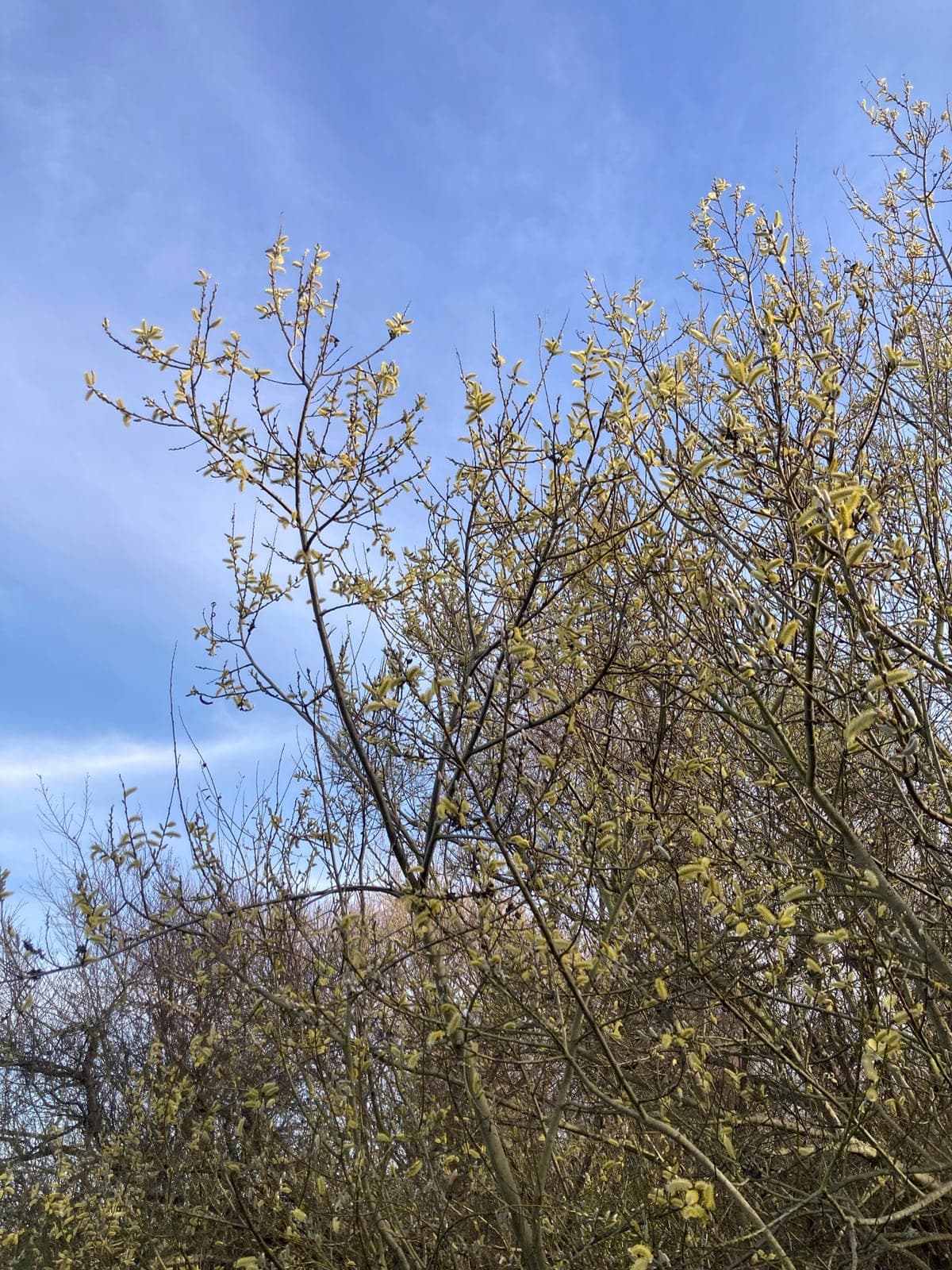
Arroyo Willow is a fast-growing native shrub or small tree that lines streams, arroyos, seeps, and wet meadows from British Columbia south through California and into Baja California. It is one of the most abundant riparian willows in California and a foundational component of streamside plant communities. Land managers and restoration practitioners rely on it for streambank stabilization and habitat work; home gardeners with wet or boggy sites can use it as a large-scale screen or wildlife planting.
It spreads readily by root suckers and can form dense thickets if not periodically checked. It roots easily from hardwood cuttings pushed directly into moist soil before bud break, making propagation simple and inexpensive. The species tolerates periodic flooding and handles heavy clay soils. It needs consistent access to soil moisture and will decline in dry upland conditions without sustained irrigation. Preferred pH is neutral to slightly acidic. Prune crossing stems or suckers to shape; in restoration contexts, allow natural spread.
The bark of Salix species contains salicin, from which salicylic acid is derived. Various Native peoples across the plant's range used willow bark as a preparation for pain and fever. The shrub hosts a large number of native moth and butterfly larvae and provides early-season pollen and nectar for bees before most other plants are in growth.
Ecoregions:Northwestern Forested MountainsMarine West Coast ForestNorth American DesertsMediterranean CaliforniaSouthern Semi-Arid HighlandsTemperate Sierras
Willow Scab
Olive-brown to black lesions appear on young leaves within days of bud break, causing rapid curling and leaf drop. Shoot tips blacken and die back. Dark, sunken lesions develop on current-season stems, and salmon-colored spore masses may be visible on infected tissue during humid weather.
Rake and destroy all fallen leaves and infected shoot tips each autumn. Apply a copper-based fungicide or myclobutanil at bud swell, then again at bud break. In persistently wet springs, repeat every 10–14 days until new shoot growth hardens off. Improve canopy airflow through selective pruning and avoid overhead irrigation.
Rust
Orange to brown raised pustules on the undersides of leaves, with yellow spotting on the upper surface. Heavy infections cause leaves to yellow and drop.
Remove and destroy infected leaves. Avoid overhead watering and improve air circulation. Apply a sulfur or copper-based fungicide if it spreads. Clear plant debris in fall.
Cytospora Canker
White or blue-white pitch masses ooze from bark on lower branches and the trunk. Affected branches die back progressively from the tip inward; bark beneath the resin is discolored brown and may have a resinous, sunken appearance.
Prune infected branches well below the canker margin into healthy wood and destroy all cuttings. Sterilize pruning tools with 70% isopropyl alcohol between each cut. No effective fungicide is available; prevent recurrence by avoiding drought stress, soil compaction, and mechanical bark injury.
Fungal leaf spot
Brown or purplish spots on the leaves, often ringed with a yellow halo, that spread and merge in warm, humid, or wet weather; heavily spotted leaves yellow and drop early.
Pick off spotted leaves and clear fallen debris to remove overwintering spores. Improve air circulation by thinning, and water at the base so foliage dries quickly. If it persists, apply a copper- or sulfur-based fungicide at the first sign.
Powdery mildew
White or grey powdery coating on leaves - usually starting on older growth in humid conditions or when nights cool.
Improve air circulation by thinning plants. Apply neem oil or potassium bicarbonate spray at first sign. Avoid overhead watering.