
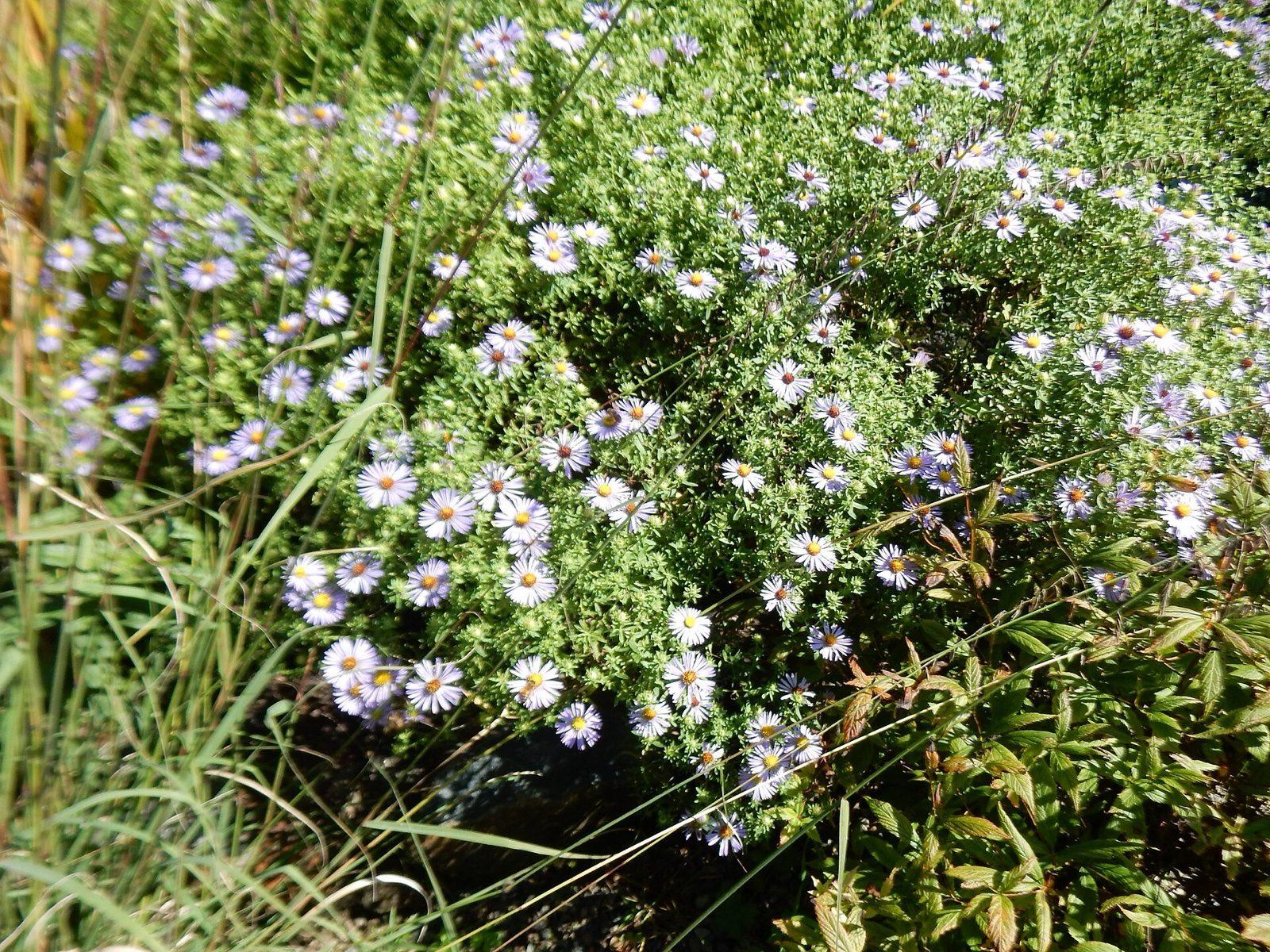
Aromatic aster is a native herbaceous perennial of the eastern and central United States, prized for its dense clusters of violet-purple flower heads that open from August through November, later than most perennials and when few other plants are in bloom. Plants spread by short rhizomes to form tight, weed-suppressing mounds. The foliage releases a faint resinous scent when brushed, which gives the species its common name.
Plant in full sun and lean, well-drained soil; excess fertility produces lax stems that flop without staking. Cutting plants back by one-third in early summer tightens the habit without delaying bloom. Aromatic aster tolerates drought and poor, rocky soils better than most cultivated asters, and it naturalizes well in meadow and prairie settings with little supplemental water once established.
This species is a documented late-season nectar source for migrating monarchs, overwintering bumblebee queens, and specialist native bees in the tribe Astereae. Leaving seed heads standing through winter provides forage for goldfinches and sparrows.
Ecoregions:Northwestern Forested MountainsEastern Temperate ForestsGreat Plains
These dates are for Zone 6b. Enter your ZIP to time every job to your own frost dates.
- sow · Oct 30 - Nov 27Direct sow seed on the surface and leave it outdoors to cold stratify naturally; it needs light to germinate
- cut · Any time in fallLeave seed heads standing for finches and other seed-eating birds
- cut · Mar 13 - Mar 27Cut last year's stems to the ground before new growth emerges
- plant · Mar 27 - Apr 17Divide clumps every 3-4 years as new shoots emerge; replant the vigorous outer pieces
- buy · Aug 21 - Sep 4Order seed - about two months before sowing
Problems & troubleshooting
Common problems
Aster Yellows
Deformed, greenish flowers, stunted growth, and yellowed foliage. Flower centers may produce tufts of leafy growth instead of normal petals.
No cure. Remove and destroy infected plants immediately to stop spread. Control leafhoppers, which transmit the disease, and remove nearby weed hosts.
Powdery mildew
White or grey powdery coating on leaves - usually starting on older growth in humid conditions or when nights cool.
Improve air circulation by thinning plants. Apply neem oil or potassium bicarbonate spray at first sign. Avoid overhead watering.
Fungal leaf spot
Brown or purplish spots on the leaves, often ringed with a yellow halo, that spread and merge in warm, humid, or wet weather; heavily spotted leaves yellow and drop early.
Pick off spotted leaves and clear fallen debris to remove overwintering spores. Improve air circulation by thinning, and water at the base so foliage dries quickly. If it persists, apply a copper- or sulfur-based fungicide at the first sign.