
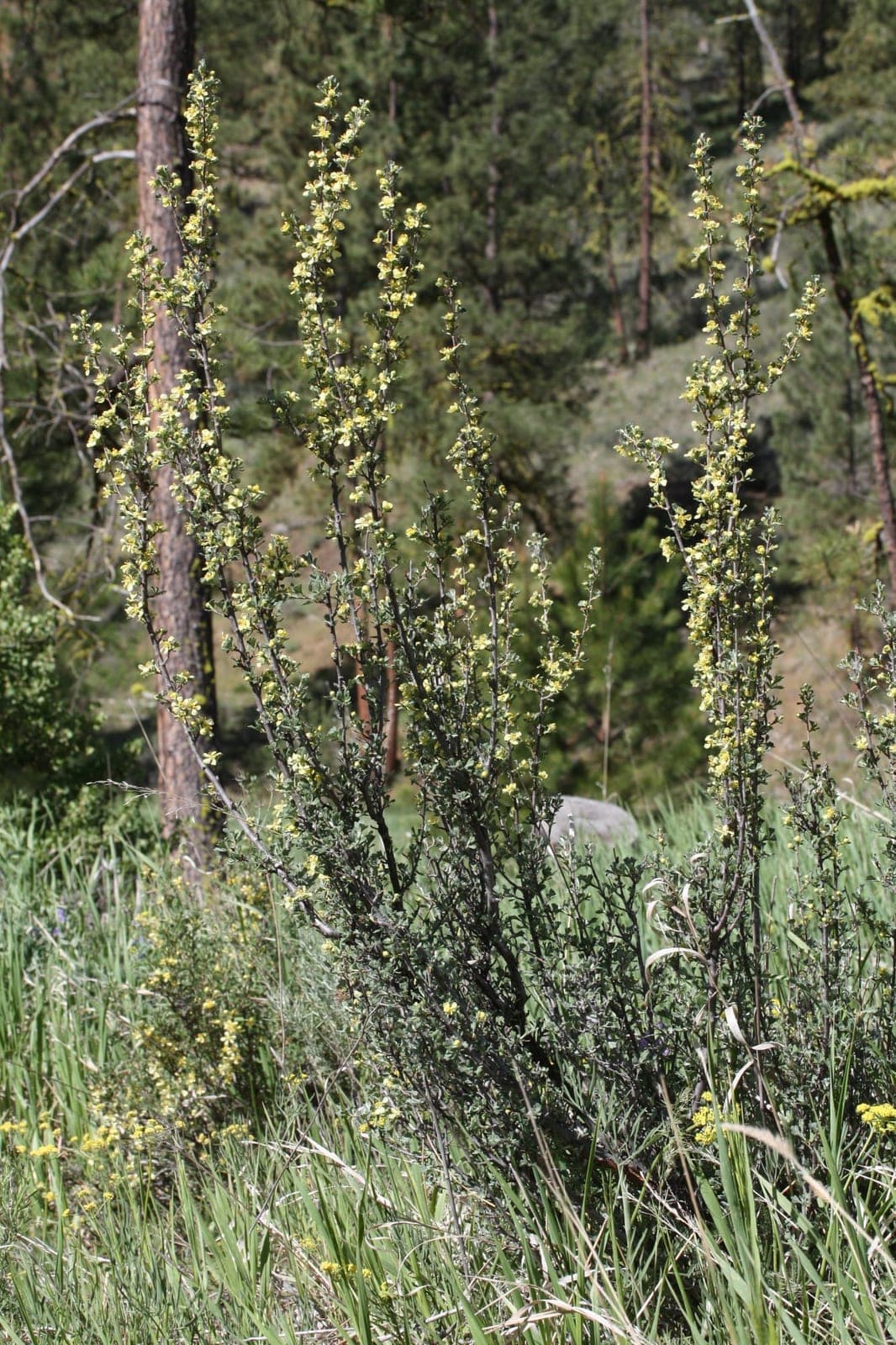
Antelope bitterbrush is a deciduous to semi-evergreen shrub native to the intermountain West, ranging from British Columbia south to Baja California and east through the Rockies. It grows across sagebrush steppe, open ponderosa pine forest, and dry mountain slopes, and it is one of the most valuable native shrubs for western xeric gardens and habitat restoration plantings.
The shrub develops a deep taproot, making it highly drought-tolerant once established but difficult to transplant. It fixes atmospheric nitrogen through root associations with Frankia bacteria, gradually improving lean soils over time. It performs best in fast-draining sandy or gravelly soils with no supplemental irrigation after establishment; clay soils or regular watering cause rapid decline. Seeds require 60–90 days of cold stratification at 34–38°F - fall direct sowing achieves this naturally. Plants can resprout from the root crown after fire and play a role in post-disturbance recovery.
Antelope bitterbrush is among the most critical browse plants in western North America, providing high-protein forage for mule deer, pronghorn antelope, and elk through winter and early spring. Seeds are cached by chipmunks and other small mammals. Paiute and Shoshone people used bark and leaf decoctions for fever, colds, and respiratory complaints.
Ecoregions:Northwestern Forested MountainsNorth American Deserts
Root rot
Plants wilt, yellow, and stunt even in moist soil; lower stems and roots turn brown, soft, and mushy and the plant may collapse. Most common in heavy, wet, or poorly drained ground.
Improve drainage and stop overwatering, and never plant too deep. Lift and destroy badly affected plants along with the soil around the roots. Grow in raised or free-draining beds to prevent it returning.
Powdery mildew
White or grey powdery coating on leaves - usually starting on older growth in humid conditions or when nights cool.
Improve air circulation by thinning plants. Apply neem oil or potassium bicarbonate spray at first sign. Avoid overhead watering.