
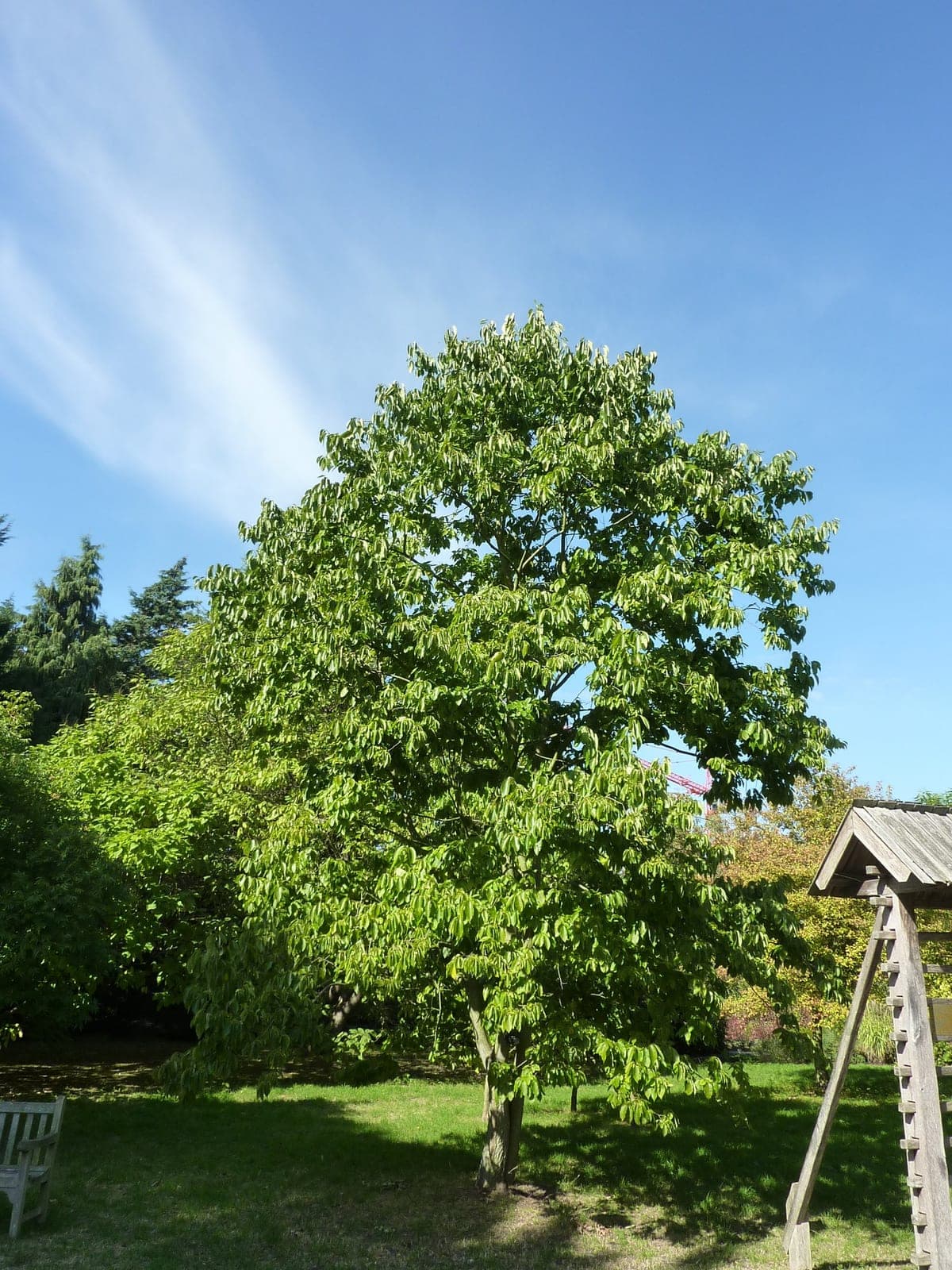
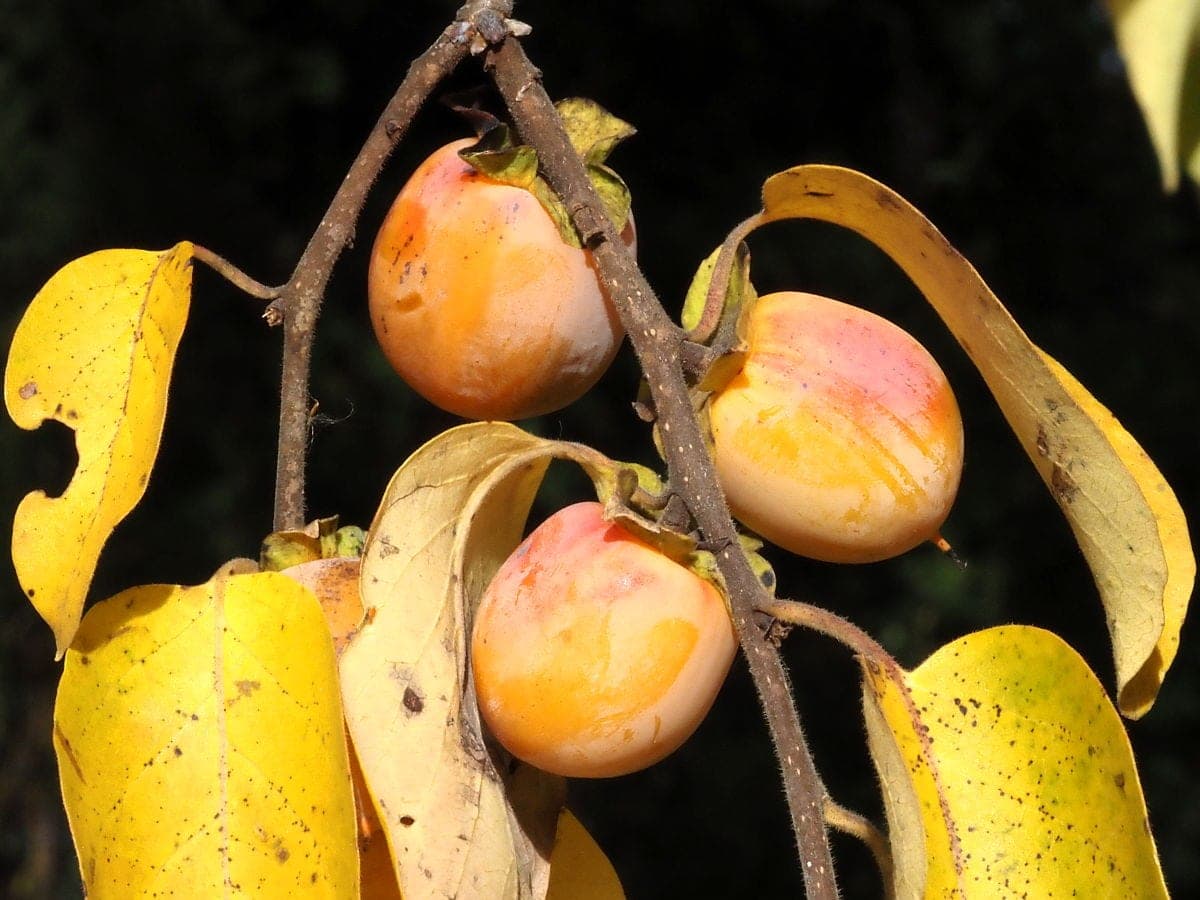
American persimmon is a native deciduous tree of eastern North America reaching 30–60 feet, with distinctive blocky, plated bark and edible fall fruit. It tolerates compacted clay, drought, periodic flooding, and poor fertility better than most fruiting trees, making it one of the more adaptable choices for difficult sites in a wide range of zones.
The species is typically dioecious, requiring at least one male and one female tree for fruit production; a handful of named cultivars are parthenocarpic or self-fertile. Trees develop a deep taproot early, making transplanting difficult past the seedling stage - bare-root stock planted while dormant gives the best results. Root suckers are common and need periodic removal in managed landscapes. Fruit is intensely astringent until fully ripe due to soluble tannins; sweetness develops after a hard frost or when fruit softens completely on the tree. Ripe fruit persists through early winter and is a major food source for white-tailed deer, Virginia opossums, raccoons, foxes, and numerous bird species - the folk name possumwood reflects this ecological role.
Bark and unripe fruit contain high concentrations of condensed tannins used by Indigenous peoples and early settlers as astringent preparations for sore throats, mouth sores, diarrhea, and hemorrhoids. Ripe fruit was eaten fresh, dried, and cooked into puddings, breads, and fermented drinks, and remains nutritionally significant with high sugar, antioxidant, and vitamin C content.
Ecoregions:Eastern Temperate ForestsGreat Plains
Persimmon Wilt
Sudden wilting and yellowing of foliage on one or more branches, progressing to browning and dieback. Cutting into affected bark reveals streaked or discolored sapwood. Entire trees may die within a single season or decline over several years.
No effective treatment exists once a tree is infected. Remove and destroy infected trees and stumps promptly to reduce spread to nearby persimmons. Do not replant American persimmon on the same site. Where wilt pressure is high, Asian persimmon cultivars show greater resistance and can be substituted.
Fungal leaf spot
Brown or purplish spots on the leaves, often ringed with a yellow halo, that spread and merge in warm, humid, or wet weather; heavily spotted leaves yellow and drop early.
Pick off spotted leaves and clear fallen debris to remove overwintering spores. Improve air circulation by thinning, and water at the base so foliage dries quickly. If it persists, apply a copper- or sulfur-based fungicide at the first sign.
Root rot
Plants wilt, yellow, and stunt even in moist soil; lower stems and roots turn brown, soft, and mushy and the plant may collapse. Most common in heavy, wet, or poorly drained ground.
Improve drainage and stop overwatering, and never plant too deep. Lift and destroy badly affected plants along with the soil around the roots. Grow in raised or free-draining beds to prevent it returning.