
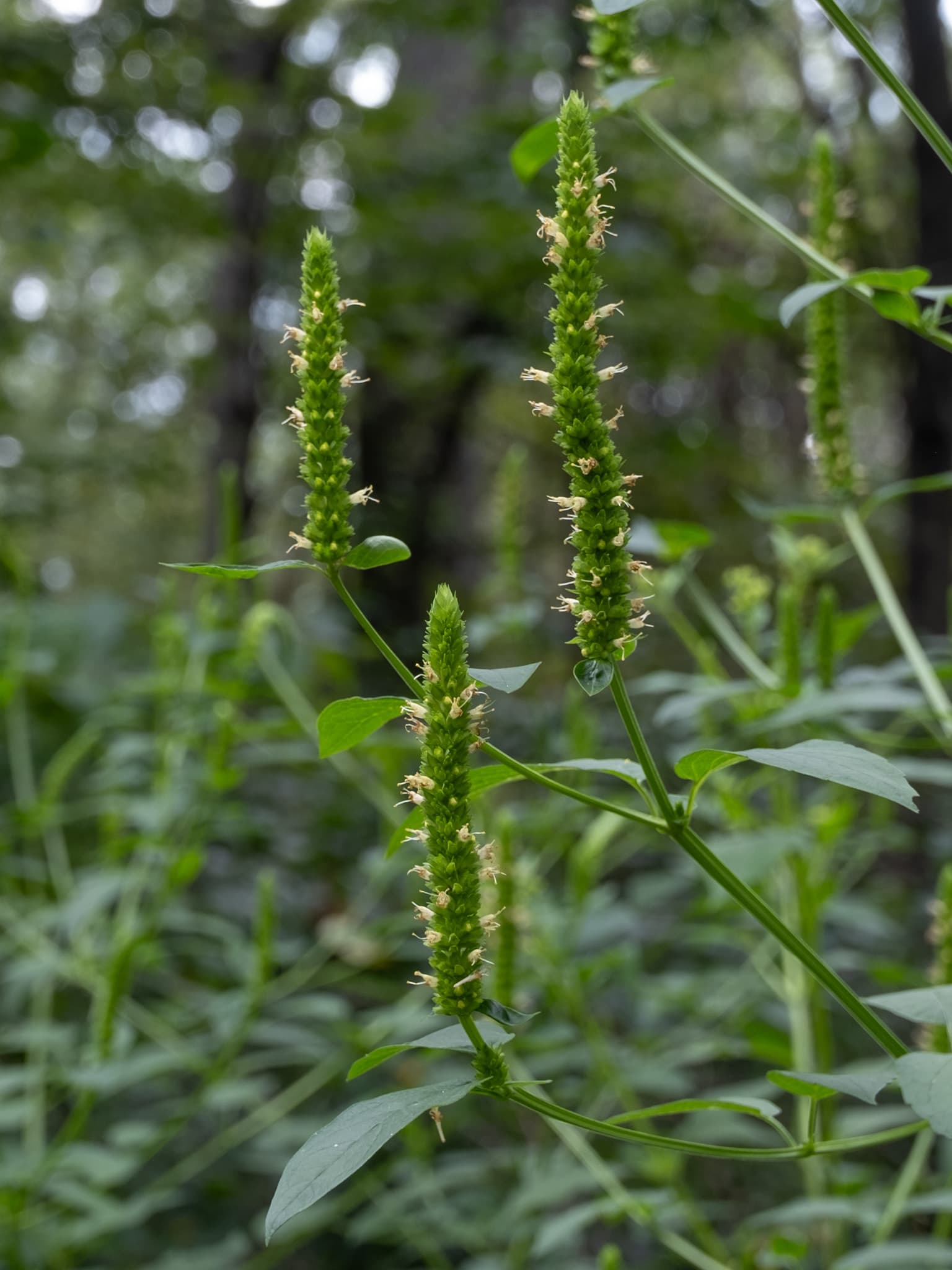
Yellow giant hyssop is a tall native perennial in the mint family, growing 4–6 feet and producing long, narrow flower clusters of pale yellowish-white from July through September. Native to woodland edges, stream banks, and disturbed ground across the eastern and central United States and into Canada, it draws bumblebees and native solitary bees in significant numbers throughout its flowering period.
The plant tolerates a wide light range, from full sun to moderate shade, and performs best in moist, fertile soil. It spreads by prolific self-seeding and can colonize an area over several seasons; cutting stems before seed dispersal controls spread where unwanted. Cold-hardy to zone 3a, it dies to the ground in winter and re-emerges reliably from its root crown each spring. Organic mulch helps maintain soil moisture through dry spells.
The aromatic foliage carries a mild anise-mint scent. Indigenous communities across its native range used the leaves to make herbal tea, and related Agastache species have documented use in traditional North American medicine for respiratory complaints.
Ecoregions:Eastern Temperate ForestsGreat Plains
Powdery mildew
White or grey powdery coating on leaves - usually starting on older growth in humid conditions or when nights cool.
Improve air circulation by thinning plants. Apply neem oil or potassium bicarbonate spray at first sign. Avoid overhead watering.
Fungal leaf spot
Brown or purplish spots on the leaves, often ringed with a yellow halo, that spread and merge in warm, humid, or wet weather; heavily spotted leaves yellow and drop early.
Pick off spotted leaves and clear fallen debris to remove overwintering spores. Improve air circulation by thinning, and water at the base so foliage dries quickly. If it persists, apply a copper- or sulfur-based fungicide at the first sign.
Root rot
Plants wilt, yellow, and stunt even in moist soil; lower stems and roots turn brown, soft, and mushy and the plant may collapse. Most common in heavy, wet, or poorly drained ground.
Improve drainage and stop overwatering, and never plant too deep. Lift and destroy badly affected plants along with the soil around the roots. Grow in raised or free-draining beds to prevent it returning.