
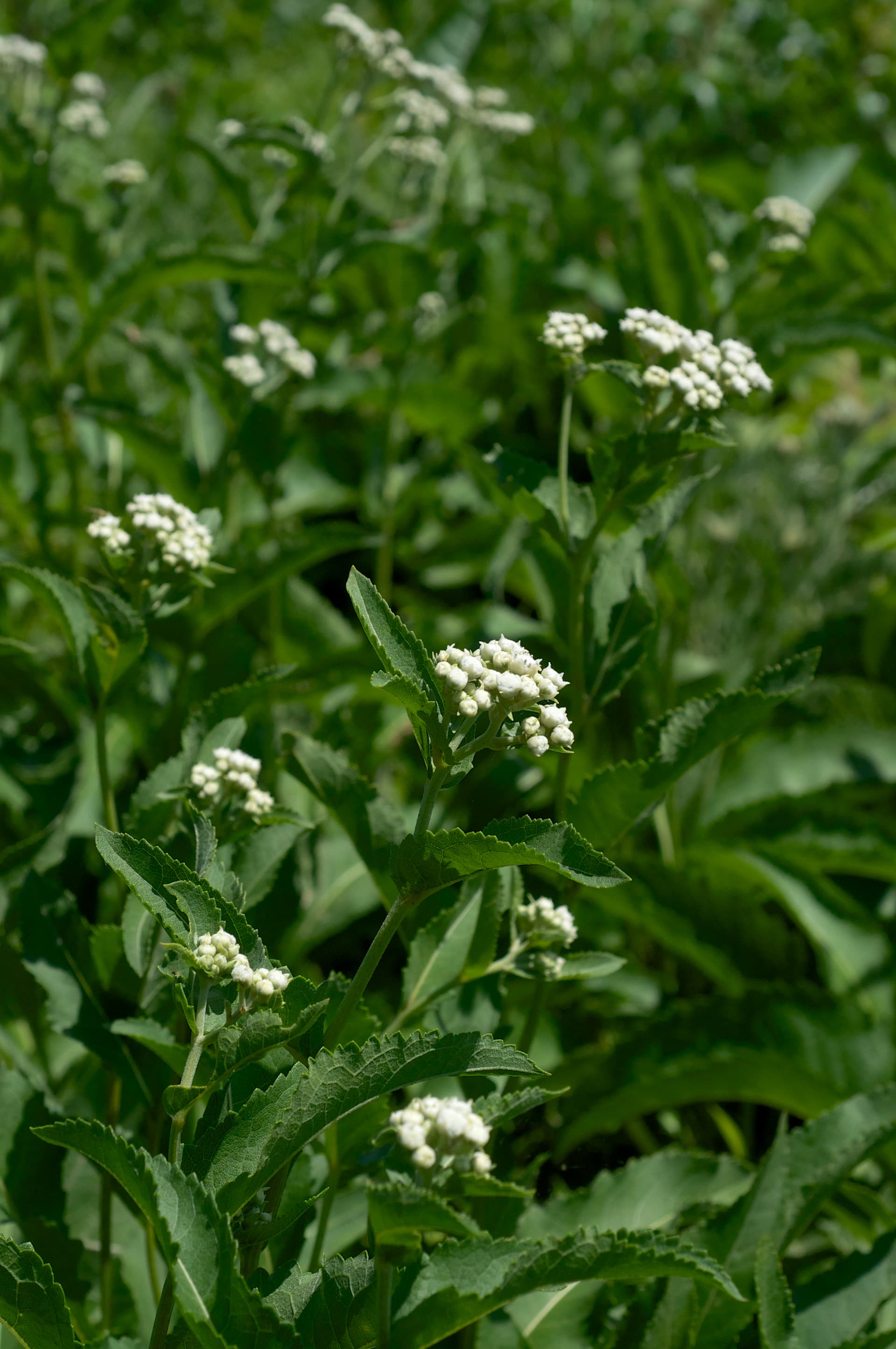
Wild quinine (Parthenium integrifolium) is a native North American prairie perennial bearing flat-topped clusters of small white button-like flower heads that hold for weeks in midsummer. It draws an exceptional range of native bees, wasps, and small butterflies during a period when fewer natives are in flower. Deer rarely browse it, and the upright form holds well without staking.
A deep taproot makes established plants drought tolerant and largely self-sufficient. They tolerate clay and heavy loam soils that defeat many ornamentals, and they naturalize readily in prairie restorations, meadow plantings, and rain gardens. Seed requires cold-moist stratification, so fall direct sowing is the simplest approach; seeds germinate the following spring without intervention. Plants spread slowly into tidy clumps and rarely need division.
The common names 'wild quinine' and 'American feverfew' reflect documented use by Native peoples and early settlers to treat fevers. The plant contains sesquiterpene lactones including parthenolide, which has been the subject of laboratory research into anti-inflammatory activity.
Ecoregions:Eastern Temperate ForestsGreat Plains
Fungal leaf spot
Brown or purplish spots on the leaves, often ringed with a yellow halo, that spread and merge in warm, humid, or wet weather; heavily spotted leaves yellow and drop early.
Pick off spotted leaves and clear fallen debris to remove overwintering spores. Improve air circulation by thinning, and water at the base so foliage dries quickly. If it persists, apply a copper- or sulfur-based fungicide at the first sign.
Powdery mildew
White or grey powdery coating on leaves - usually starting on older growth in humid conditions or when nights cool.
Improve air circulation by thinning plants. Apply neem oil or potassium bicarbonate spray at first sign. Avoid overhead watering.
Root rot
Plants wilt, yellow, and stunt even in moist soil; lower stems and roots turn brown, soft, and mushy and the plant may collapse. Most common in heavy, wet, or poorly drained ground.
Improve drainage and stop overwatering, and never plant too deep. Lift and destroy badly affected plants along with the soil around the roots. Grow in raised or free-draining beds to prevent it returning.