
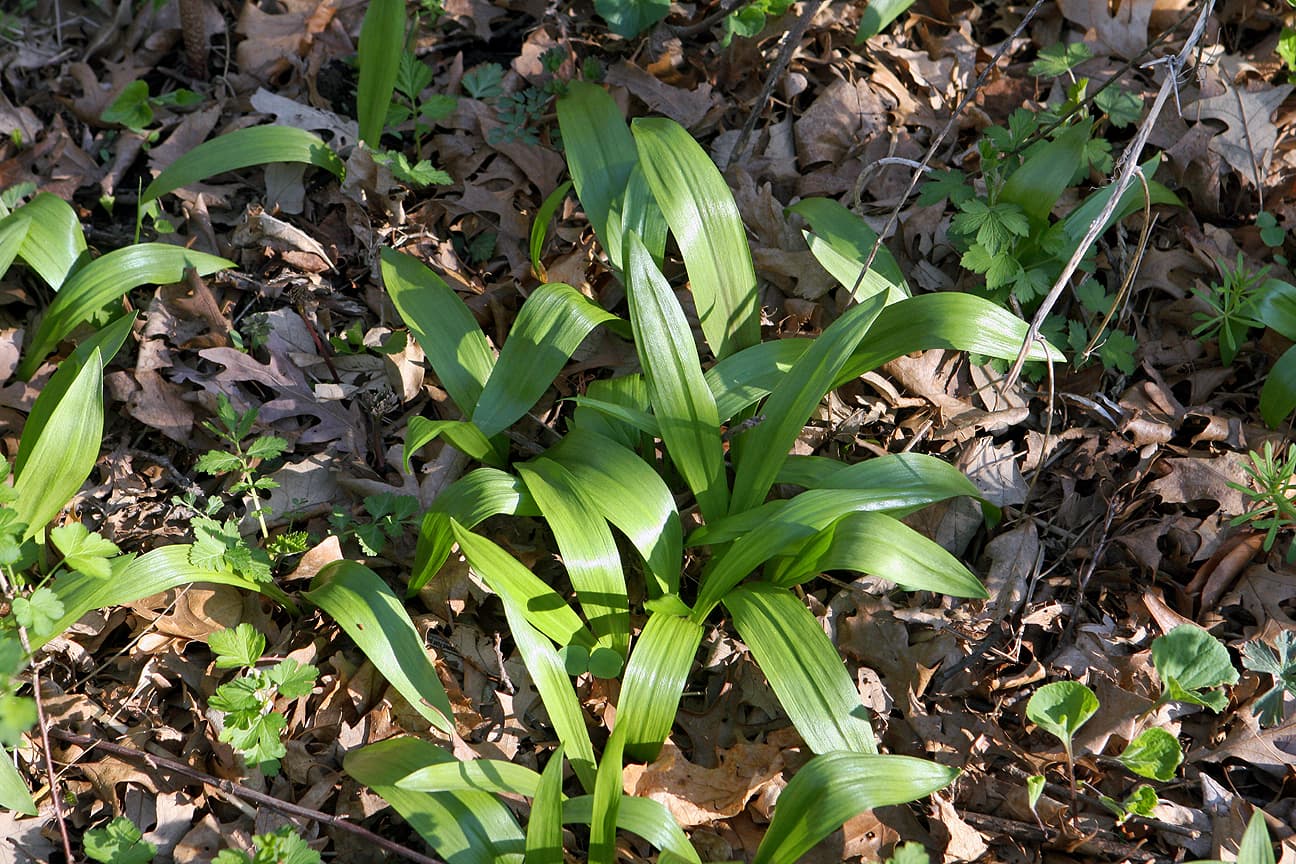
Wild leek (Allium tricoccum), widely known as ramps, is a bulbous perennial native to the deciduous forests of eastern North America. Both the broad spring leaves and the pungent bulbs are edible, with a flavor between garlic and onion; they are eaten raw, sautéed, pickled, and fermented across Appalachian and indigenous cuisines. A Miami-Illinois name for this plant is the direct etymological source of the city name Chicago.
Leaves emerge in early spring, often while frost is still possible, then die back completely by early summer before leafless stalks carry small white clusters in June and July. Seed germinates slowly and seedlings take four to seven years to reach harvestable size; planting bulb divisions in fall into moist, humus-rich, slightly acidic soil under a deciduous canopy is the most reliable way to establish a colony. Populations are vulnerable to overharvesting, so responsible practice means taking no more than one leaf per plant or one bulb from every ten.
Ojibwe, Menominee, and other Native American groups used wild leek as a spring tonic and to treat colds, croup, and fevers. The plant contains allicin and related sulfur compounds common to the Allium genus, which have documented antimicrobial properties consistent with these traditional applications.
Ecoregions:Northern ForestsEastern Temperate ForestsGreat Plains
Onion White Rot
Yellowing and dieback of leaves, soft rotting at the base, and a fluffy white fungal growth with small black sclerotia on roots and lower stems.
Remove and destroy infected plants. Do not compost. Avoid replanting alliums in affected soil for several years and rotate crops. There is no chemical cure once established.
Pink Root
Roots turn pale pink shortly after infection, then progress to deep red, purple, and finally brown as they shrivel and die. Affected plants are stunted and may produce secondary roots that also become infected. Foliage yellows and plant vigor declines sharply.
Rotate alliums out of affected beds for a minimum of 3–4 years; the causal pathogen (Phoma terrestris) persists indefinitely in soil. Use certified disease-free transplants and sets. Maintain well-drained, fertile soil conditions - drought stress and waterlogging both increase susceptibility. No curative chemical treatment is reliably effective once infection is established.
Fungal leaf spot
Brown or purplish spots on the leaves, often ringed with a yellow halo, that spread and merge in warm, humid, or wet weather; heavily spotted leaves yellow and drop early.
Pick off spotted leaves and clear fallen debris to remove overwintering spores. Improve air circulation by thinning, and water at the base so foliage dries quickly. If it persists, apply a copper- or sulfur-based fungicide at the first sign.
Damping Off
Seedlings collapse at the soil line with thin, water-soaked stems; seeds may fail to emerge or rot before sprouting.
Sow in well-draining mix, avoid overwatering, and ensure good airflow. Remove affected seedlings and let the surface dry between waterings.
Botrytis (grey mould)
Grey fuzzy mould on petals and stems, worst in cool wet conditions.
Remove affected parts immediately. Improve air circulation. Avoid overhead watering. Apply copper fungicide if severe.