
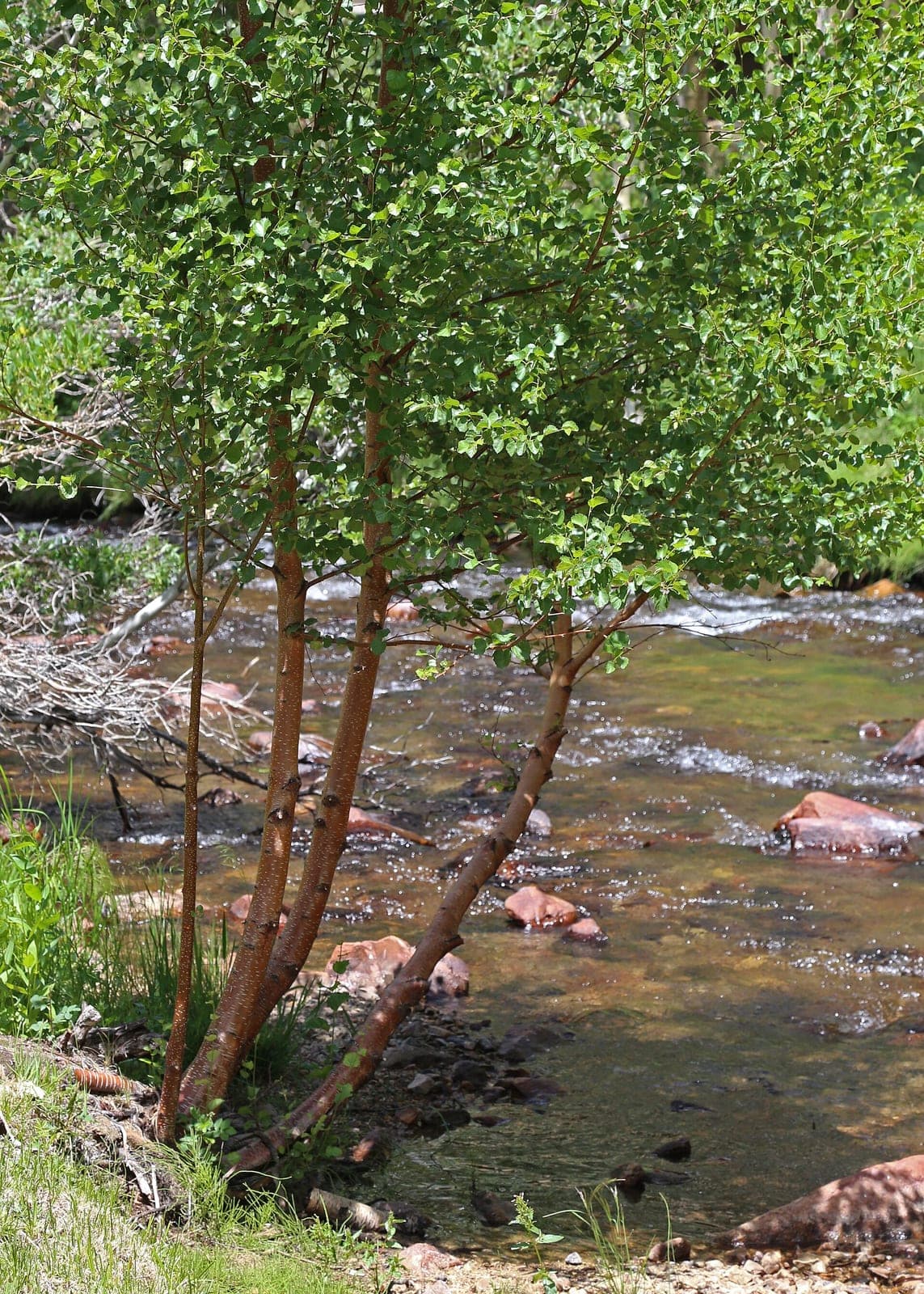
Water birch is a small, multi-stemmed native tree of western North America, found along streams and moist drainages from the Yukon south to Arizona and New Mexico. Its bark is dark reddish-brown to nearly black rather than white, giving it a year-round presence distinct from paper birch. Clumps typically reach 15–25 feet with arching stems, a scale suited to garden riparian plantings and smaller properties.
It performs best in moist to wet, slightly acidic soil along pond edges, creek margins, or swales, and tolerates periodic flooding better than most ornamental trees. Deep organic mulch helps maintain soil moisture during summer dry spells. The dense fibrous root system stabilizes streambanks and makes it a primary species in riparian restoration work across the Intermountain West. Seeds are a reliable winter food source for redpolls and siskins; beaver regularly harvest stems for dam construction.
Several Native American nations used water birch inner bark as emergency food and prepared bark tea as a febrifuge. Sap can be tapped in late winter before bud break, as with other birches, producing a lightly sweet liquid, though yields are modest compared to paper birch.
Ecoregions:TaigaNorthern ForestsNorthwestern Forested MountainsGreat PlainsNorth American Deserts
Fungal leaf spot
Brown or purplish spots on the leaves, often ringed with a yellow halo, that spread and merge in warm, humid, or wet weather; heavily spotted leaves yellow and drop early.
Pick off spotted leaves and clear fallen debris to remove overwintering spores. Improve air circulation by thinning, and water at the base so foliage dries quickly. If it persists, apply a copper- or sulfur-based fungicide at the first sign.
Rust
Orange to brown raised pustules on the undersides of leaves, with yellow spotting on the upper surface. Heavy infections cause leaves to yellow and drop.
Remove and destroy infected leaves. Avoid overhead watering and improve air circulation. Apply a sulfur or copper-based fungicide if it spreads. Clear plant debris in fall.
Cytospora Canker
White or blue-white pitch masses ooze from bark on lower branches and the trunk. Affected branches die back progressively from the tip inward; bark beneath the resin is discolored brown and may have a resinous, sunken appearance.
Prune infected branches well below the canker margin into healthy wood and destroy all cuttings. Sterilize pruning tools with 70% isopropyl alcohol between each cut. No effective fungicide is available; prevent recurrence by avoiding drought stress, soil compaction, and mechanical bark injury.
Botryosphaeria Canker
Dark, sunken cankers on stems and major branches, most often occurring after drought stress or mechanical wounding. Bark peeled back from affected areas reveals brown, discolored wood beneath. Branch tips wilt and die back progressively inward.
Prune infected branches at least 6 inches below the visible canker margin using sterilized tools, and dispose of all cuttings away from the garden. Reduce plant stress by maintaining consistent irrigation during dry periods and avoiding bark wounds during maintenance. No curative fungicide is available; keeping plants vigorous is the primary preventive strategy.