
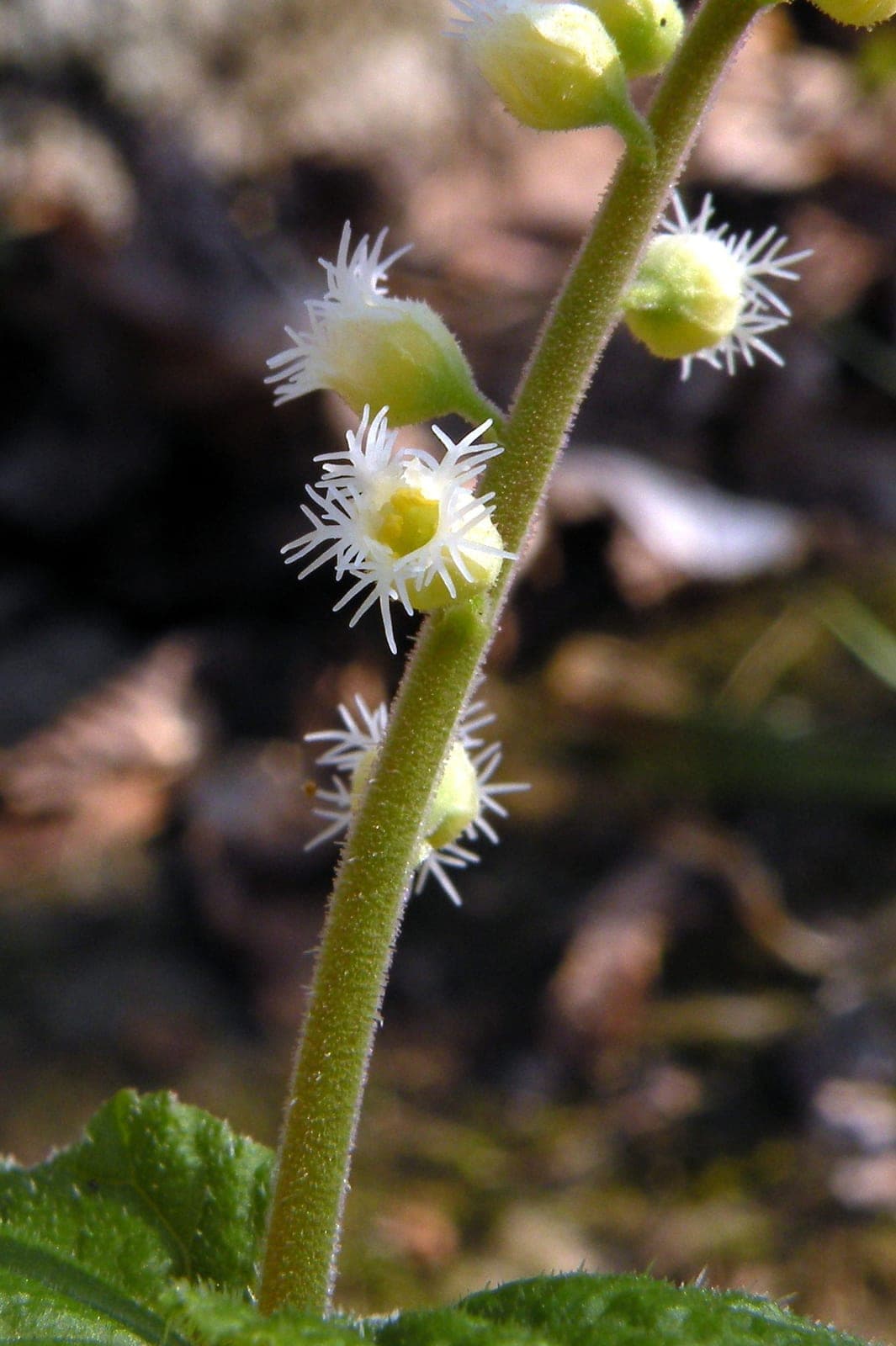
Mitella diphylla is a small native perennial in the Saxifragaceae family, found in rich deciduous woodlands across northeastern and midwestern North America. In spring it sends up slender stalks lined with tiny white flowers whose petals are so deeply fringed they resemble miniature snowflakes. The common name refers to the two stem leaves and to the seed capsule, which mimics a bishop's miter in shape.
It spreads gradually by short rhizomes and gentle self-seeding, forming tidy clumps without becoming invasive. Consistent moisture and dappled to deep shade are non-negotiable; drought or direct sun causes rapid decline. Plant in humus-rich, slightly acidic soil where fallen leaves will naturally mulch the root zone each autumn, replicating the woodland floor it comes from.
Ecoregions:Northern ForestsEastern Temperate ForestsGreat Plains
Fungal leaf spot
Brown or purplish spots on the leaves, often ringed with a yellow halo, that spread and merge in warm, humid, or wet weather; heavily spotted leaves yellow and drop early.
Pick off spotted leaves and clear fallen debris to remove overwintering spores. Improve air circulation by thinning, and water at the base so foliage dries quickly. If it persists, apply a copper- or sulfur-based fungicide at the first sign.
Root rot
Plants wilt, yellow, and stunt even in moist soil; lower stems and roots turn brown, soft, and mushy and the plant may collapse. Most common in heavy, wet, or poorly drained ground.
Improve drainage and stop overwatering, and never plant too deep. Lift and destroy badly affected plants along with the soil around the roots. Grow in raised or free-draining beds to prevent it returning.
Foliar Nematode
Angular brown or yellowish patches bounded by leaf veins, beginning on the lowest leaves and progressing upward. Affected tissue dries to a papery tan while adjacent tissue remains green. Symptoms worsen in warm, wet conditions.
Remove and dispose of all affected leaves-do not compost. Avoid overhead irrigation; water at the base. Increase plant spacing to improve air circulation. No effective chemical treatment exists; severely infected plants should be dug out and discarded to prevent spread to neighboring heucheras.