
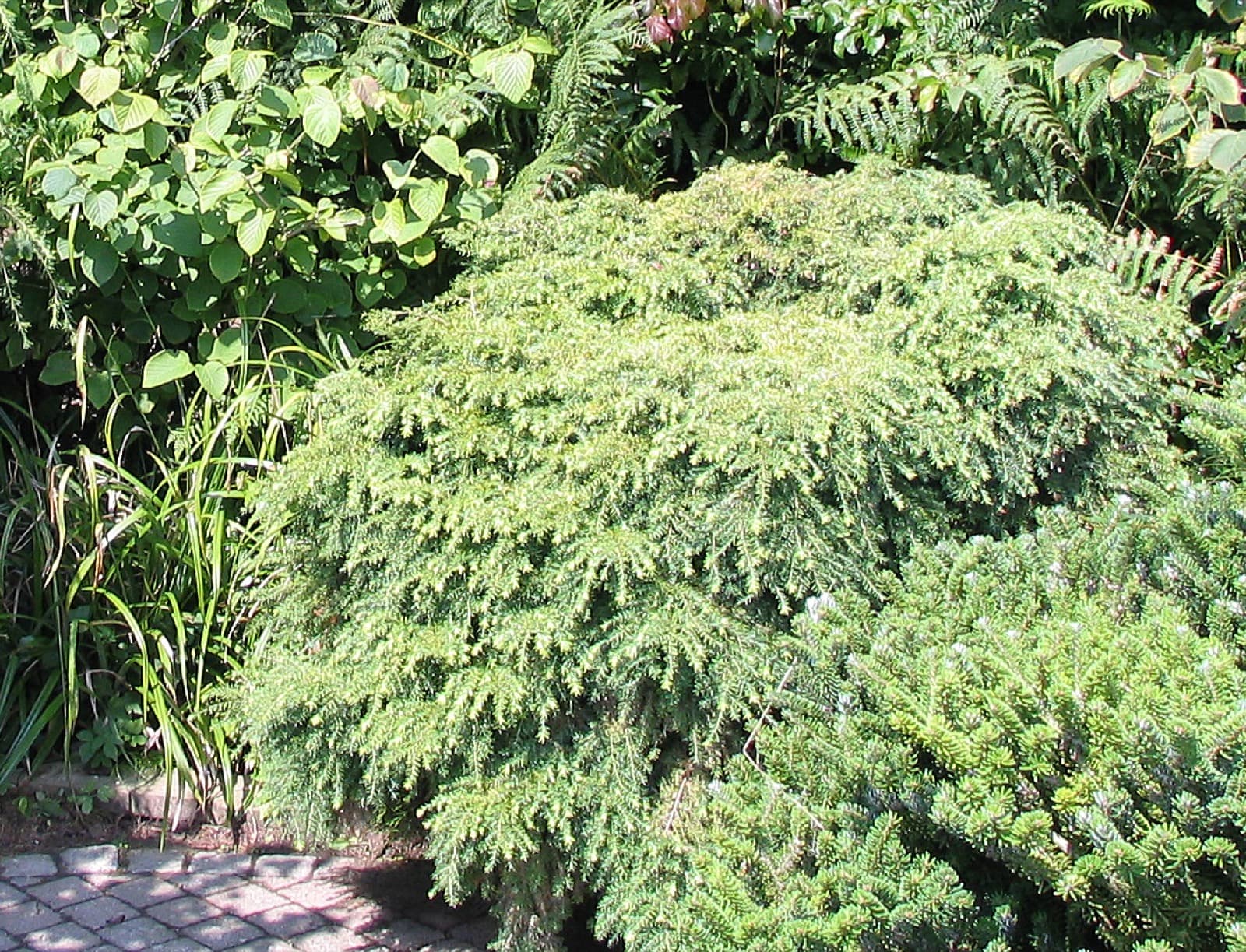
Tsuga canadensis 'Jeddeloh' is a dwarf cultivar of Eastern Hemlock that forms a dense, bird's-nest mound with a shallow natural depression at the center. Despite sharing a common name with the toxic herb poison hemlock (Conium maculatum), Tsuga species are not poisonous. 'Jeddeloh' grows slowly to 3–5 ft tall and 4–6 ft wide, making it a practical, long-lived evergreen for shaded sites where scale and texture matter.
Performs best in cool, humid climates with consistent soil moisture and partial to full shade; hot, dry, or windy conditions cause rapid foliage decline. Acidic, humus-rich soil with good drainage is essential - waterlogged roots lead quickly to Phytophthora decline. A 2–3 in layer of shredded bark or pine-needle mulch helps maintain the moisture and low pH the plant requires. Hemlock woolly adelgid (Adelges tsugae) is the most serious threat in the eastern US; inspect branch undersides for white waxy egg sacs in late winter and spring and treat promptly with horticultural oil or a systemic drench before populations establish.
Wild Tsuga canadensis provides critical deep-shade canopy over cold headwater streams, moderating water temperature for native brook trout and other stream fauna. The species is in steep decline across much of its native range due to adelgid pressure; healthy garden specimens represent meaningful conservation of regional genetic material.
Ecoregions:Northern ForestsEastern Temperate Forests
Phytophthora Root Rot
Wilting despite moist soil, yellowing leaves, stunted growth, and dark, decayed roots and crown tissue. Vines may collapse during hot weather.
Plant in well-draining soil and avoid waterlogging. Remove and destroy affected vines. Improve drainage with raised beds or amended soil and avoid overwatering.
Sirococcus Shoot Blight
Newly elongating shoot tips wilt and turn brown in late spring. Infected needles and stems develop small black pycnidia. Affected shoots may curl into a shepherd's crook shape. Current-year growth is killed and the disease can spread further during prolonged wet periods.
Prune and destroy infected shoot tips as soon as symptoms appear. Apply copper-based fungicide or chlorothalonil at bud break, repeating every two weeks during wet springs. Plant at adequate spacing to maximize air circulation and avoid overhead irrigation.
Cytospora Canker
White or blue-white pitch masses ooze from bark on lower branches and the trunk. Affected branches die back progressively from the tip inward; bark beneath the resin is discolored brown and may have a resinous, sunken appearance.
Prune infected branches well below the canker margin into healthy wood and destroy all cuttings. Sterilize pruning tools with 70% isopropyl alcohol between each cut. No effective fungicide is available; prevent recurrence by avoiding drought stress, soil compaction, and mechanical bark injury.