
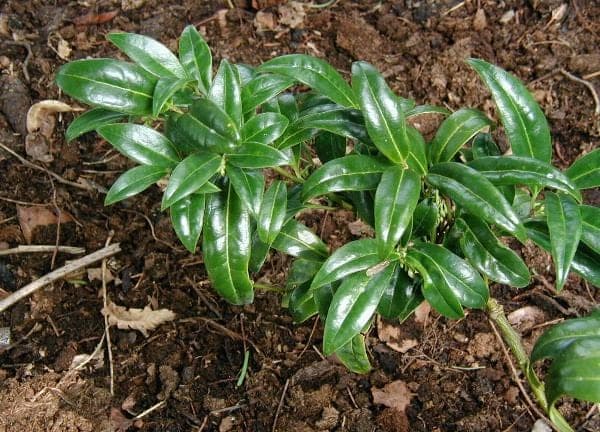
Sarcococca hookeriana var. humilis is a low, stoloniferous evergreen shrub native to the Himalayas, grown for two traits that are difficult to find together: reliable performance in dry shade under established trees, and an intensely sweet fragrance produced by its tiny white late-winter flowers. At 1–2 ft tall it gradually colonizes shaded areas that defeat most other groundcovers.
Plants spread by underground stolons, building a dense, weed-suppressing mat over several years. Humus-rich, slightly acidic to neutral soil with good drainage gives the best results; wet or compacted soils invite root rot. A 2–3 in layer of organic mulch at planting aids establishment and insulates roots through the first winter. At the lower edge of its hardiness range a sheltered position away from drying winter winds reduces foliage desiccation. Stoloniferous offsets can be separated and transplanted in early spring to propagate new plants.
Glossy black berries ripen on established colonies in fall and provide modest food value for birds. The spreading, shade-tolerant habit makes this shrub a practical choice for stabilizing slopes under tree canopy where turf and most perennials fail to establish.
Root rot
Plants wilt, yellow, and stunt even in moist soil; lower stems and roots turn brown, soft, and mushy and the plant may collapse. Most common in heavy, wet, or poorly drained ground.
Improve drainage and stop overwatering, and never plant too deep. Lift and destroy badly affected plants along with the soil around the roots. Grow in raised or free-draining beds to prevent it returning.
Phytophthora Root Rot
Wilting despite moist soil, yellowing leaves, stunted growth, and dark, decayed roots and crown tissue. Vines may collapse during hot weather.
Plant in well-draining soil and avoid waterlogging. Remove and destroy affected vines. Improve drainage with raised beds or amended soil and avoid overwatering.
Volutella Blight
Stems die back and turn tan or straw-colored. Salmon-pink spore masses form on dead stems during humid conditions. Affected leaves yellow, then turn brown and drop, often beginning with inner or lower foliage.
Prune all dead and dying stems back to healthy wood. Disinfect cutting tools between plants with 70% isopropyl alcohol. Thin dense growth to increase air circulation. Apply a copper-based fungicide after pruning. Remove all plant debris from the base and avoid overhead watering.