
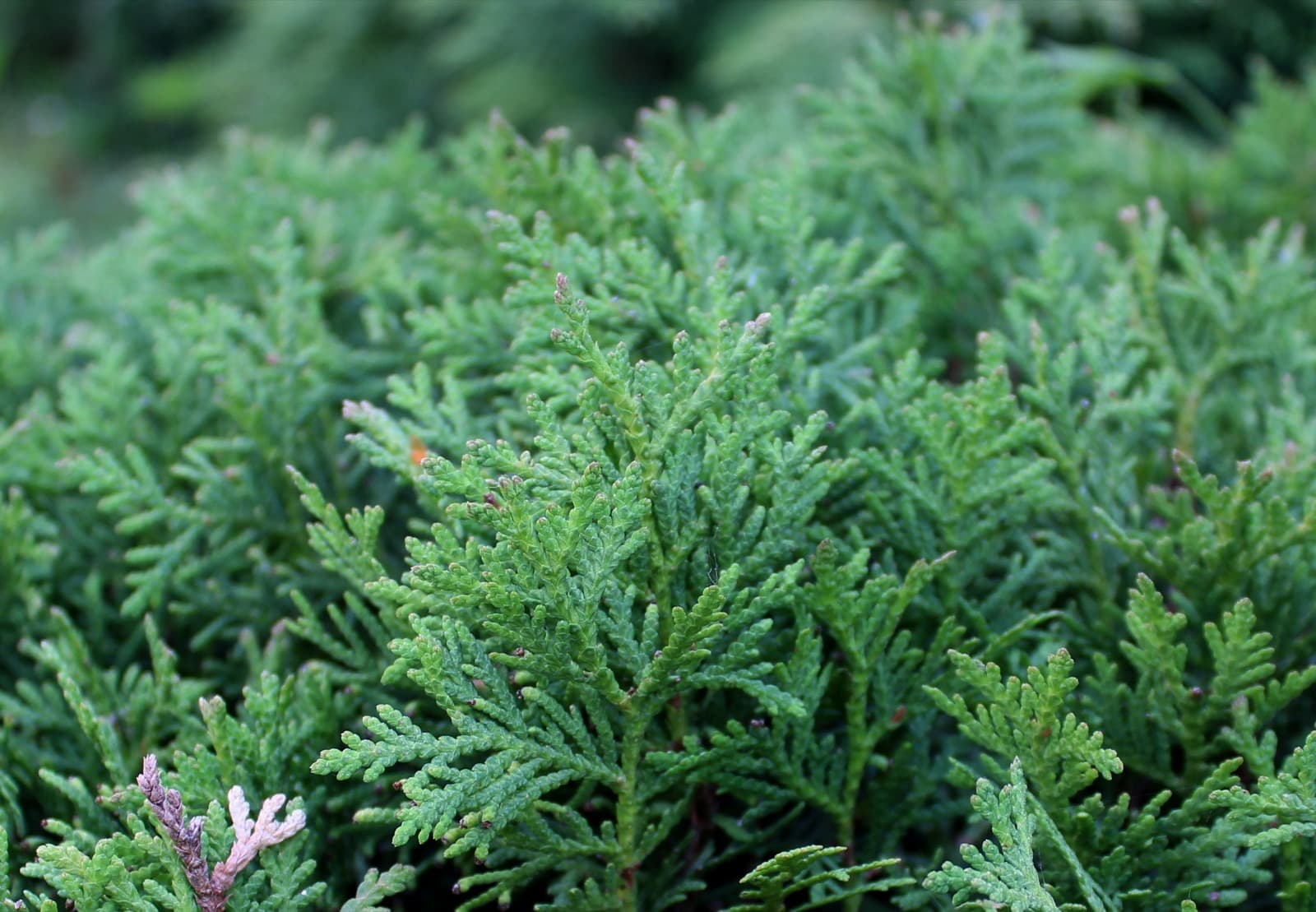
Danica arborvitae is a dwarf, globe-shaped cultivar of Thuja occidentalis selected in Denmark. It holds a tight, symmetrical mound naturally without shearing, making it one of the most low-maintenance evergreen cultivars available for small-scale plantings. Mature size is typically 2–3 ft tall and wide after 10 years, with older specimens occasionally reaching 4 ft.
It performs best in full sun with well-drained, consistently moist soil and good air circulation. Foliage is dense, flat-sprayed, and dark green, bronzing slightly in winter before recovering in spring. Plants tolerate cold to zone 3a and are largely problem-free when sited correctly; standing water around the roots is the primary cause of decline. Mulching the root zone moderates soil temperature, retains moisture, and reduces weed competition.
The common name arborvitae - Latin for "tree of life" - traces to sixteenth-century French accounts of Indigenous peoples of eastern North America using Thuja occidentalis foliage to treat scurvy; the leaves contain measurable vitamin C, and this use predated any chemical understanding of the nutrient.
Ecoregions:Northern ForestsEastern Temperate ForestsGreat Plains
Kabatina Twig Blight
Tips of one-year-old shoots turn yellow then straw-brown, most visibly from late winter through early spring. Tiny black pycnidia appear at the boundary of dead and living tissue. Unlike Phomopsis blight, which kills current-season shoots in summer, Kabatina affects previous-year wood and symptoms are most prominent at or before bud break.
Prune affected shoots 2–3 inches below visible symptoms during dry weather; disinfect cutting tools between each cut with 70% isopropyl alcohol. Avoid overhead irrigation. Apply a preventive copper-based or thiophanate-methyl fungicide in early fall before temperatures drop. Thin dense interior foliage to improve air circulation.
Phytophthora Root Rot
Wilting despite moist soil, yellowing leaves, stunted growth, and dark, decayed roots and crown tissue. Vines may collapse during hot weather.
Plant in well-draining soil and avoid waterlogging. Remove and destroy affected vines. Improve drainage with raised beds or amended soil and avoid overwatering.
Armillaria Root Rot
Thinning, yellowing canopy with progressive dieback; white, fan-shaped mycelial mats visible beneath bark at or just below the soil line; honey-colored mushroom clusters appearing at the trunk base or on surface roots in autumn.
No chemical cure exists. Improve drainage and avoid any injury to roots or trunk. Remove severely infected trees along with as much root material as possible. Do not replant susceptible species in the same spot.