
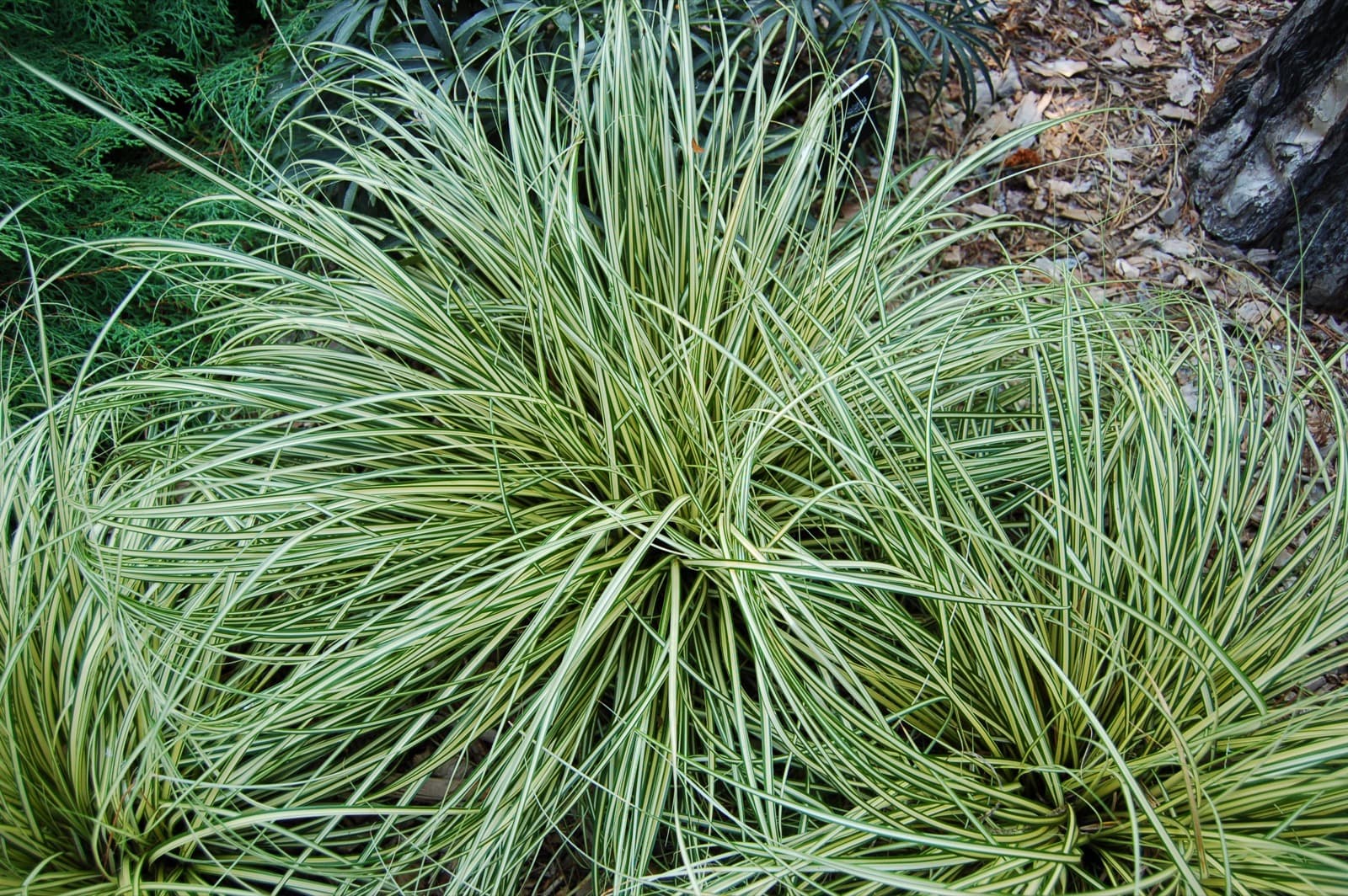
Carex oshimensis 'Evergold' is a compact, mounding sedge with narrow arching leaves striped creamy yellow at the center and dark green along the margins. It holds its variegation year-round in mild climates and remains semi-evergreen in zones 5 and 6. The consistent color and fine texture make it one of the most reliable edging and ground cover plants for shaded gardens.
Native to the forests of Oshima Island, Japan, this cultivar tolerates deeper shade than most variegated grass-like plants and performs well beneath trees, along shaded paths, and in containers. It prefers consistently moist, humus-rich soil with good drainage; prolonged waterlogging at the crown encourages rot. A mulch layer retains moisture, moderates soil temperature, and in colder zones protects the crown through winter. Clumps benefit from division every three to four years to maintain density and vigor.
When planted in mass, the low, dense mounding habit suppresses weeds effectively, making it practical for shaded slopes and woodland borders.
Crown Rot
Lower leaves yellow and wilt; the base of the rosette turns brown and soft, sometimes with white fungal threads at the soil line. Plants collapse in wet conditions.
Remove and destroy affected plants. Improve drainage and avoid overhead watering. Do not mulch directly against the crown. Space plants for airflow and avoid replanting in the same wet spot.
Root rot
Plants wilt, yellow, and stunt even in moist soil; lower stems and roots turn brown, soft, and mushy and the plant may collapse. Most common in heavy, wet, or poorly drained ground.
Improve drainage and stop overwatering, and never plant too deep. Lift and destroy badly affected plants along with the soil around the roots. Grow in raised or free-draining beds to prevent it returning.
Fungal leaf spot
Brown or purplish spots on the leaves, often ringed with a yellow halo, that spread and merge in warm, humid, or wet weather; heavily spotted leaves yellow and drop early.
Pick off spotted leaves and clear fallen debris to remove overwintering spores. Improve air circulation by thinning, and water at the base so foliage dries quickly. If it persists, apply a copper- or sulfur-based fungicide at the first sign.