
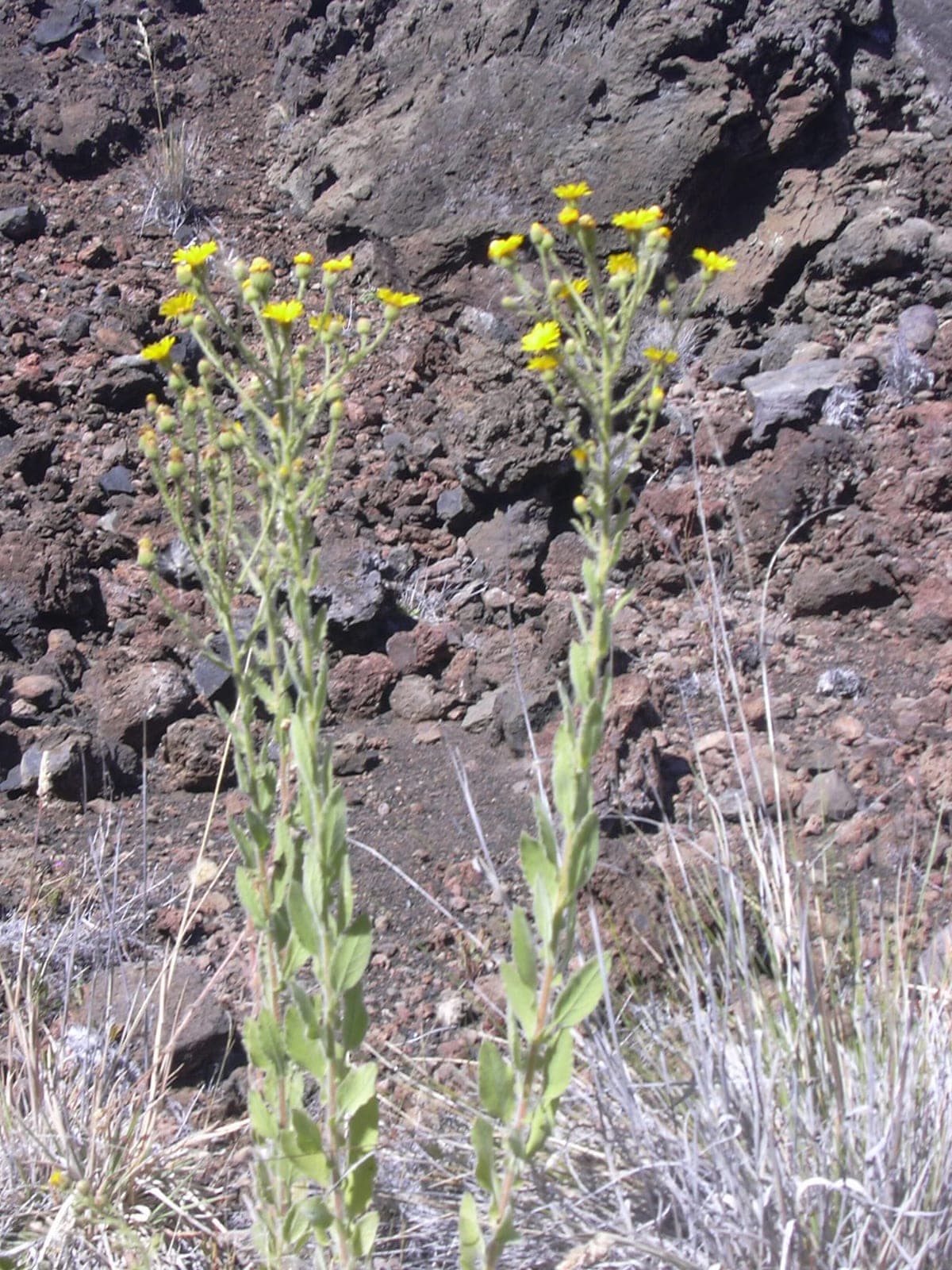
Telegraphweed is a coarse annual or biennial native to the coastal scrub, chaparral margins, and disturbed ground of southern California and Baja California. Its common name comes from its tall, erect stems, which once grew prolifically along telegraph lines. In a wild or meadow garden it serves as a reliable late-season native wildflower, drawing bees and beneficial insects when few other plants are still in flower.
Plants form a basal rosette in spring, then bolt to produce sticky, glandular-hairy stems 2–5 ft tall topped with clusters of small yellow daisy-like flowers from mid-summer through late fall. It self-seeds prolifically and colonizes open, sunny, disturbed ground quickly. Plants establish easily from seed scattered on bare soil but need active management in mixed plantings to prevent them from crowding neighbors. Sandy or gravelly, sharply drained soil and full sun are essential; standing moisture triggers root rot. pH tolerance is broad, matching the poor soils of its native roadsides and washes.
Ecoregions:Marine West Coast ForestNorth American DesertsMediterranean California
Powdery mildew
White or grey powdery coating on leaves - usually starting on older growth in humid conditions or when nights cool.
Improve air circulation by thinning plants. Apply neem oil or potassium bicarbonate spray at first sign. Avoid overhead watering.
Aster Yellows
Deformed, greenish flowers, stunted growth, and yellowed foliage. Flower centers may produce tufts of leafy growth instead of normal petals.
No cure. Remove and destroy infected plants immediately to stop spread. Control leafhoppers, which transmit the disease, and remove nearby weed hosts.
Fungal leaf spot
Brown or purplish spots on the leaves, often ringed with a yellow halo, that spread and merge in warm, humid, or wet weather; heavily spotted leaves yellow and drop early.
Pick off spotted leaves and clear fallen debris to remove overwintering spores. Improve air circulation by thinning, and water at the base so foliage dries quickly. If it persists, apply a copper- or sulfur-based fungicide at the first sign.
Root rot
Plants wilt, yellow, and stunt even in moist soil; lower stems and roots turn brown, soft, and mushy and the plant may collapse. Most common in heavy, wet, or poorly drained ground.
Improve drainage and stop overwatering, and never plant too deep. Lift and destroy badly affected plants along with the soil around the roots. Grow in raised or free-draining beds to prevent it returning.