
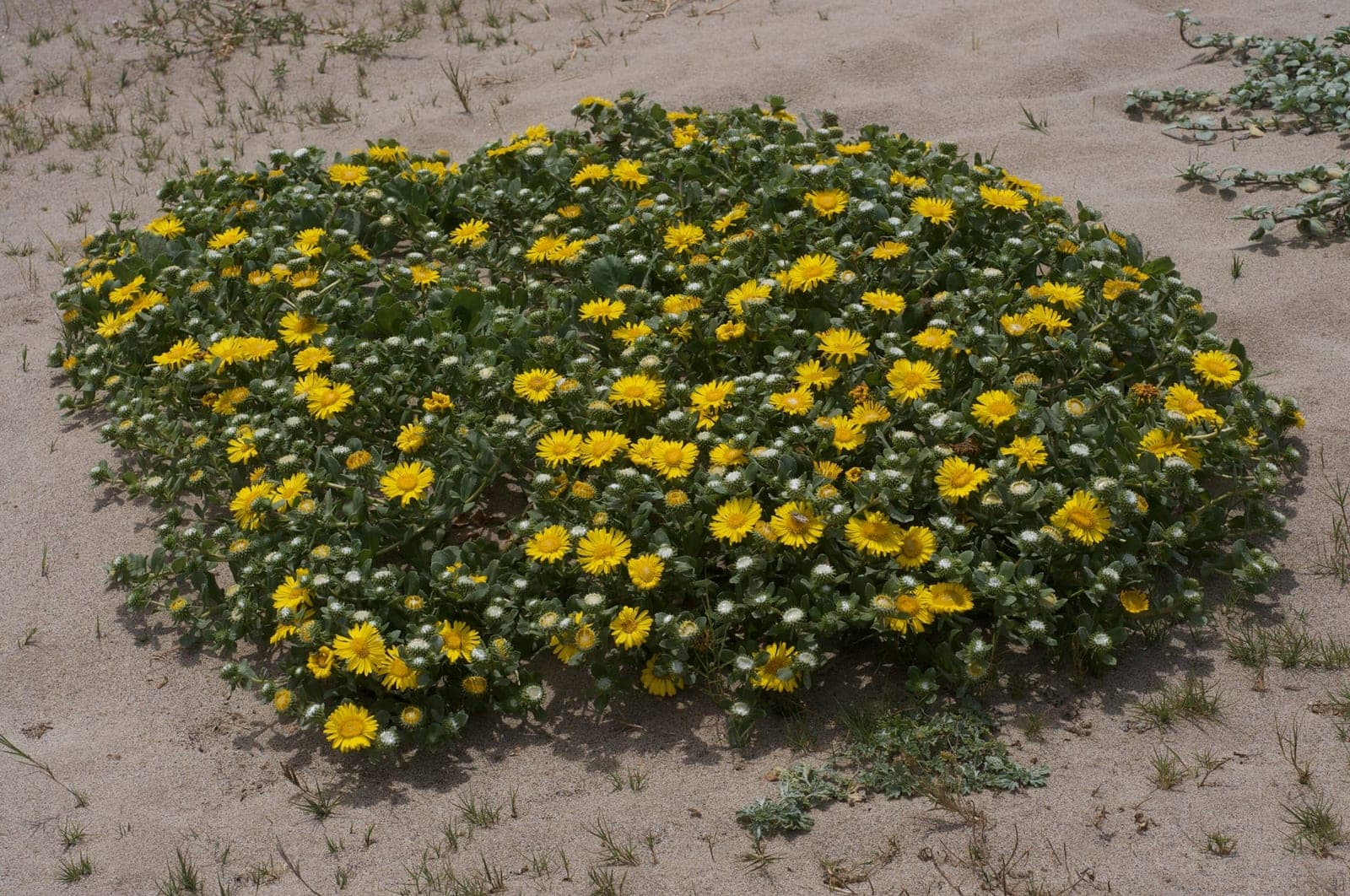
Coastal gumweed is a resinous native perennial or subshrub from the shorelines, coastal bluffs, and salt marshes of western North America, from California north to Alaska. It forms low spreading clumps or upright stems reaching about 4 feet. The yellow flower heads are ringed with white latex when fresh and reliably draw bees and a wide range of other pollinators from midsummer through fall.
The plant handles salt spray, sandy or lean soils, and extended dry periods once established. Full sun and sharp drainage are essential; soils that remain wet over winter are the primary cause of plant failure. In mild coastal climates it may develop woody basal stems and persist for many years, while plants grown inland tend to stay more herbaceous. Cutting back by half in late winter keeps growth compact and promotes heavier flowering.
Grindelia species have a well-documented history of medicinal use among indigenous peoples of the Pacific Coast and were later adopted into North American herbal practice. The resinous leaves and flower heads were used as an expectorant for bronchial congestion and asthma, and applied topically as a wash or poultice to relieve poison oak and ivy rash and minor skin irritation.
Ecoregions:Northwestern Forested MountainsMarine West Coast ForestNorth American DesertsMediterranean California
Root rot
Plants wilt, yellow, and stunt even in moist soil; lower stems and roots turn brown, soft, and mushy and the plant may collapse. Most common in heavy, wet, or poorly drained ground.
Improve drainage and stop overwatering, and never plant too deep. Lift and destroy badly affected plants along with the soil around the roots. Grow in raised or free-draining beds to prevent it returning.
Rust
Orange to brown raised pustules on the undersides of leaves, with yellow spotting on the upper surface. Heavy infections cause leaves to yellow and drop.
Remove and destroy infected leaves. Avoid overhead watering and improve air circulation. Apply a sulfur or copper-based fungicide if it spreads. Clear plant debris in fall.
Powdery mildew
White or grey powdery coating on leaves - usually starting on older growth in humid conditions or when nights cool.
Improve air circulation by thinning plants. Apply neem oil or potassium bicarbonate spray at first sign. Avoid overhead watering.