
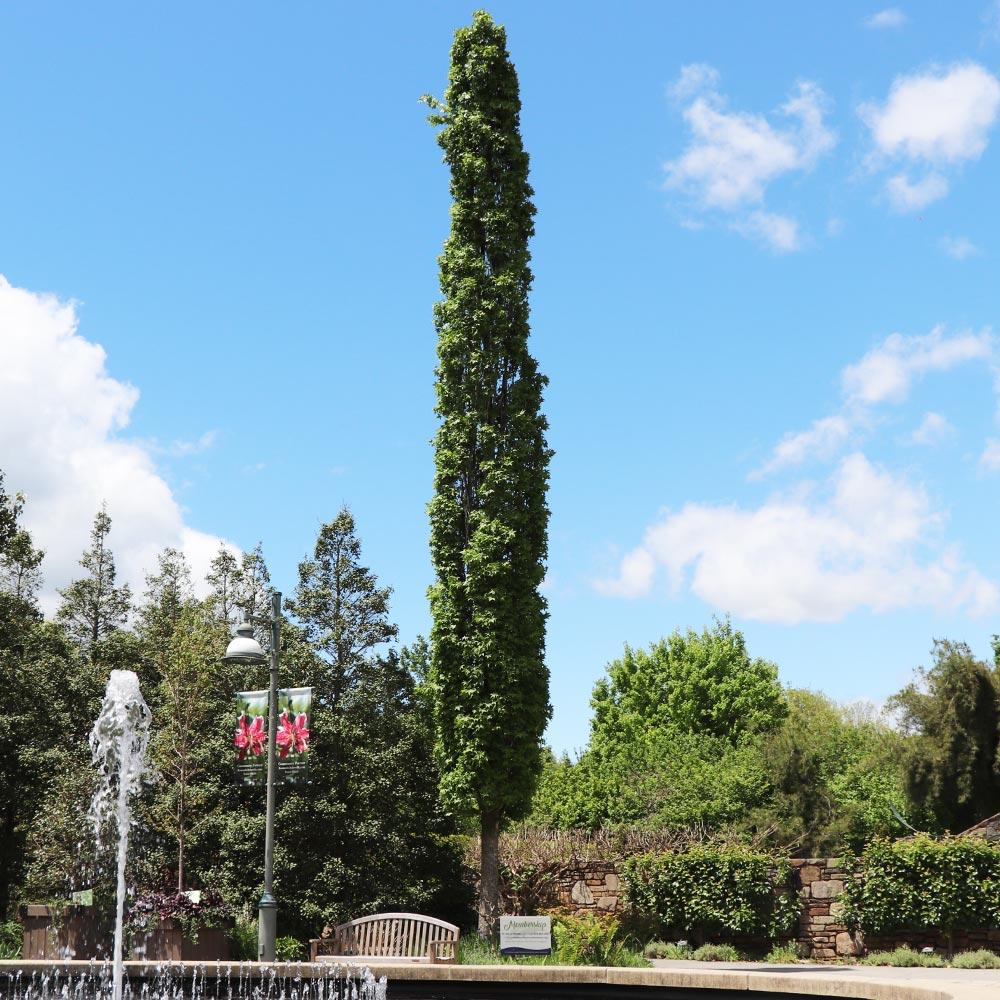
Slender Silhouette Sweetgum
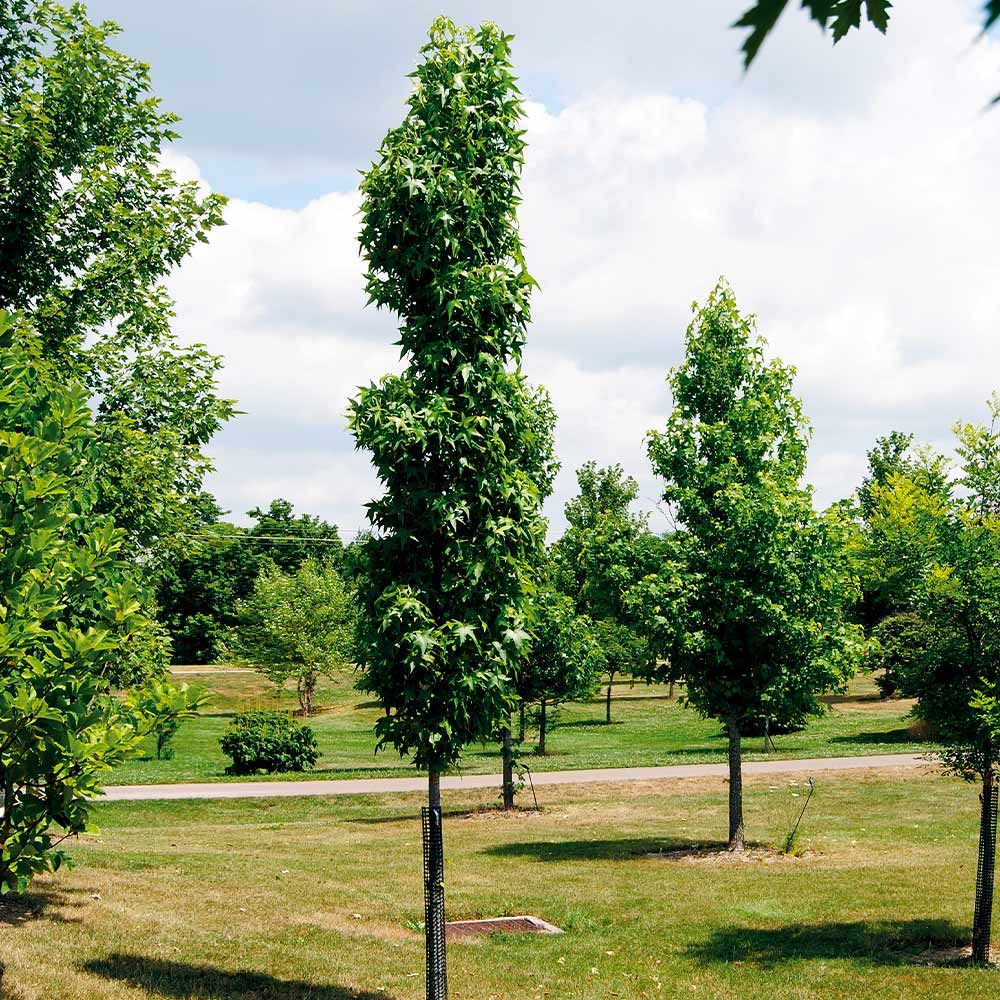
Slender Silhouette sweetgum is a narrowly columnar cultivar of American sweetgum, reaching 40–50 feet tall while rarely exceeding 4–5 feet wide at maturity. That tight profile makes it one of the few large deciduous trees suited to narrow side yards, urban tree lawns, and formal allées, while still delivering the multi-colored fall foliage the species is known for - deep red, burgundy, orange, and yellow often appearing on the same tree simultaneously.
The species is native to moist bottomlands and floodplains of the eastern United States, and this cultivar retains that adaptability. It tolerates periodic wet soil and handles urban conditions reasonably well once established. Like the species, it produces spiny seed capsules - commonly called gumballs - that drop in late fall and persist into winter; site the tree away from paved walkways and high-traffic areas to minimize nuisance. Slightly acidic soil tends to produce the most intense fall color, and pH should be managed accordingly.
The balsam resin of American sweetgum has a documented history of practical use. Indigenous peoples and early settlers used it as a chewing gum substitute, and the aromatic storax derived from the bark has been employed in folk medicine for skin conditions, wounds, and respiratory complaints. The resin has demonstrated antimicrobial activity in laboratory analysis.
Ecoregions:Eastern Temperate ForestsGreat Plains
These dates are for Zone 6b. Enter your ZIP to time every job to your own frost dates.
- buy · Jan 2 - Jan 16Order nursery stock - about two months before planting
- plant · Mar 13 - Apr 3Plant container or balled-and-burlapped stock before bud break, away from paving and walkways: this form still drops spiky seed balls.
Problems & troubleshooting
Common problems
Fungal leaf spot
Brown or purplish spots on the leaves, often ringed with a yellow halo, that spread and merge in warm, humid, or wet weather; heavily spotted leaves yellow and drop early.
Pick off spotted leaves and clear fallen debris to remove overwintering spores. Improve air circulation by thinning, and water at the base so foliage dries quickly. If it persists, apply a copper- or sulfur-based fungicide at the first sign.
Botryosphaeria Canker
Dark, sunken cankers on stems and major branches, most often occurring after drought stress or mechanical wounding. Bark peeled back from affected areas reveals brown, discolored wood beneath. Branch tips wilt and die back progressively inward.
Prune infected branches at least 6 inches below the visible canker margin using sterilized tools, and dispose of all cuttings away from the garden. Reduce plant stress by maintaining consistent irrigation during dry periods and avoiding bark wounds during maintenance. No curative fungicide is available; keeping plants vigorous is the primary preventive strategy.
Root rot
Plants wilt, yellow, and stunt even in moist soil; lower stems and roots turn brown, soft, and mushy and the plant may collapse. Most common in heavy, wet, or poorly drained ground.
Improve drainage and stop overwatering, and never plant too deep. Lift and destroy badly affected plants along with the soil around the roots. Grow in raised or free-draining beds to prevent it returning.