
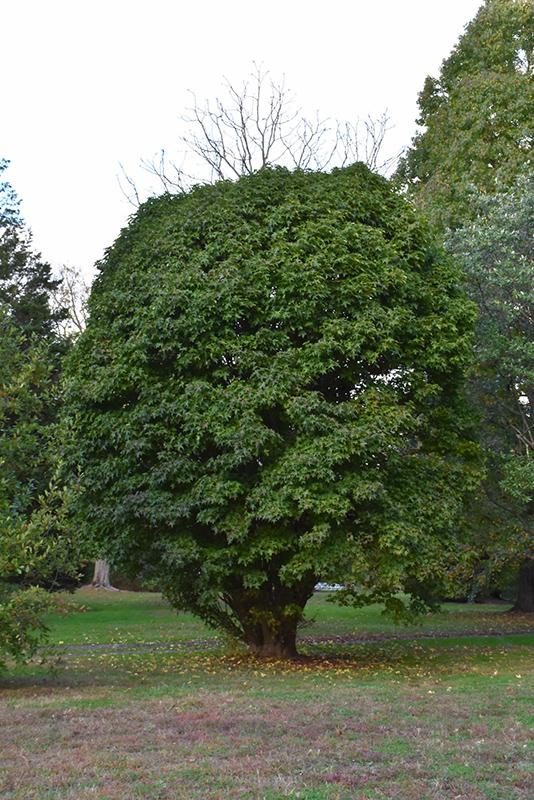
'Gumball' is a dwarf, globe-forming cultivar of American sweetgum (Liquidambar styraciflua), a species native to the eastern United States. It is typically sold grafted onto a straight trunk as a topiary standard, though it can also grow as a low, self-stemmed mound. The primary draw is the same vivid fall foliage - red, orange, purple, and yellow simultaneously on the same plant - as the full-sized species, in a form that fits small residential lots and tight planting spaces.
The cultivar is slow-growing and reaches roughly 6–10 ft as a grafted standard. Like the straight species, it tolerates clay and seasonally wet soils better than most ornamental trees, making it useful in spots where drainage is imperfect. It still produces the spiky seed capsules that give the species its common name, though in smaller quantities. Mulching the root zone 3–4 in deep helps sustain consistent soil moisture and buffers temperature extremes at both ends of its hardiness range. Full sun is required for peak fall color intensity; partial shade produces noticeably muted tones.
The resin of L. styraciflua - historically called American storax or copalm balsam - was used by Indigenous peoples of the eastern woodlands and later by European settlers as a topical antiseptic, a wound dressing, and an expectorant for respiratory complaints. It was listed in the United States Pharmacopeia during the 19th century and has been used in perfumery as a fixative.
Ecoregions:Eastern Temperate ForestsGreat Plains
These dates are for Zone 6b. Enter your ZIP to time every job to your own frost dates.
- buy · Jan 2 - Jan 16Order nursery stock - about two months before planting
- cut · Feb 27 - Mar 20Before bud break, shear lightly to keep the rounded ball shape and rub off any shoots from below the graft.
- plant · Mar 13 - Apr 3Plant container stock before bud break. Top-grafted standards need a stake for the first year or two.
Problems & troubleshooting
Common problems
Fungal leaf spot
Brown or purplish spots on the leaves, often ringed with a yellow halo, that spread and merge in warm, humid, or wet weather; heavily spotted leaves yellow and drop early.
Pick off spotted leaves and clear fallen debris to remove overwintering spores. Improve air circulation by thinning, and water at the base so foliage dries quickly. If it persists, apply a copper- or sulfur-based fungicide at the first sign.
Cercospora Leaf Spot
Small round spots with tan or gray centers and reddish-purple borders on leaves. Spots merge in severe cases, causing leaves to brown and die back.
Remove infected leaves and avoid overhead watering. Space plants for airflow and rotate crops. Apply a copper-based fungicide if the infection spreads.
Botryosphaeria Canker
Dark, sunken cankers on stems and major branches, most often occurring after drought stress or mechanical wounding. Bark peeled back from affected areas reveals brown, discolored wood beneath. Branch tips wilt and die back progressively inward.
Prune infected branches at least 6 inches below the visible canker margin using sterilized tools, and dispose of all cuttings away from the garden. Reduce plant stress by maintaining consistent irrigation during dry periods and avoiding bark wounds during maintenance. No curative fungicide is available; keeping plants vigorous is the primary preventive strategy.
Root rot
Plants wilt, yellow, and stunt even in moist soil; lower stems and roots turn brown, soft, and mushy and the plant may collapse. Most common in heavy, wet, or poorly drained ground.
Improve drainage and stop overwatering, and never plant too deep. Lift and destroy badly affected plants along with the soil around the roots. Grow in raised or free-draining beds to prevent it returning.